Traveller Stories · Kerala, India
Mahim & the Kerala Group's Journey to the Hornbill Festival
A group of travellers from Kerala, led by Mahim, spent seven days crossing Assam and Nagaland — a jeep safari and an Assamese cultural evening in Kaziranga, the Kachari stone ruins at Dimapur, a morung in Khonoma village, and a full day inside the Hornbill Festival at Kisama. Told entirely from the photographs the group sent back.
A group from Kerala, led by Mahim, travelled together across Assam and Nagaland for seven days. The Hornbill Festival at Kisama was the reason the trip existed; everything else — a safari in Kaziranga, an evening of Bihu and Sattriya at the park, the stone ruins at Dimapur, a morung in Khonoma — was arranged around it.
This page is written from the group's own photographs. Where a picture confirms a place, the caption names it. Where it does not, the caption stays general.
Kaziranga — Morning Safari
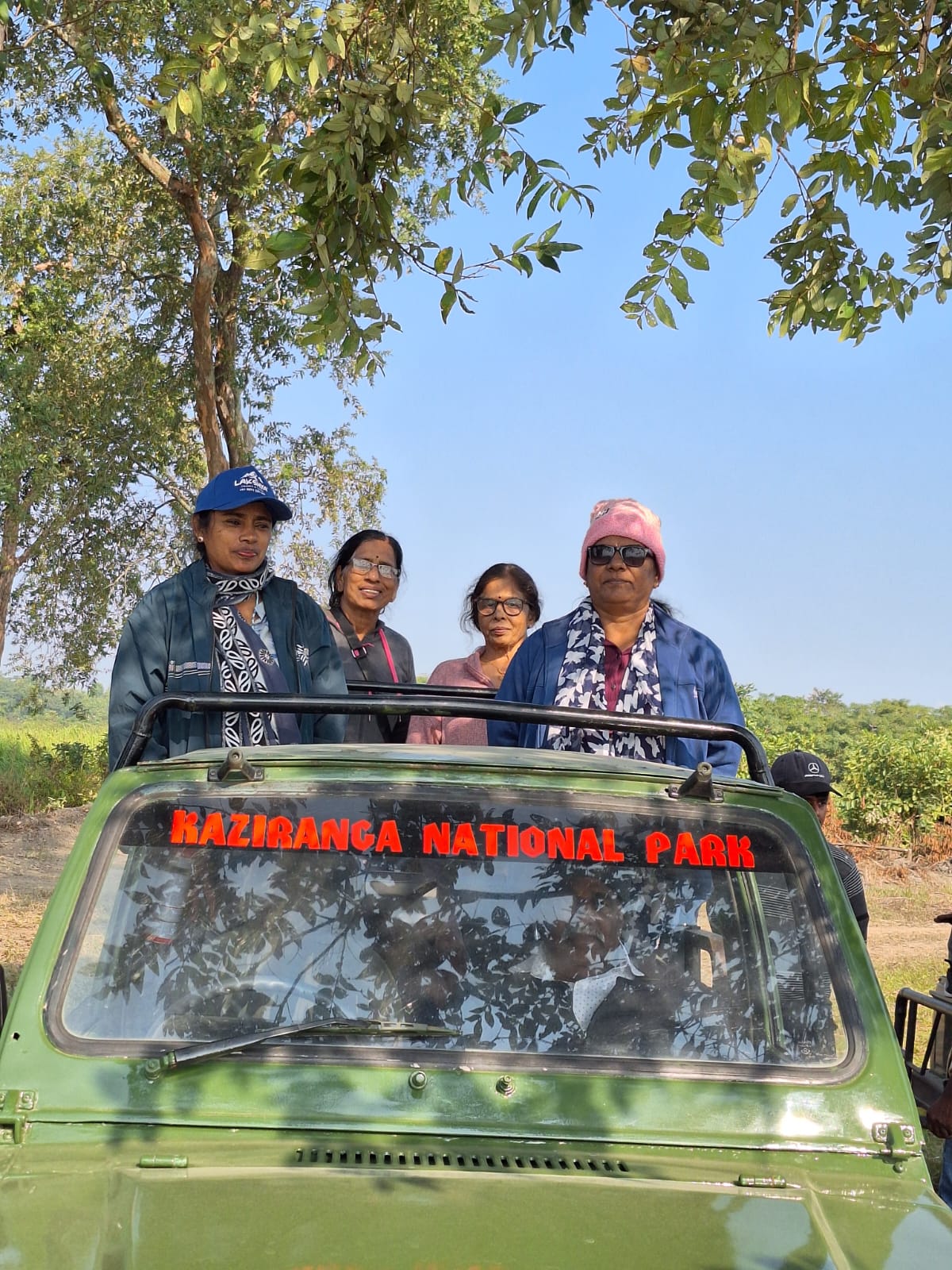
By the third morning the group was inside Kaziranga National Park, standing in an open jeep as the mist lifted off the grasslands. Kaziranga is best known for its one-horned rhino; the group watched from the jeep, quietly, from the tree line at the edge of the park.
Kaziranga — An Assamese Cultural Evening
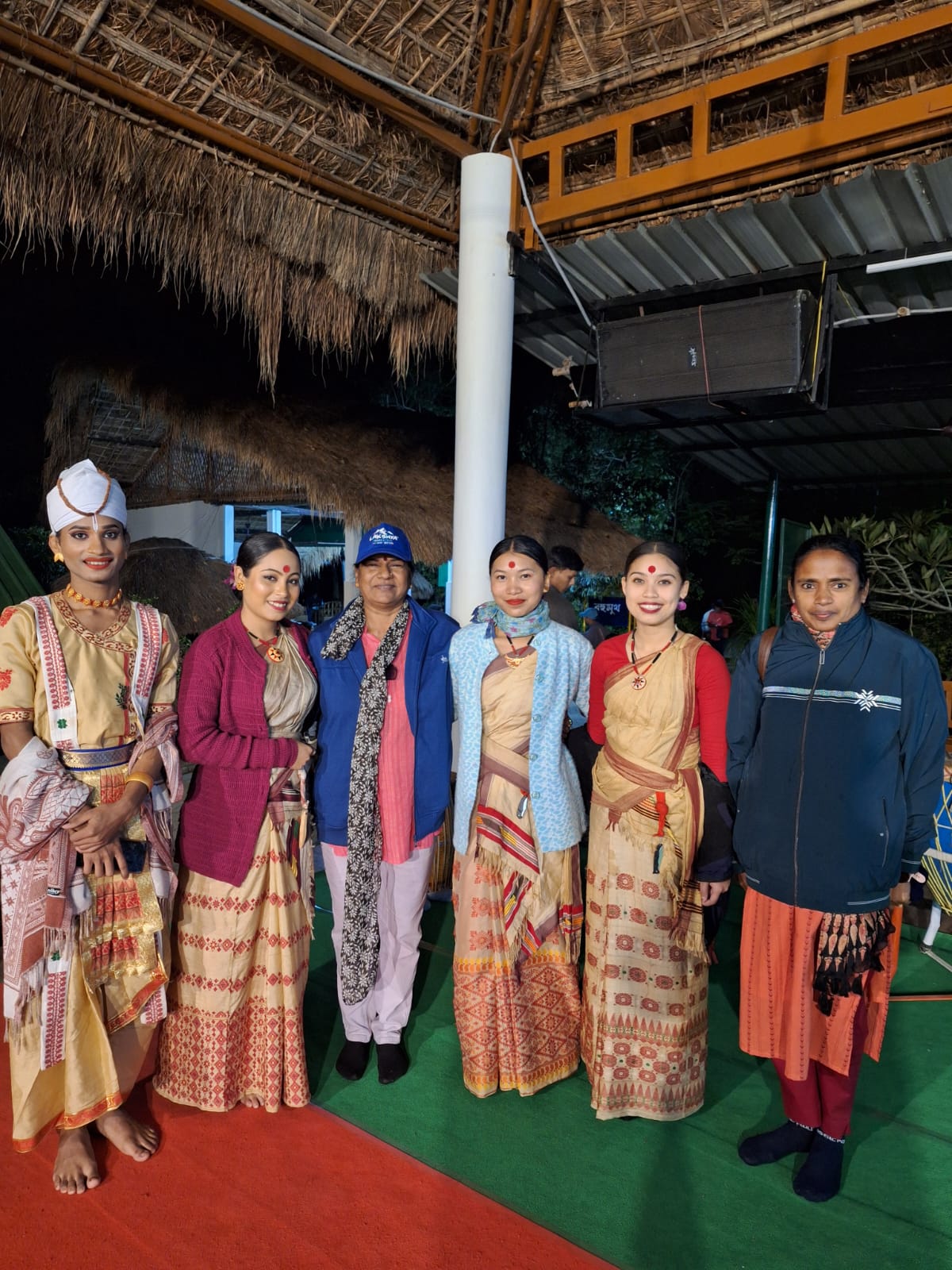
That same evening, at the park's cultural centre, a small troupe of Assamese artists performed traditional Bihu and Sattriya dances under a thatched pavilion — the men in gamosas, the women in mekhela chador. Two of the travellers stayed on afterwards for a photograph with the performers.
Dimapur — The Kachari Ruins
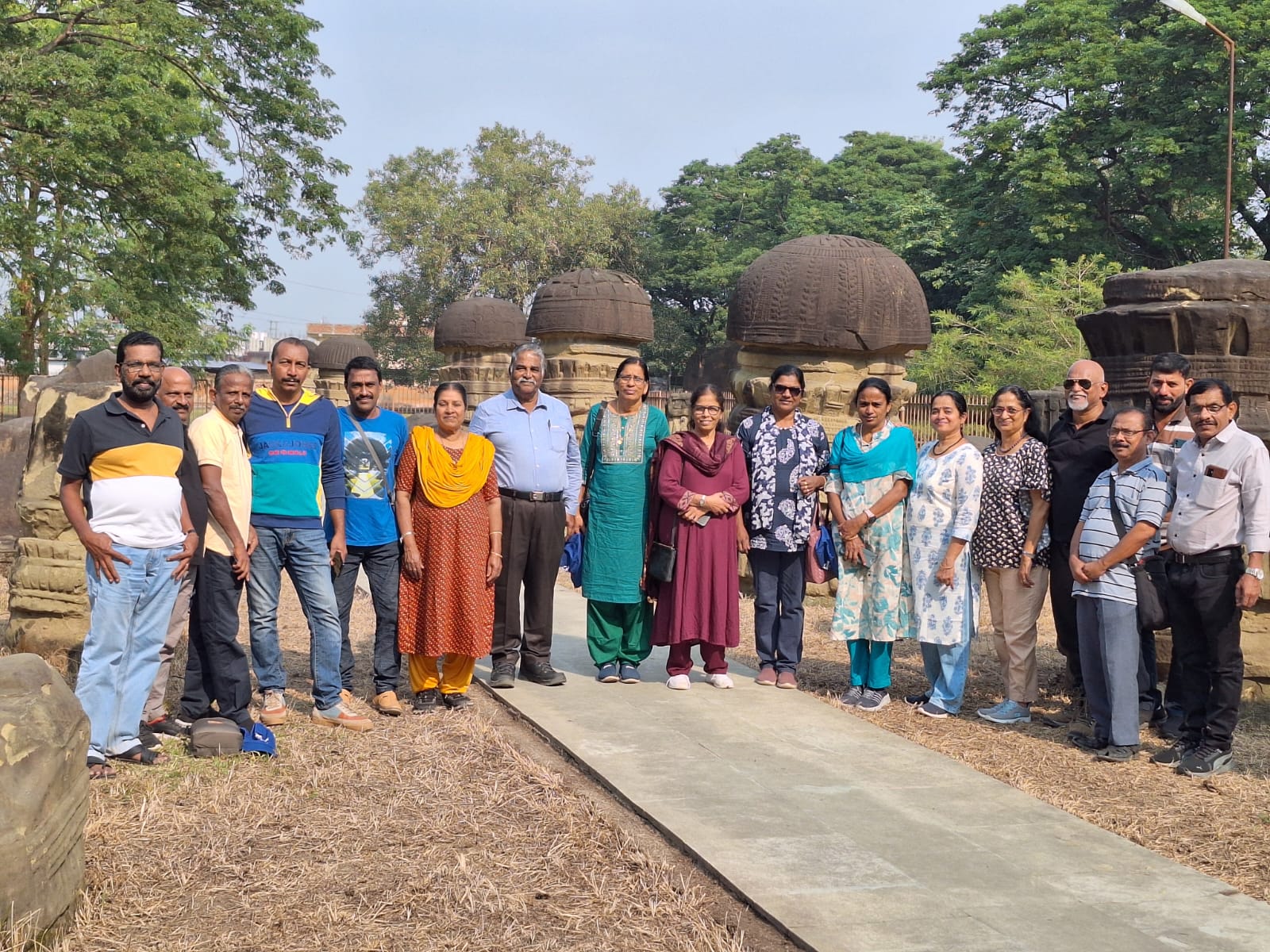
The road from Kaziranga runs east into Nagaland through Dimapur. On the way in the group stopped at the Kachari Ruins — the carved sandstone dome-pillars left by the medieval Dimasa Kachari kingdom, standing in a quiet fenced enclosure at the edge of the town. It made for the trip's first proper group photograph before the climb into the hills.
Khonoma — A Morung in the Angami Village
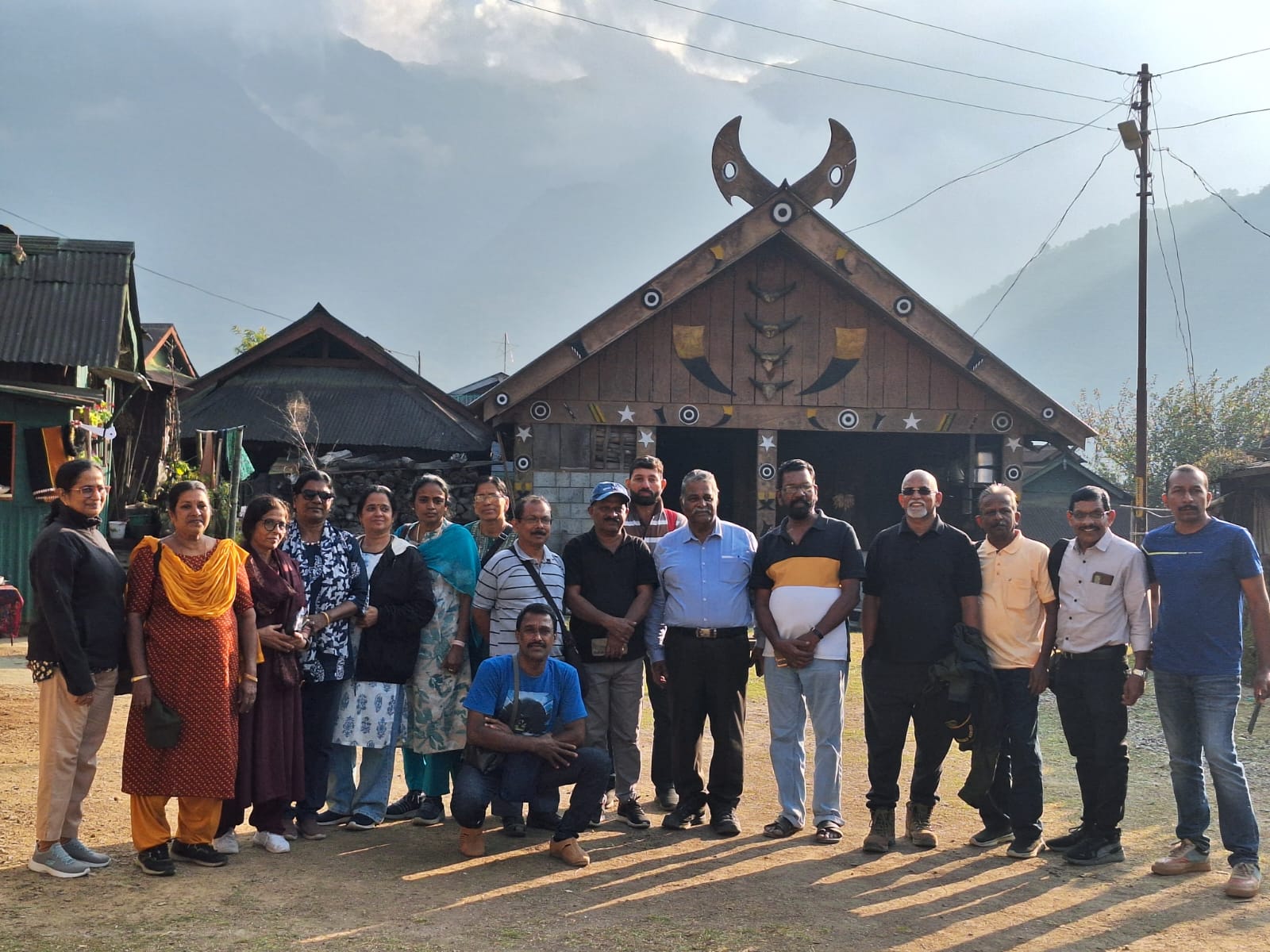
On the drive from Dimapur up to Kohima the group stopped for a morning in Khonoma — the green Angami warrior village, and one of the oldest continually inhabited settlements in the Naga hills. They stood for a portrait in front of a traditional morung, the wooden longhouse whose triangular gable carries the crossed mithun horns and the row of hollowed roundels that mark the meeting-house of the clan.
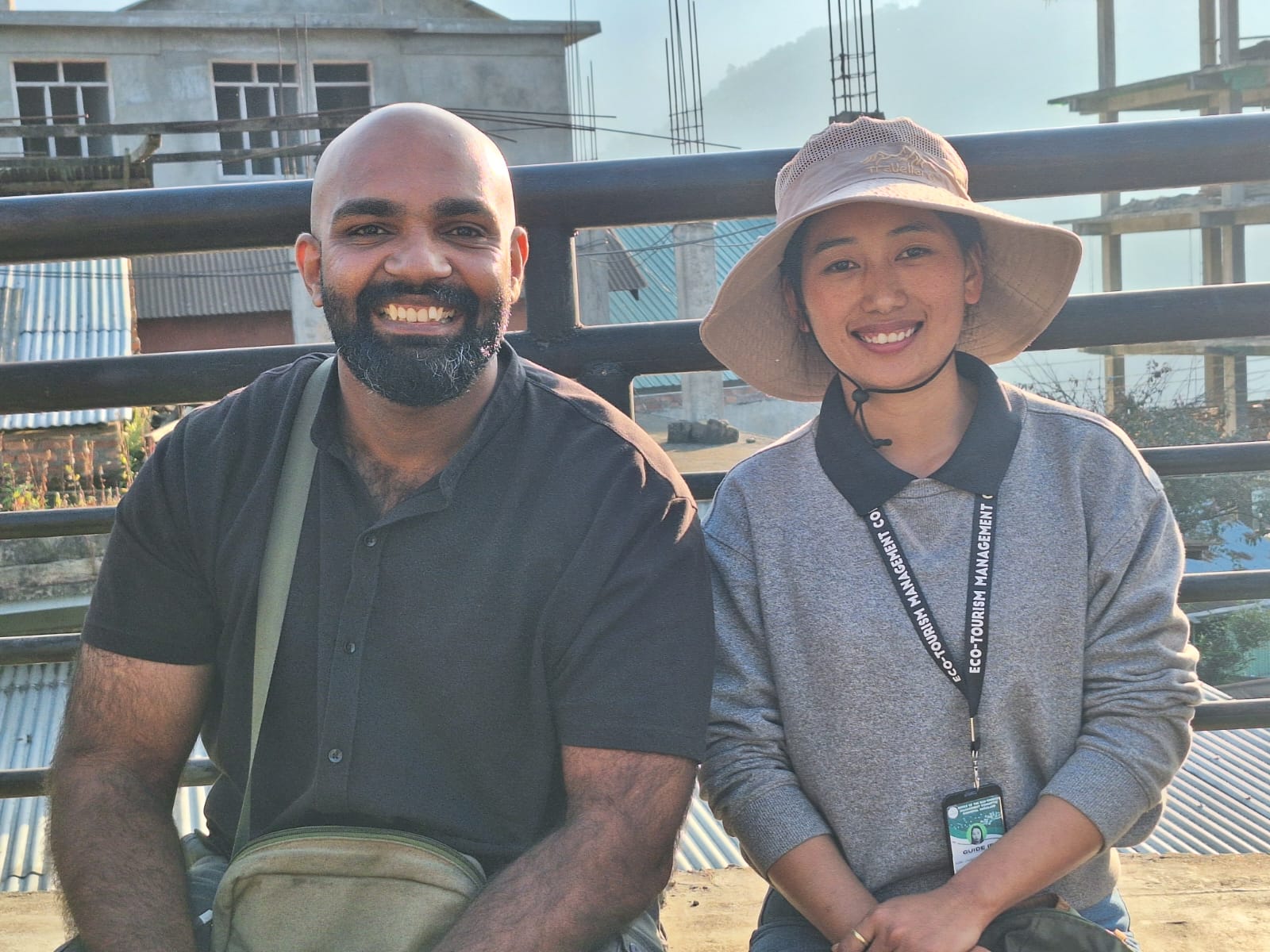
Mahim & the Local Guide
The group was walked through Nagaland by a local guide — visible in the photograph in her wide-brimmed hat and the lanyard of the state Eco-Tourism Management Council. Mahim, the Kerala group's leader, is sitting beside her on a railing in the sun. Two people who had spent a week co-ordinating routes, morungs and kitchens, resting for a moment before the next drive.
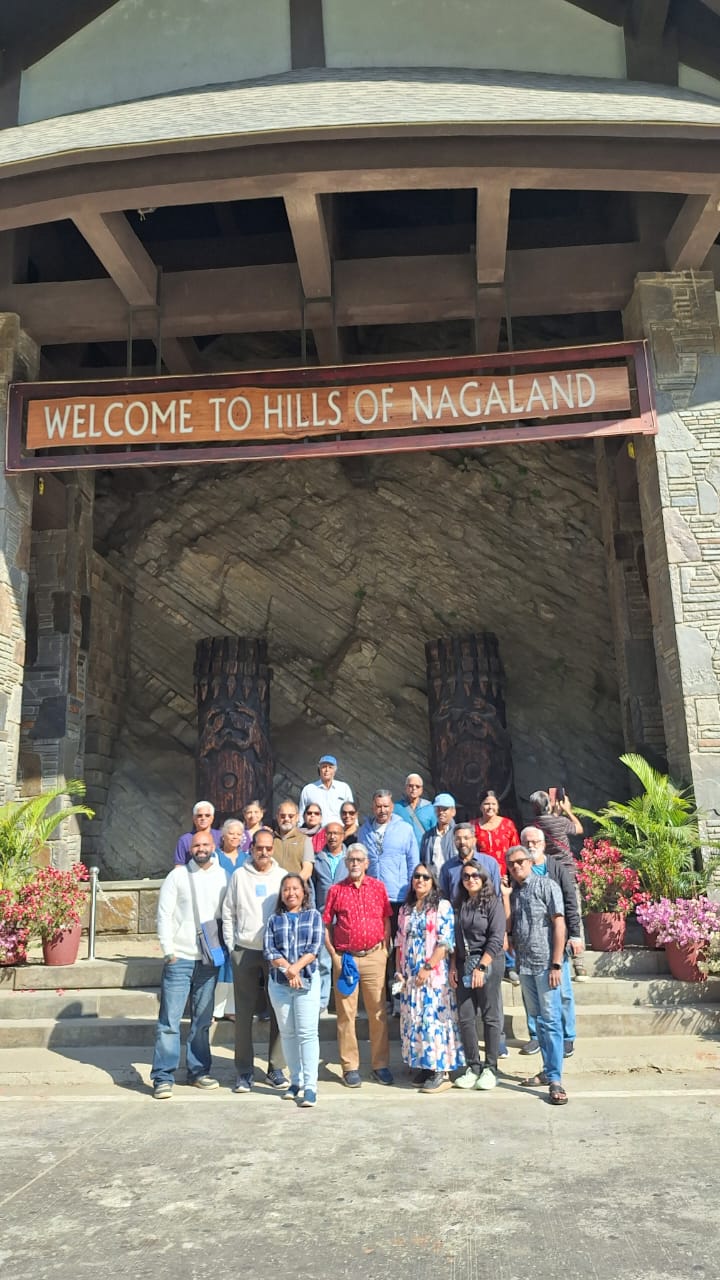
The Festival Entry Gate — Kisama
The next morning the group drove down from Kohima to the festival grounds at Kisama. Just inside the entrance stands the ceremonial gateway of the Hornbill Festival — a tall stone arch reading Welcome to Hills of Nagaland, flanked by two carved wooden warrior columns. It is the photograph almost every visitor stops for before walking on to the morungs.
Kisama — A Full Day at the Hornbill Festival
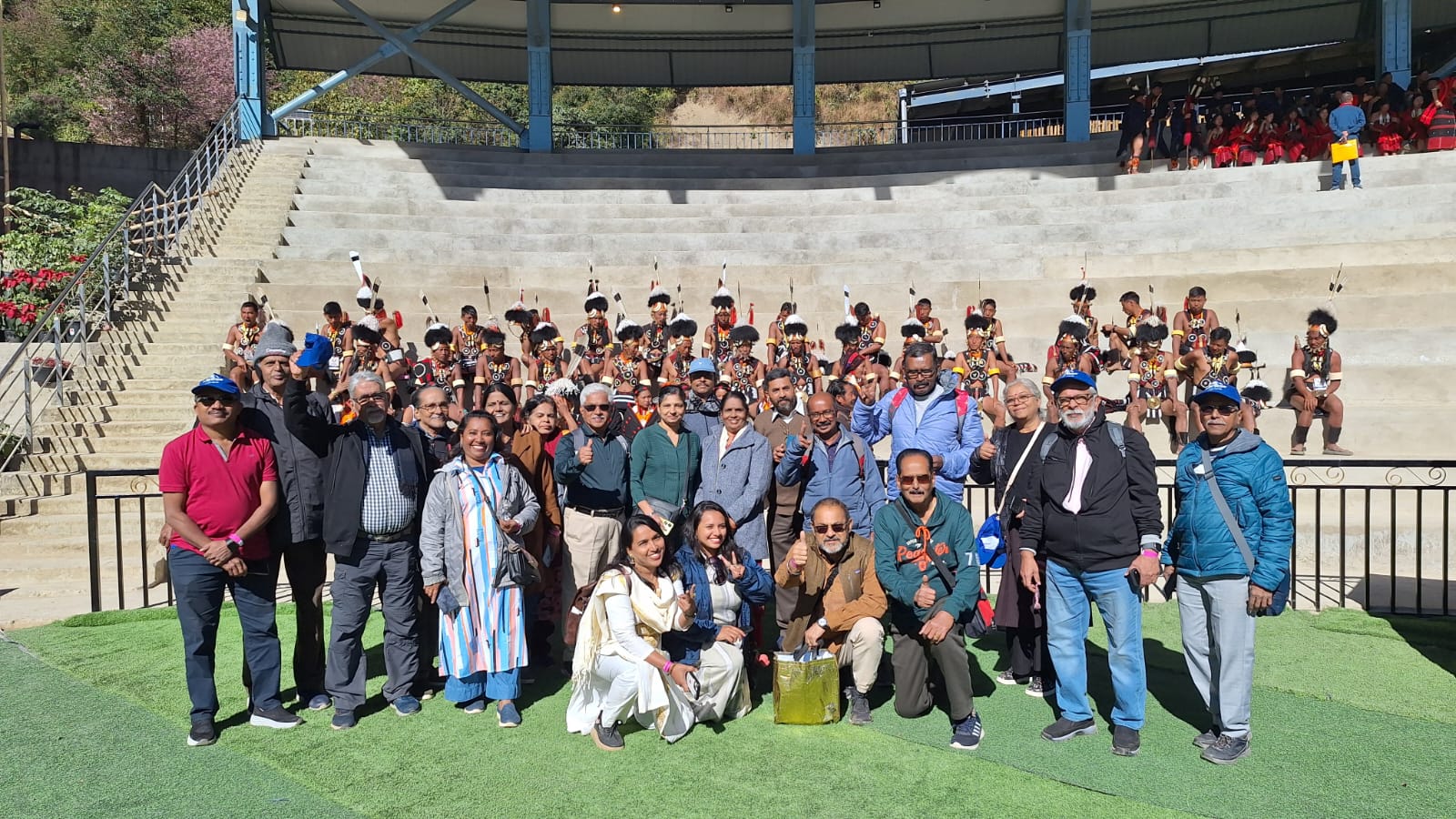
The fifth day was the one everyone had come for: a full day at the Hornbill Festival at Kisama Heritage Village. The morungs of the seventeen major Naga tribes line the slope above the arena; below, warrior processions cross the ground in waves. The whole Kerala group gathered on the arena turf for the trip's central photograph — a full row of Naga warriors in feathered headdresses seated on the stone stands behind them.
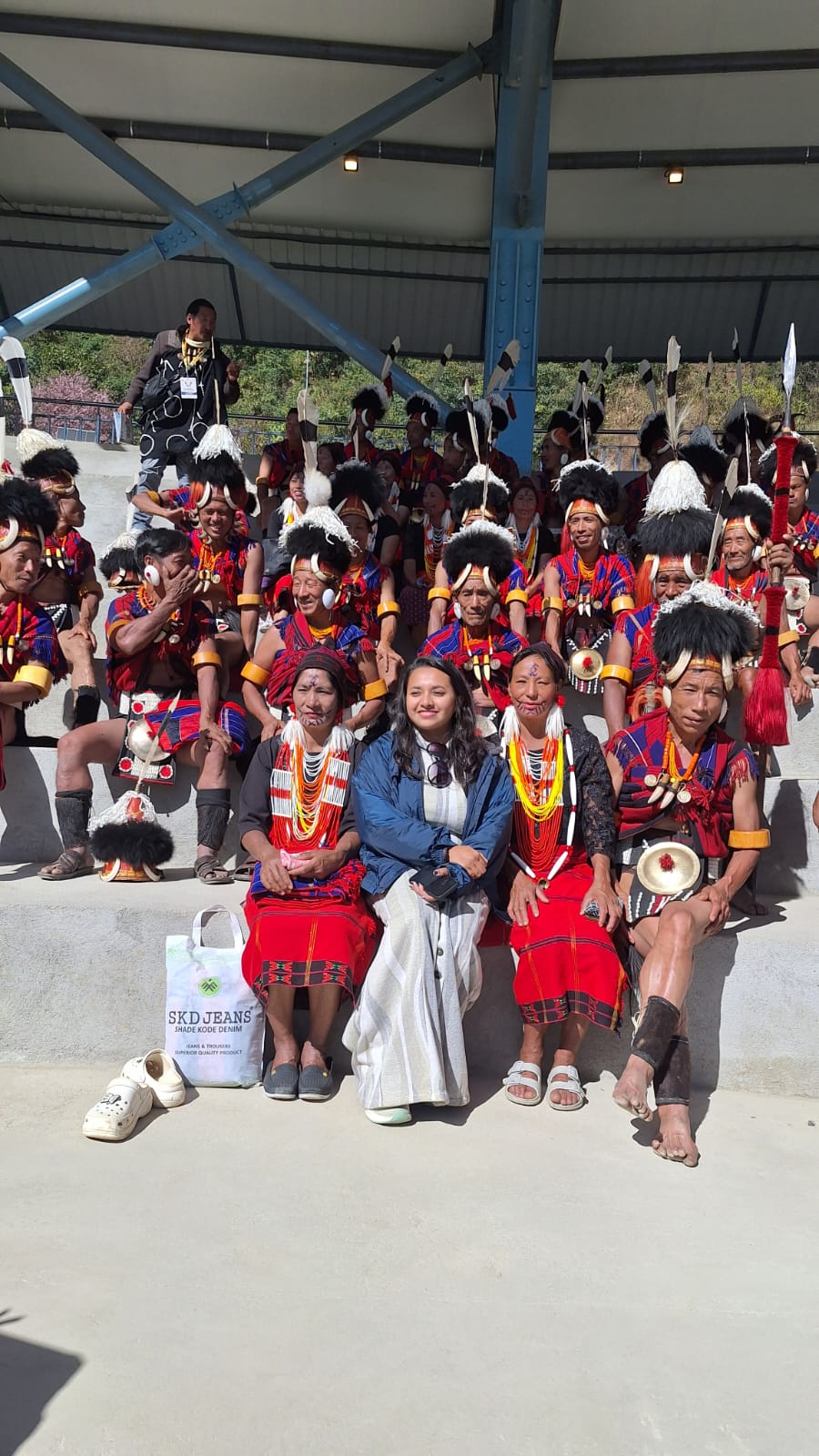
On the Stands — with the Women of the Troupe
Higher up on the stands, one of the younger travellers sat between two Naga women in bright red wraparound skirts and long white bead necklaces. Behind them, a full row of men from the same troupe waited for their next call to the arena — red-and-black shawls, tall fur headdresses tipped with hornbill feathers, boar-tusk collars, brass ear ornaments. A shared bench, a shared photograph.
Between Two Konyak Elders
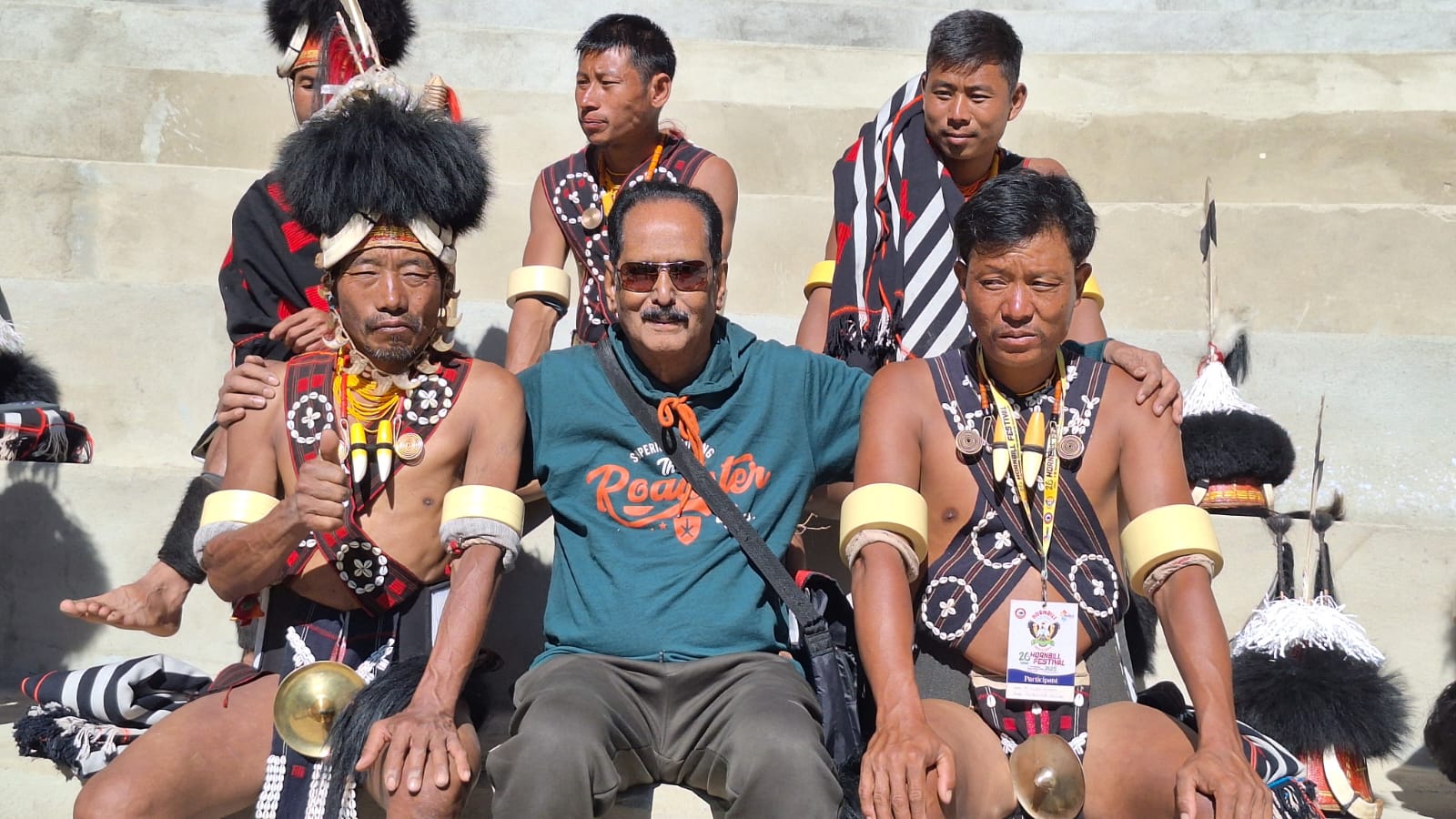
On another row of the stands, one of the senior travellers sat down between two Konyak elders in full ceremonial dress — the tall black-fur headdress on one side, the striped shawl and heavy ivory armband on the other. The Konyak, the tribe of the former headhunters of the north, are the presence most photographs of the Hornbill Festival end up circling back to; here they are up close, at rest between performances.
On the Arena Floor — with Four Young Warriors
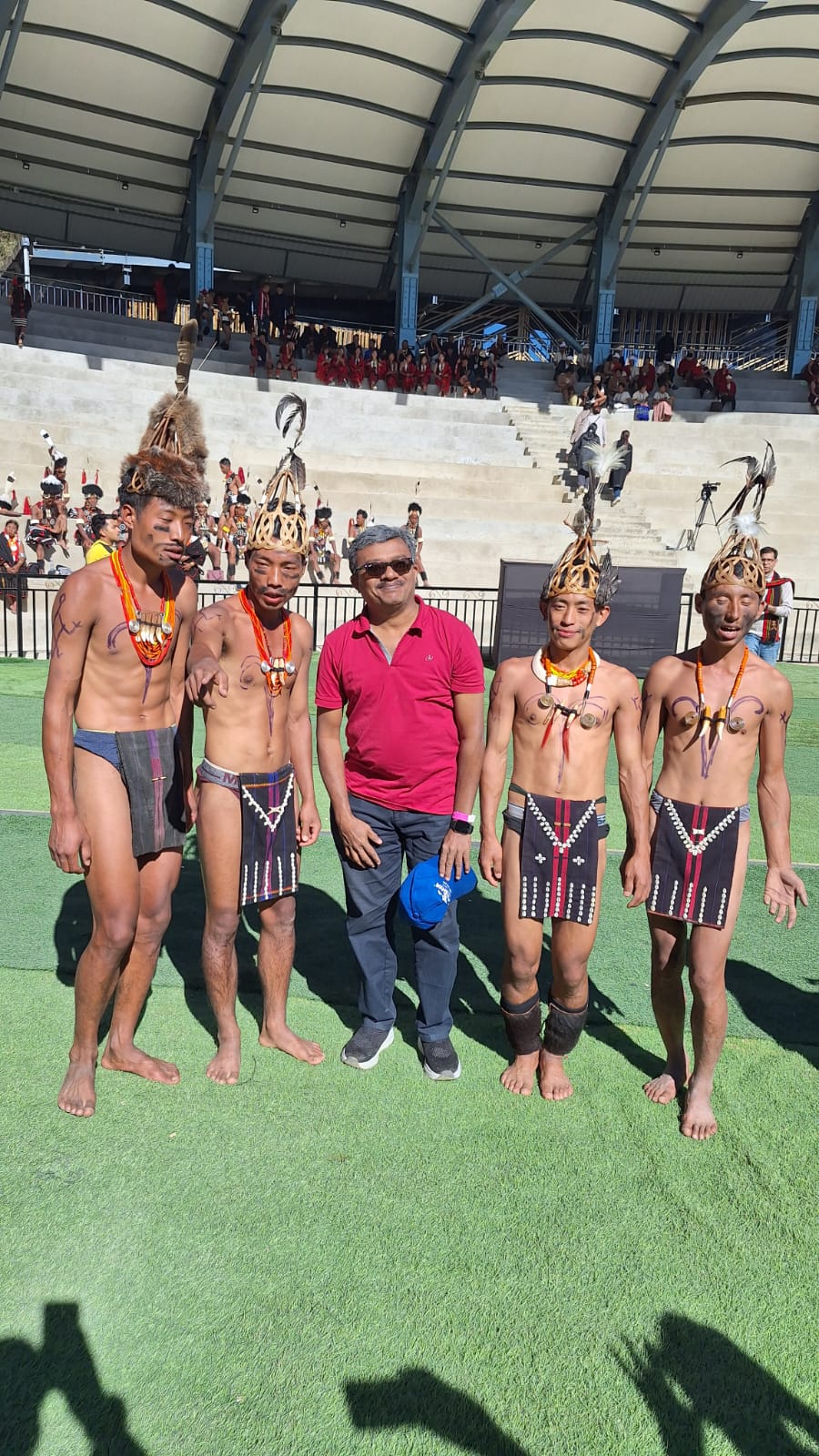
Down on the turf, one of the travellers stood for a portrait with four young warriors in carved wooden crown headdresses tipped with hornbill feathers — dark loincloths, boar-tusk collars, thin lines of body paint tracing across their chests. This is what most first-time visitors remember about Kisama: not the crowds or the stalls, but the quiet minute after a performance when a warrior turns, smiles, and stands still.
The Closing Group Portrait
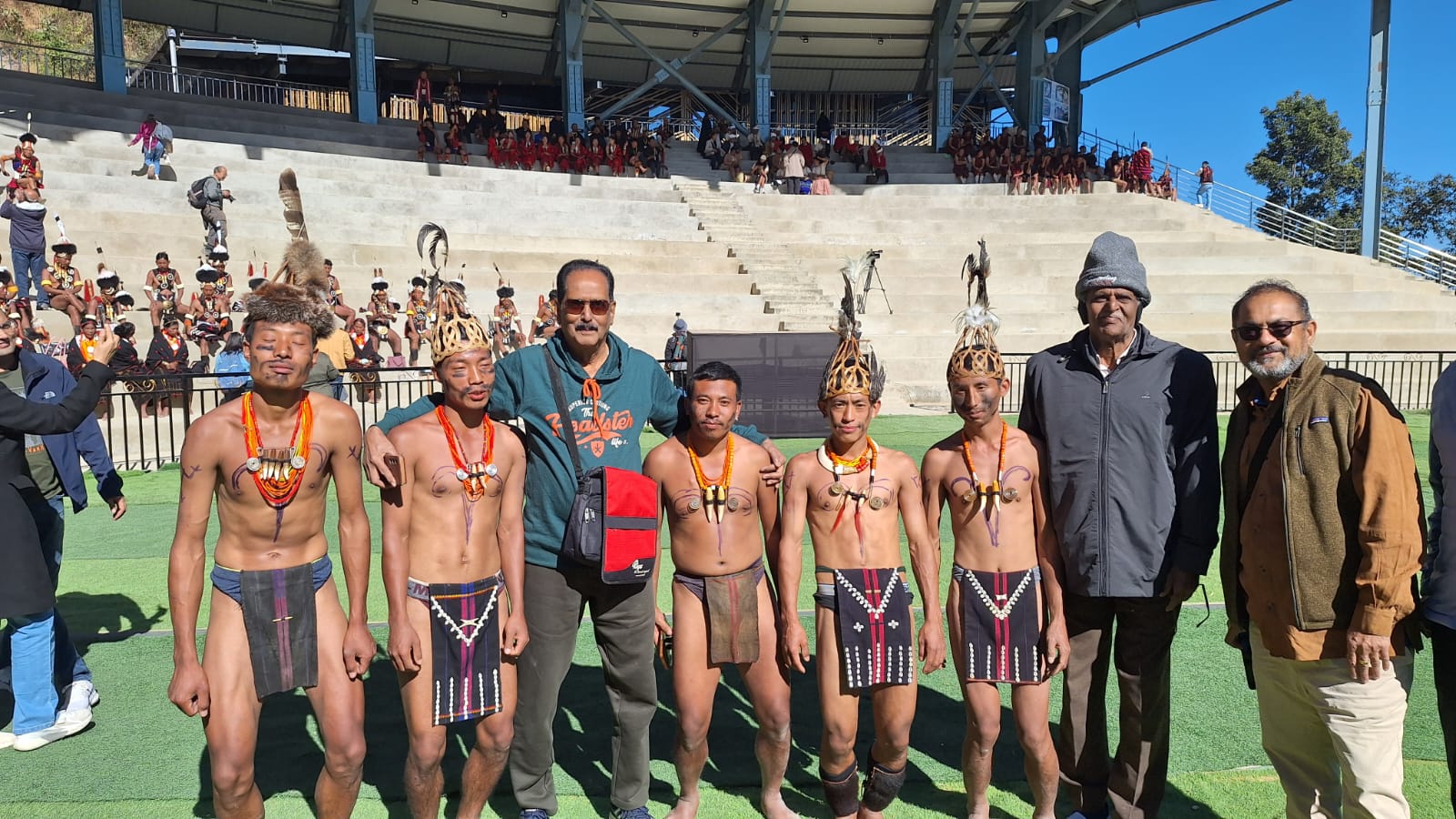
Before leaving the arena, a smaller group from the Kerala party gathered on the turf with five warriors in feathered crowns for the trip's other keepsake photograph. Travellers and warriors standing shoulder to shoulder, the empty stone tiers of Kisama rising behind them and the winter sun high overhead — a picture that will sit on a mantelpiece back in Kerala long after the trip is over.
Back to Guwahati
The next morning the group left Kohima and made the long drive back down through Dimapur to Guwahati, where the trip had begun. Seven days — one cultural evening, one safari, one set of stone ruins, one festival — and the group photograph inside the Kisama arena that will keep the whole journey alive long after everyone has flown home to Kerala.
Journey Timeline
7 days across Northeast India
- Day 1GuwahatiArrival in Assam — the gateway to Northeast India.
- Day 2Guwahati → KazirangaThe long eastward drive along the Brahmaputra to the edge of Kaziranga National Park.
- Day 3KazirangaMorning jeep safari through the grasslands; an evening cultural program of Bihu and Sattriya artists at the park.
- Day 4Kaziranga → DimapurEast into Nagaland; a stop at the Kachari Ruins on the way in.
- Day 5Dimapur → Khonoma → KohimaUp into the Angami hills — a morning at Khonoma village and its morungs, then on to Kohima.
- Day 6Kohima — Hornbill FestivalA full day at Kisama Heritage Village — the ceremonial entry gate, arena performances, morungs and warrior processions.
- Day 7Kohima → GuwahatiThe long drive back to Assam and departure from Northeast India.
Festival Experiences
What he saw at Kisama
- Jeep safari in the Kaziranga grasslands
- An evening cultural program at Kaziranga — Bihu and Sattriya artists
- The Kachari Ruins at Dimapur — carved sandstone domes of the old Dimasa kingdom
- A traditional Angami morung in Khonoma village
- The ceremonial entry gate inside the Hornbill Festival grounds at Kisama
- A full day at the Hornbill Festival — arena, morungs and processions
- Konyak elders in feathered headdresses on the stands at Kisama
- Portraits with Chakhesang warriors on the arena floor
Continue Reading
Related Hornbill Festival pages
Hornbill Festival 2026
The full guide to the 1–10 December 2026 festival at Kisama.
ReadKisama Heritage Village
The seventeen morungs, the arena and how to walk the grounds.
ReadKhonoma Village
Widely described as India's first green village — the Angami settlement near Kohima.
ReadHornbill Festival Guide
Permits, transport, costs and itineraries for planning your visit.
ReadHow to Reach Kohima
Flights to Dimapur or Guwahati and the drive up into the Angami hills.
ReadFestival Packages
Curated Hornbill Festival journeys with Living Roots.
ReadYour Journey
Plan Your Own Hornbill Festival Journey
Small groups, private guides, and stays with the families whose photographs appear on this page.