Traveller Stories
Mr. Gulder's Journey to the Hornbill Festival
Mr. Gulder and his wife spent nine days in Nagaland — four at the Hornbill Festival, a stay at Touphema Tourist Village, an afternoon in the Angami warrior village of Khonoma, and a night at the Kohima carnival. This is their journey, kept in their own photographs.
Mr. Gulder and his wife came to Nagaland for the Hornbill Festival, but stayed long enough to see the villages around it — Kigwema on the road to Kisama, Touphema Tourist Village north of Kohima, and Khonoma, the old Angami warrior village, on their last full day.
They arrived in Dimapur on the 29th of November and drove up to Kohima the same day. The next morning was quiet — the festival had not yet opened — and they used the day for local sightseeing. From the 1st of December they were at Kisama. The photographs on this page are their own, kept in the order the days unfolded.
Arrival — Dimapur to Kohima
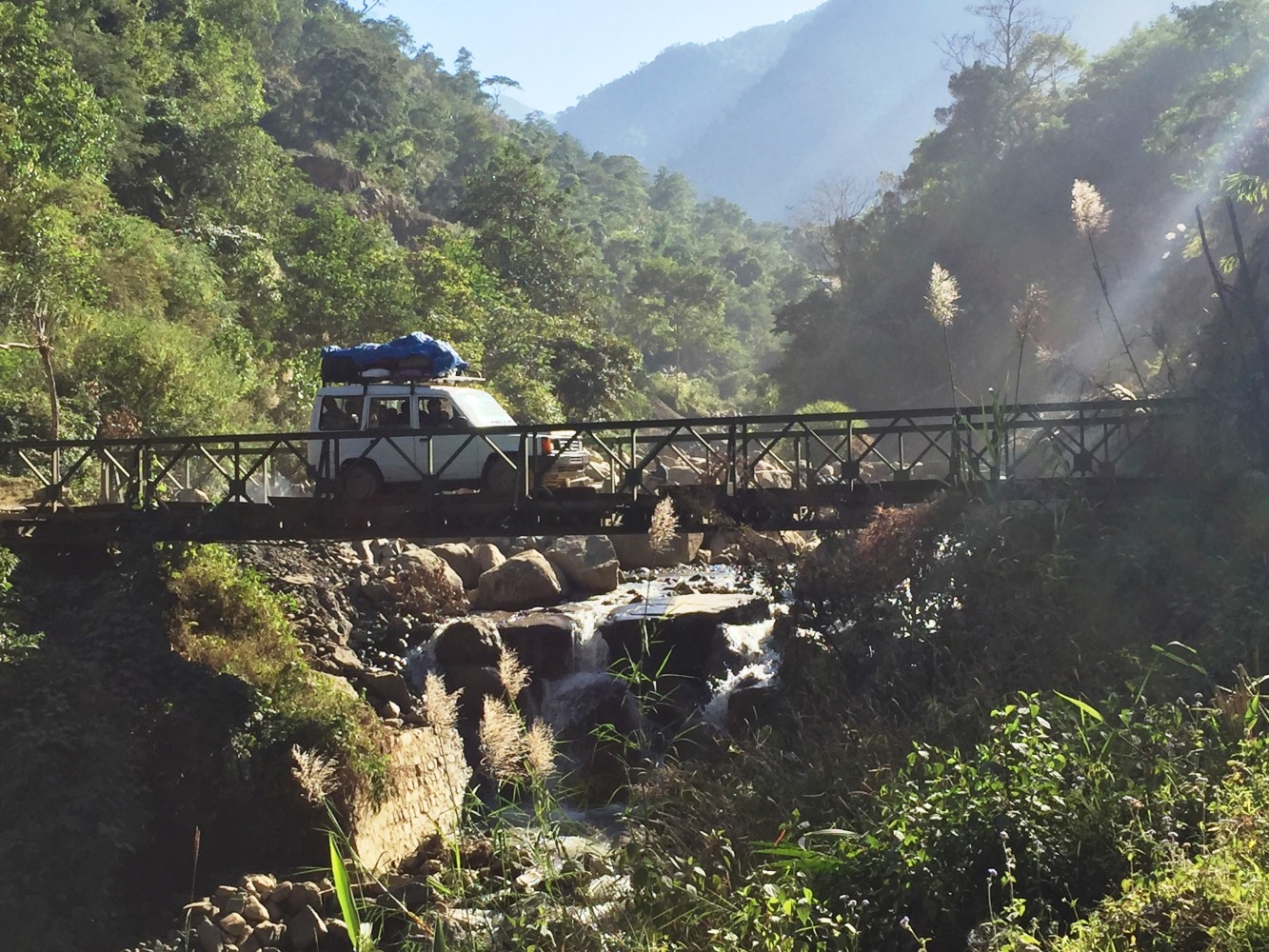
They flew into Dimapur on the 29th of November and were on the road up to Kohima within the hour. The road climbs steadily out of the Dimapur plains into the Angami hills — narrow, winding and, in places, cut through the mountain by hand. The car crossed a small bridge over a stream where a truck had stopped to cool its brakes, and by evening they were in Kohima.
A Quiet Day in Kohima
The 30th of November was the in-between day — the festival opened only the next morning. They used it for slow, local sightseeing around Kohima, the kind of day that in retrospect gives a trip its texture rather than its highlights. The guide walked them through the town at their own pace, without any hurry to get to Kisama.
Kisama — The First Day of Hornbill
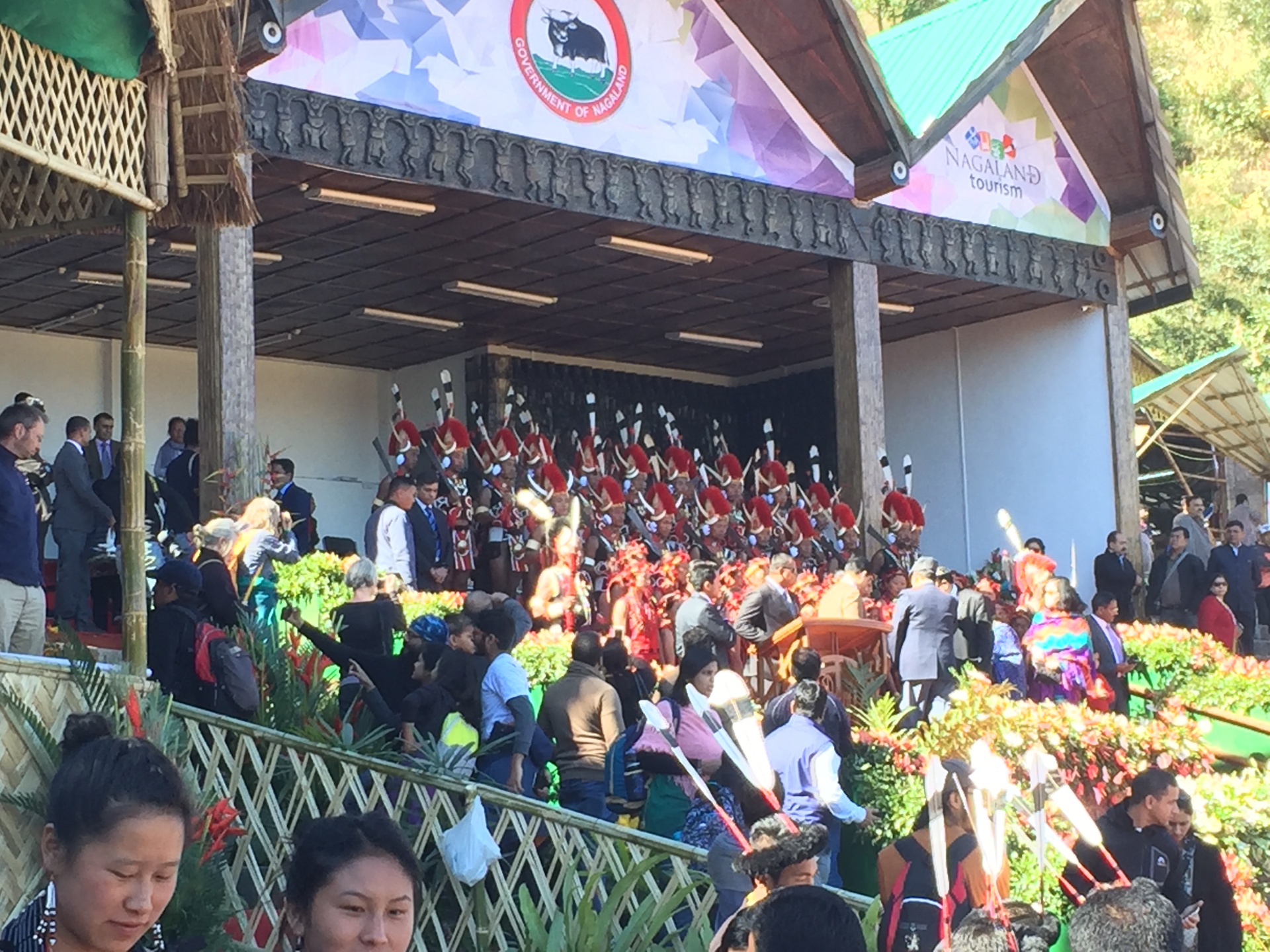
The Hornbill Festival opens formally on the 1st of December, and the opening morning at Kisama Heritage Village is one of the great sights of Northeast India. The main stage sits under a carved wooden canopy stamped with the seal of the Government of Nagaland and the Nagaland Tourism logo. Behind it, ranked in tight lines, stood the honour guard in red-fur headdresses and long white plumes. Below the stage, in flowers and heliconia, the delegates and the crowd filled the ground.
The Arena
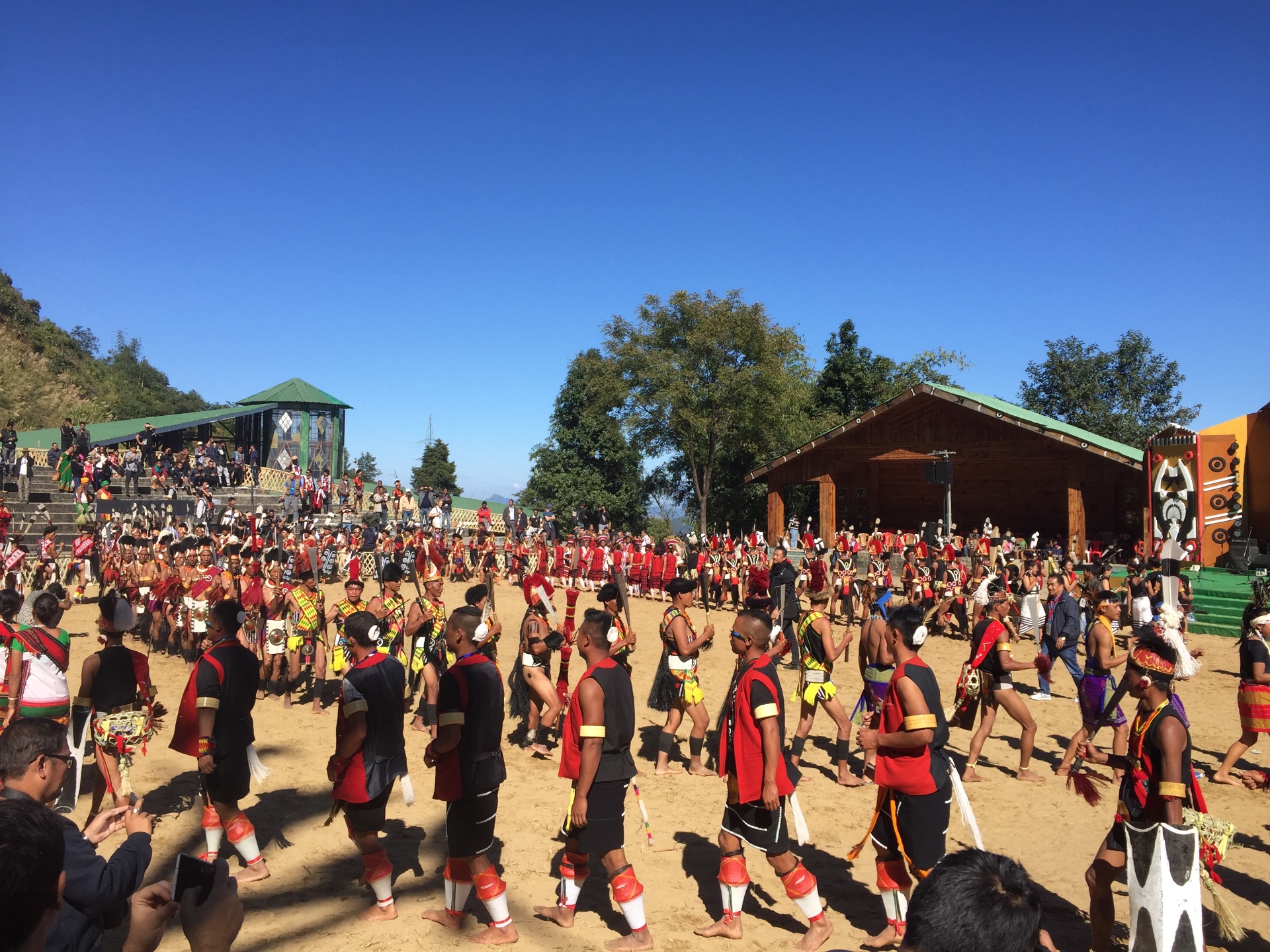
The arena programme is the loud, public heart of Hornbill. From the stands they watched line after line of warriors cross the sand ground in front of the main stage — Angami, Sumi, Ao, Chakhesang, Konyak — each tribe in its own headdress, shawl and weapon, moving in the slow unison that has given the festival its long reputation. Some carried spears with red-fur plumes at the tops of the shafts, others tall wooden shields. There were no ropes between the visitors and the performers.
The Morungs and the Warriors
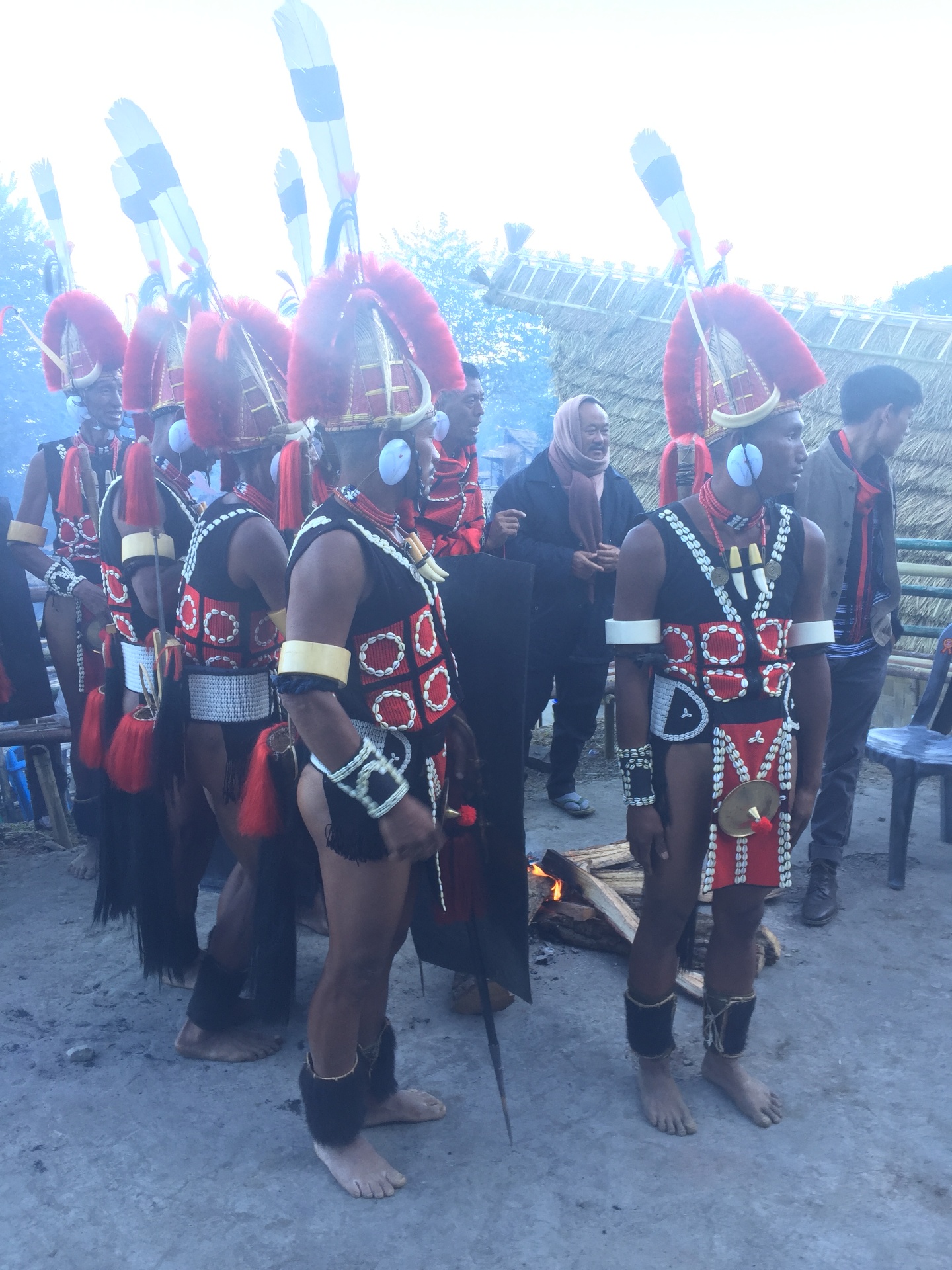
Behind the arena, each of the seventeen Naga tribes keeps its own morung — a wooden longhouse of thatch and carved posts that serves as living room, kitchen and stage. Outside one of them, in the smoky early-evening light, a small group of warriors stood in tall red-fur headdresses, cowrie-shell aprons and bone-white armbands, warming themselves at a low fire before their turn on the ground. Nothing about it felt staged. They were, plainly, waiting to perform — and, in between, warming their hands.
Kigwema — A Village on the Road
On the second festival day they turned off the road on the way back and spent an afternoon in Kigwema, the Angami village at the foot of the Kisama ridge. Kigwema is best known to Naga history as the village where the Japanese army first entered Nagaland in 1944, but on that afternoon it was simply an old Angami settlement of stone lanes, wooden houses and morungs, going about a normal Thursday.
Touphema — A Traditional Naga House
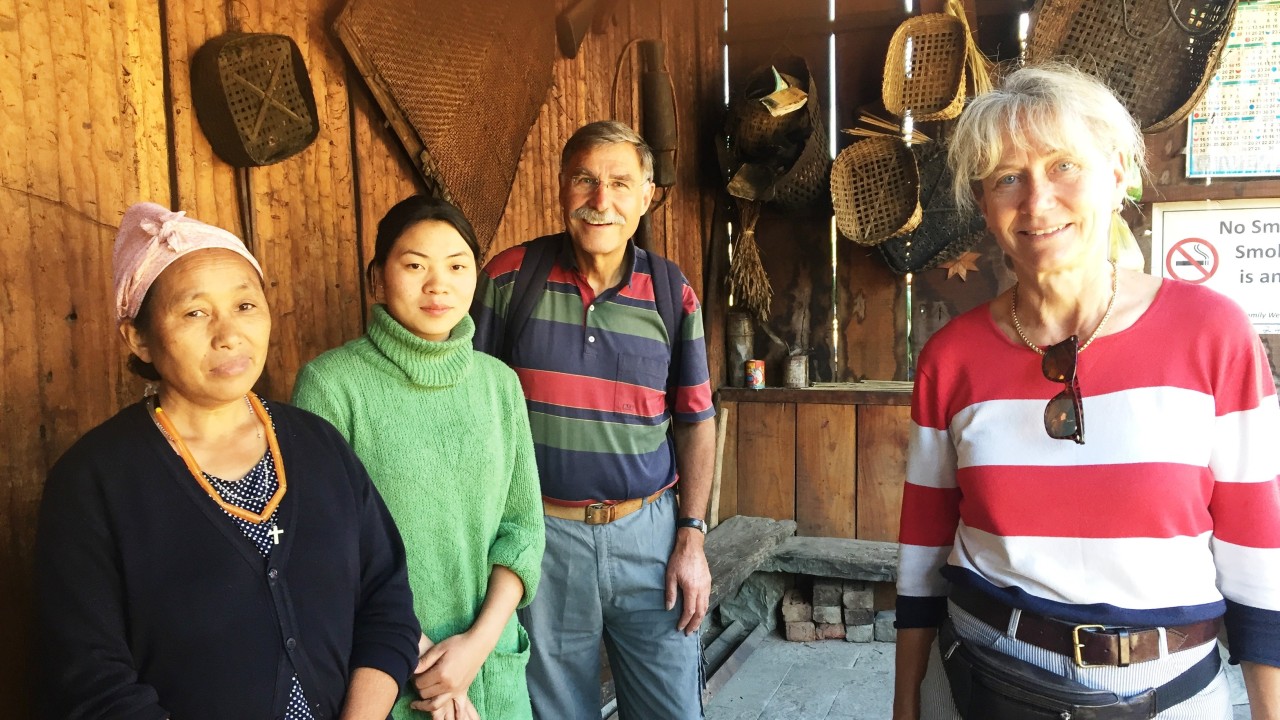
On the fifth day they drove north from Kohima to Touphema Tourist Village, a community-run cluster of traditional Angami huts on a ridge above the Touphema village proper. The huts are built the old way — timber, bamboo, thatched roof, a hearth in the middle of the floor. They spent two nights there. The strongest photograph of the whole trip is from inside one of these houses: Mr. Gulder and his wife standing with the two hostesses, baskets and winnowing trays hanging from the wooden wall behind, a small sign above the doorway asking the guests not to smoke. It is a family portrait more than a tourist photograph.
A Morung on the Ridge
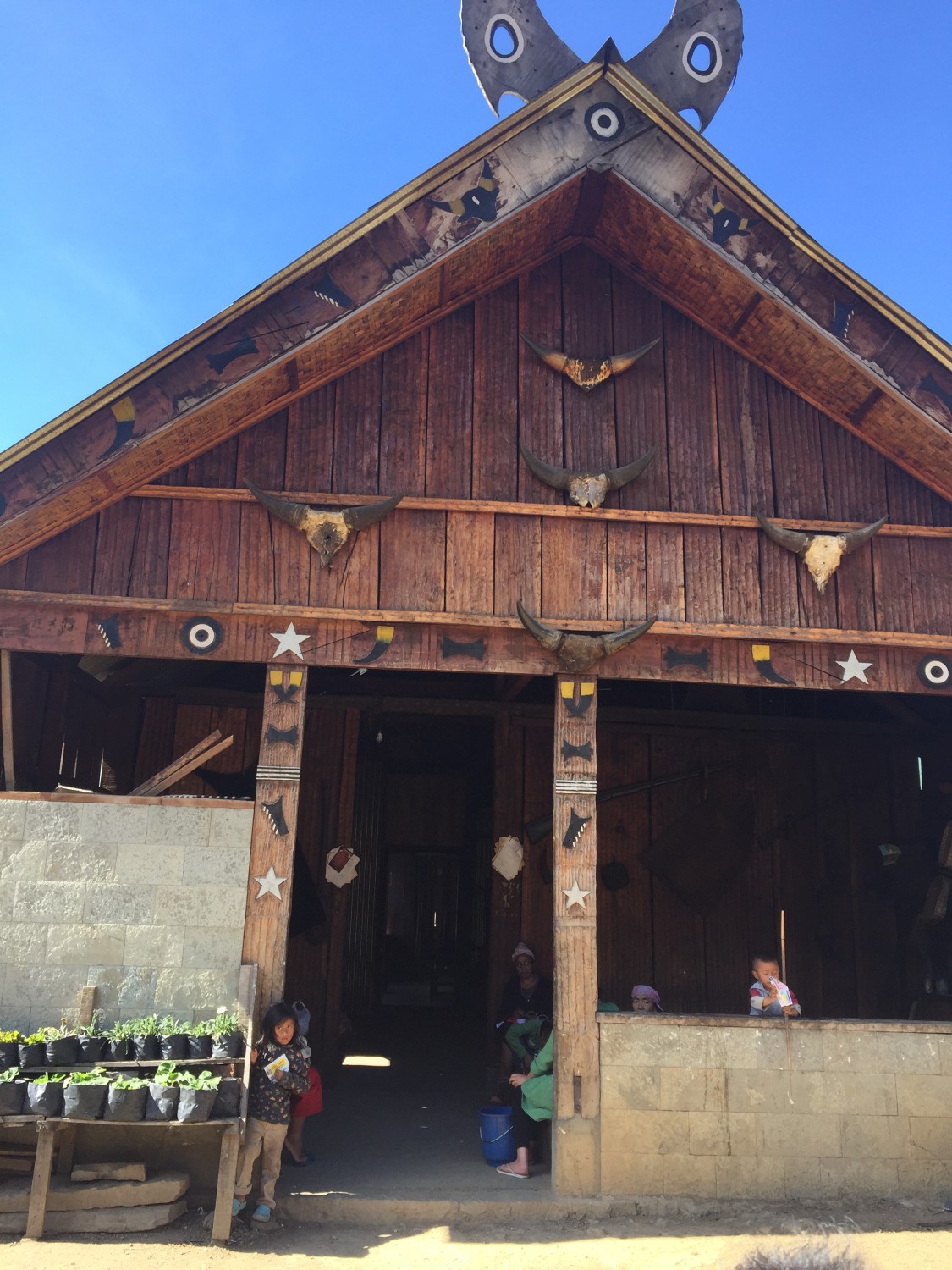
One morning at Touphema they walked over to one of the neighbouring morungs — a tall thatched hall with mithun horns and painted stars along the gable, and a great crown of carved wooden hornbill horns at the peak of the roof. Two small children came to the door to see them. Nobody asked them in; nobody asked them to leave. The whole village functioned as it does on any other quiet day.
The Night Carnival
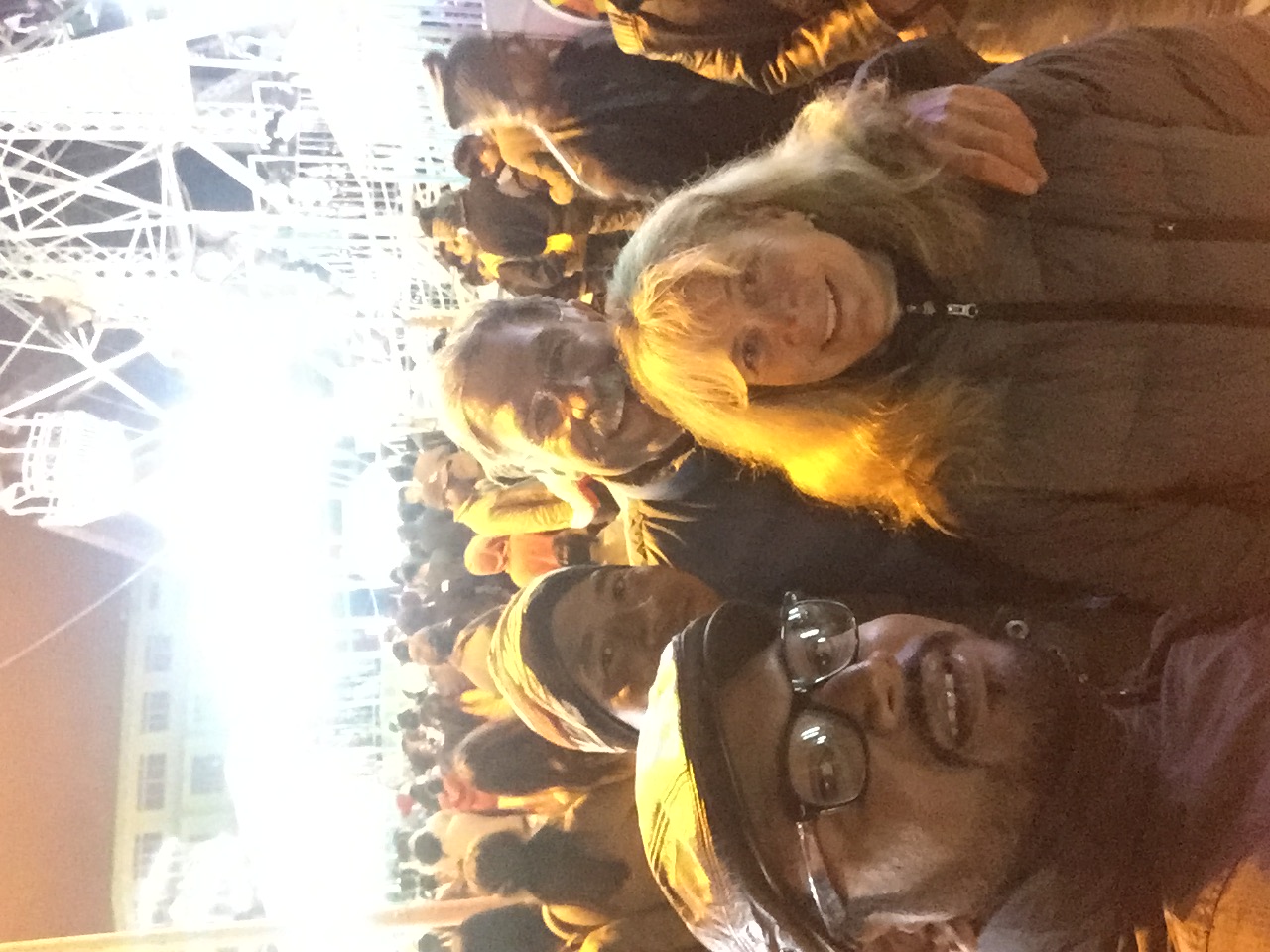
On the evening of their return to Kohima they walked down to the Hornbill Night Carnival on the high street — the big electric ferris wheel, food stalls, mask sellers, live music and thousands of people out on the road. It is the loudest, most cheerful evening of the whole festival week, and it has almost nothing to do with the arena at Kisama. One of the photographs from that night is a selfie of Mr. and Mrs. Gulder with the local guide, taken under the lights of the Ferris wheel.
Masks on the High Street
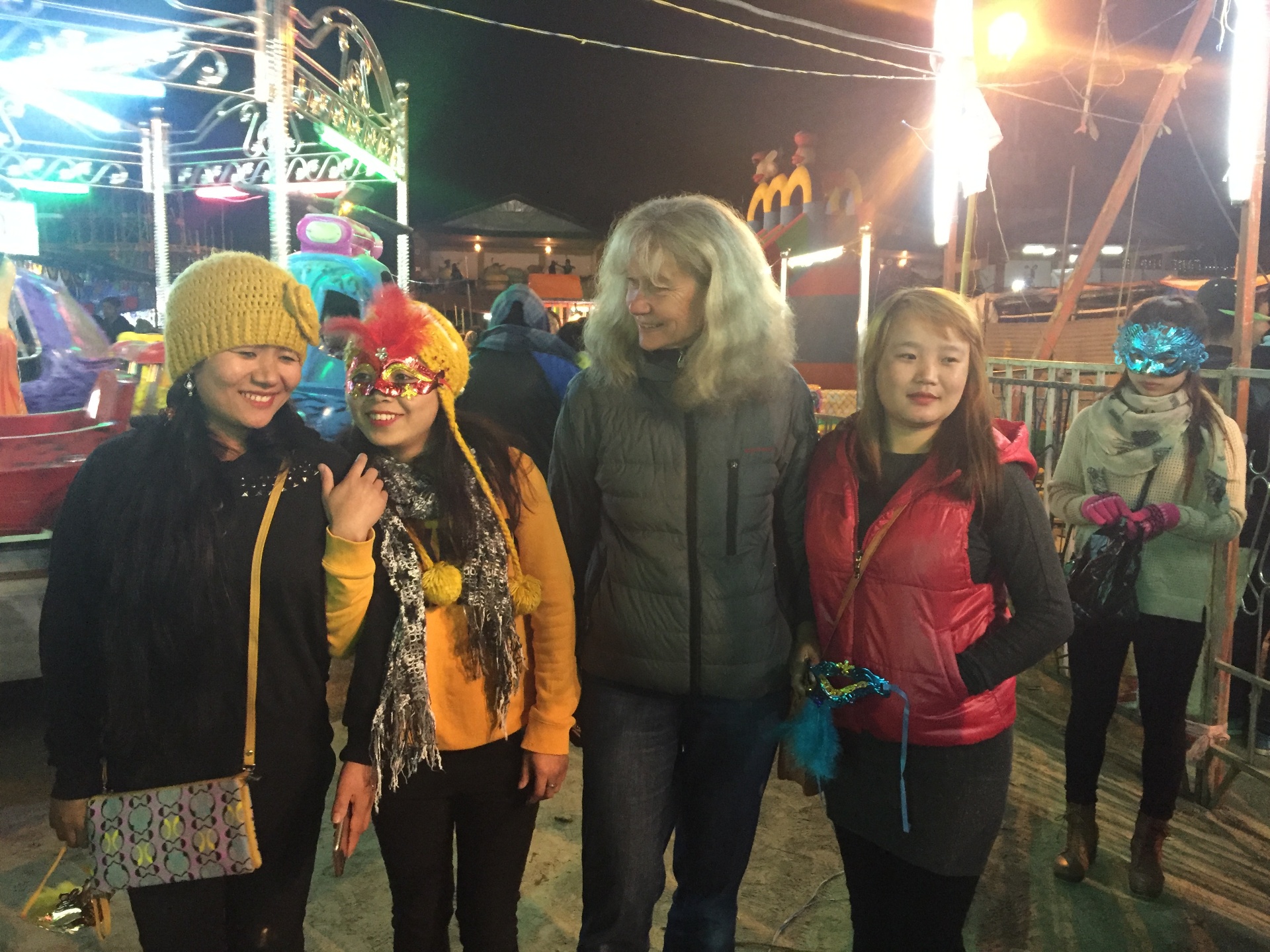
Further down the same street, the carnival crowd thickens. Small stalls sell sequinned Venetian-style masks; teenage girls buy them and put them on straight away. Mrs. Gulder stopped for a photograph with three young women from Kohima at the edge of the road, one of them still wearing her red-and-gold mask. It was that kind of evening — friendly, unhurried, and completely local.
Khonoma — The Last Full Day
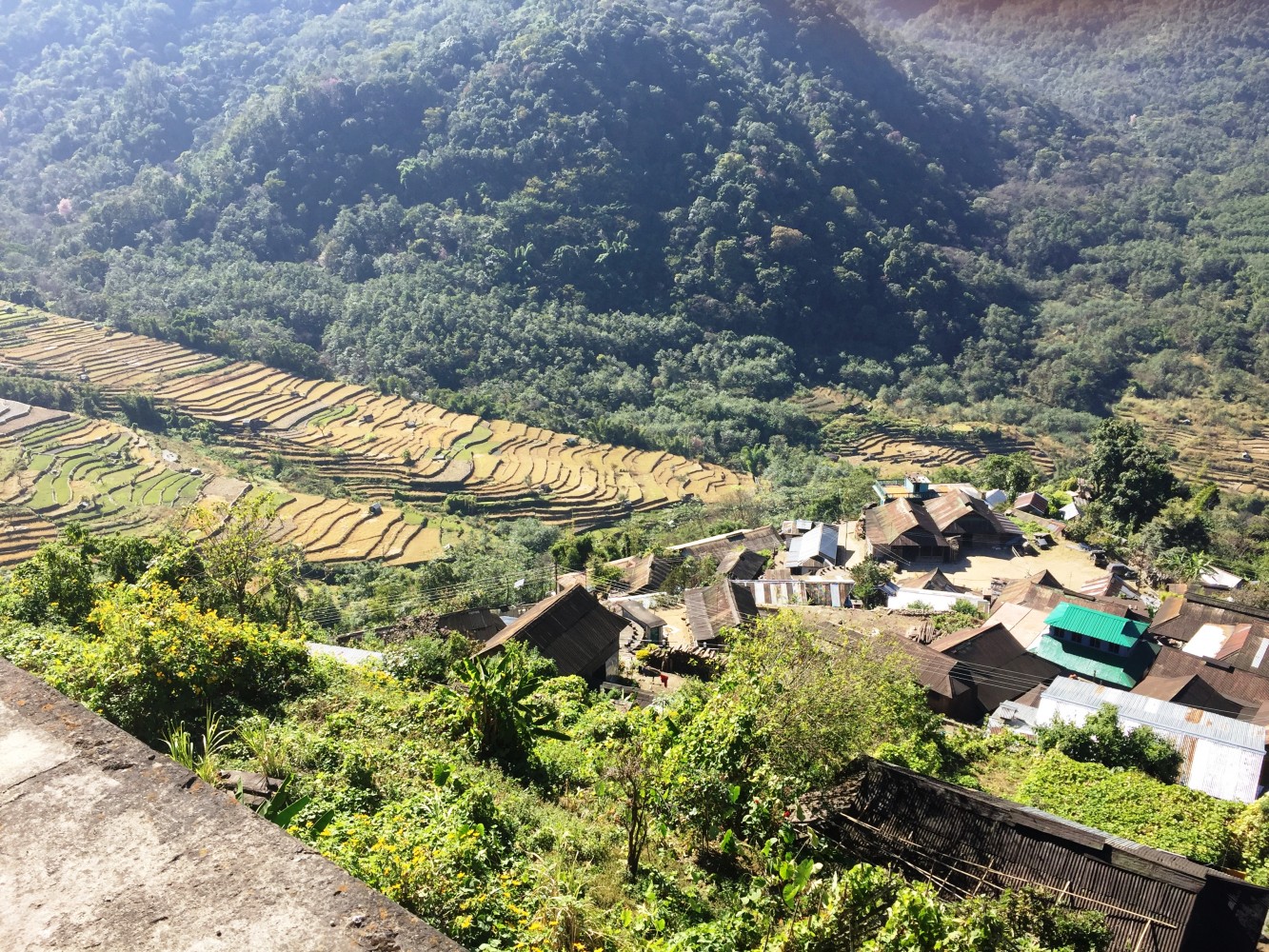
The last full day was set aside for Khonoma, the old Angami warrior village about twenty kilometres west of Kohima. Khonoma is now known as India's first green village, a community-managed conservation area where hunting has been given up and the forest is coming back. From the top of the village, the view opens onto rice terraces stepping down the hillside in long yellow-green curves, and the roofs of the settlement gathered along the ridge.
The Old Fort
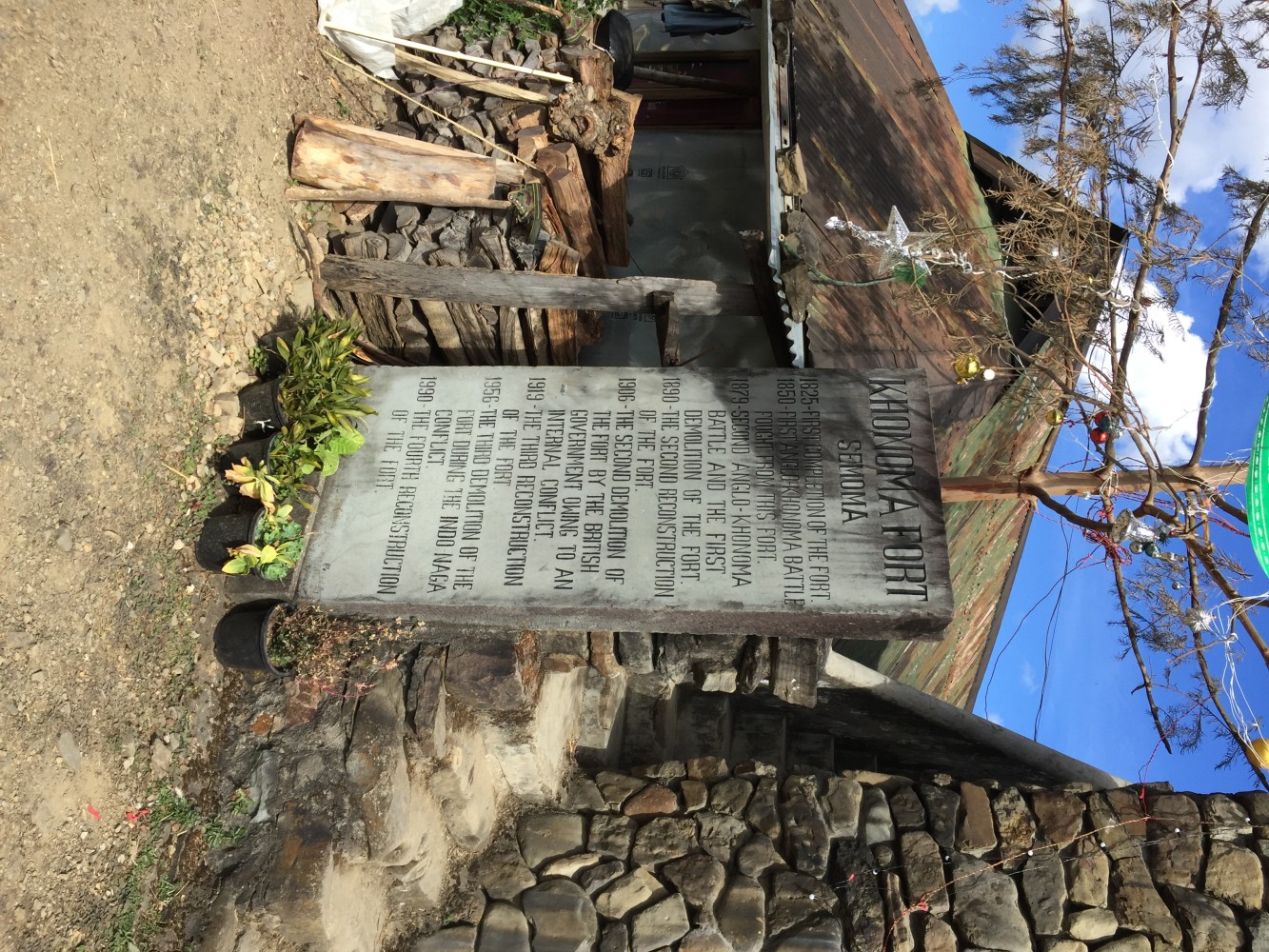
In the middle of the village they stopped in front of the memorial stone of the Khonoma Fort — Semoma. The inscription reads like a short history of the Naga hills: 1825, the first completion of the fort; 1850, the first Anglo-Khonoma battle; 1879, the second Anglo-Khonoma battle; 1916, the second reconstruction; 1919, the third; and 1956, the third demolition — during the Indo-Naga conflict — before the fourth reconstruction in 1990. Khonoma has been rebuilt, in one form or another, four times.
Descent to Dimapur
In the afternoon they left Khonoma, drove back through Kohima and down the long descending road to Dimapur. They flew out the next morning. Nine days in Nagaland, and one festival at Kisama that had, in the end, held the whole trip together — with Khonoma, Kigwema and Touphema as the villages that gave the festival its context.
Journey Timeline
9 days across Northeast India
- Day 1Dimapur → KohimaArrival in Nagaland and the drive up into the Angami hills; first evening in Kohima.
- Day 2Kohima — local sightseeingA quiet 30th of November before the festival opens; time in the town and around Kohima.
- Day 3Hornbill Festival, Kisama Heritage VillageOpening day at Kisama — the seventeen morungs, the arena, and the first massed dances.
- Day 4Hornbill Festival + Kigwema VillageA second day at Kisama, and an afternoon in Kigwema — the Angami village on the road just below the festival grounds.
- Day 5Kohima → Touphema Tourist VillageDrive north to Touphema — the community-run heritage village of traditional Angami huts.
- Day 6Touphema and the surrounding villagesA full day at Touphema — traditional Naga houses, morungs, and the villages around the ridge.
- Day 7Return to Kohima — sightseeing & Night CarnivalBack to Kohima; evening at the Hornbill Night Carnival on the high street.
- Day 8Khonoma → DimapurFull-day excursion to Khonoma, the Angami green warrior village, then the descent to Dimapur.
- Day 9Departure — DimapurFlight out of Nagaland after nine days.
Festival Experiences
What he saw at Kisama
- Four days at the Hornbill Festival at Kisama
- Kigwema village on the road below Kisama
- A stay at Touphema Tourist Village — traditional Naga huts
- Inside traditional Naga houses and tribal morungs
- Khonoma — the old Angami warrior and conservation village
- The Hornbill Night Carnival on Kohima's high street
- Long conversations with the local guide throughout the trip
Continue Reading
Related Hornbill Festival pages
Hornbill Festival 2026
The full guide to the 1–10 December 2026 festival at Kisama.
ReadKisama Heritage Village
The seventeen morungs, the arena and how to walk the grounds.
ReadAngami Tribe
The Angami people of Kohima, Khonoma and Kigwema.
ReadHow to Reach Kohima
Flights to Dimapur and the drive up into the Angami hills.
ReadFestival Packages
Curated Hornbill Festival journeys with Living Roots.
ReadTravel Guide
Permits, costs, itineraries and practical planning for Nagaland.
ReadYour Journey
Plan Your Own Hornbill Festival Journey
Small groups, private guides, and stays with the families whose photographs appear on this page.