Traveller Stories · France
Robert & Odile's Journey to the Hornbill Festival
Robert and Odile travelled from France on a nineteen-day journey across Northeast India — through the mountains of Arunachal Pradesh, the river country of Assam, and finally into Nagaland, where the Hornbill Festival at Kisama became the defining chapter of the trip. Guide Pradeep introduced them to the tribes; driver Basumutary carried them safely along the long, quiet roads.
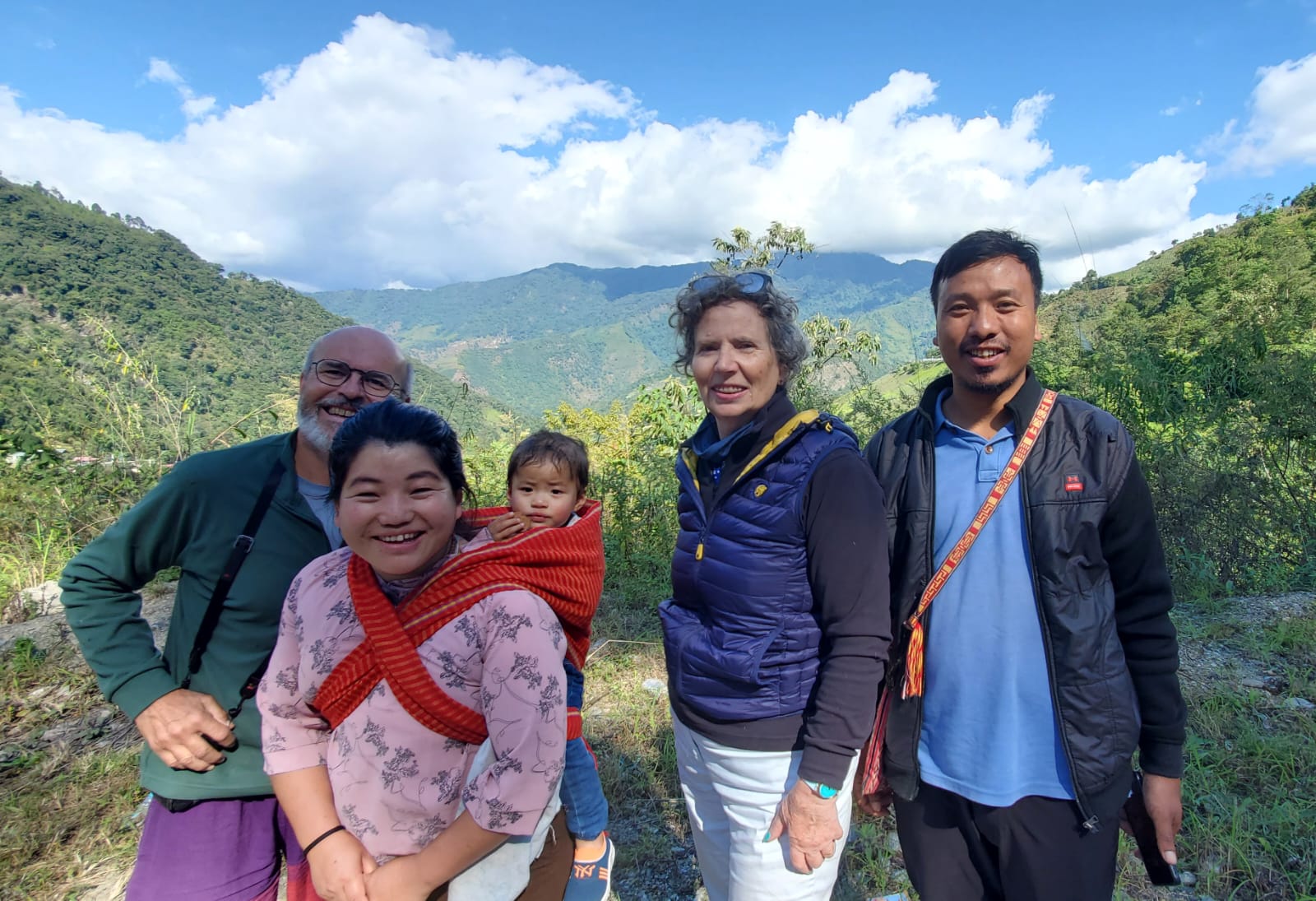
Robert and Odile travelled from France to see Northeast India slowly, on the ground. Nineteen days, three states, and one destination that had shaped the whole itinerary: the Hornbill Festival at Kisama, above Kohima, in the first week of December.
The first sixteen days were the long approach — the Buddhist monasteries and border valleys of Arunachal Pradesh, the Apatani villages of Ziro, the satras and mask-makers of Majuli, and the one-horned rhinos of Kaziranga. Everywhere, guide Pradeep explained the traditions of the people they met, and driver Basumutary — quiet, steady, unhurried — moved them safely along the mountain roads.
The last three days were Nagaland. This story is theirs, kept in photographs — with the Hornbill Festival, as it was for them, at the centre.
The Long Road North
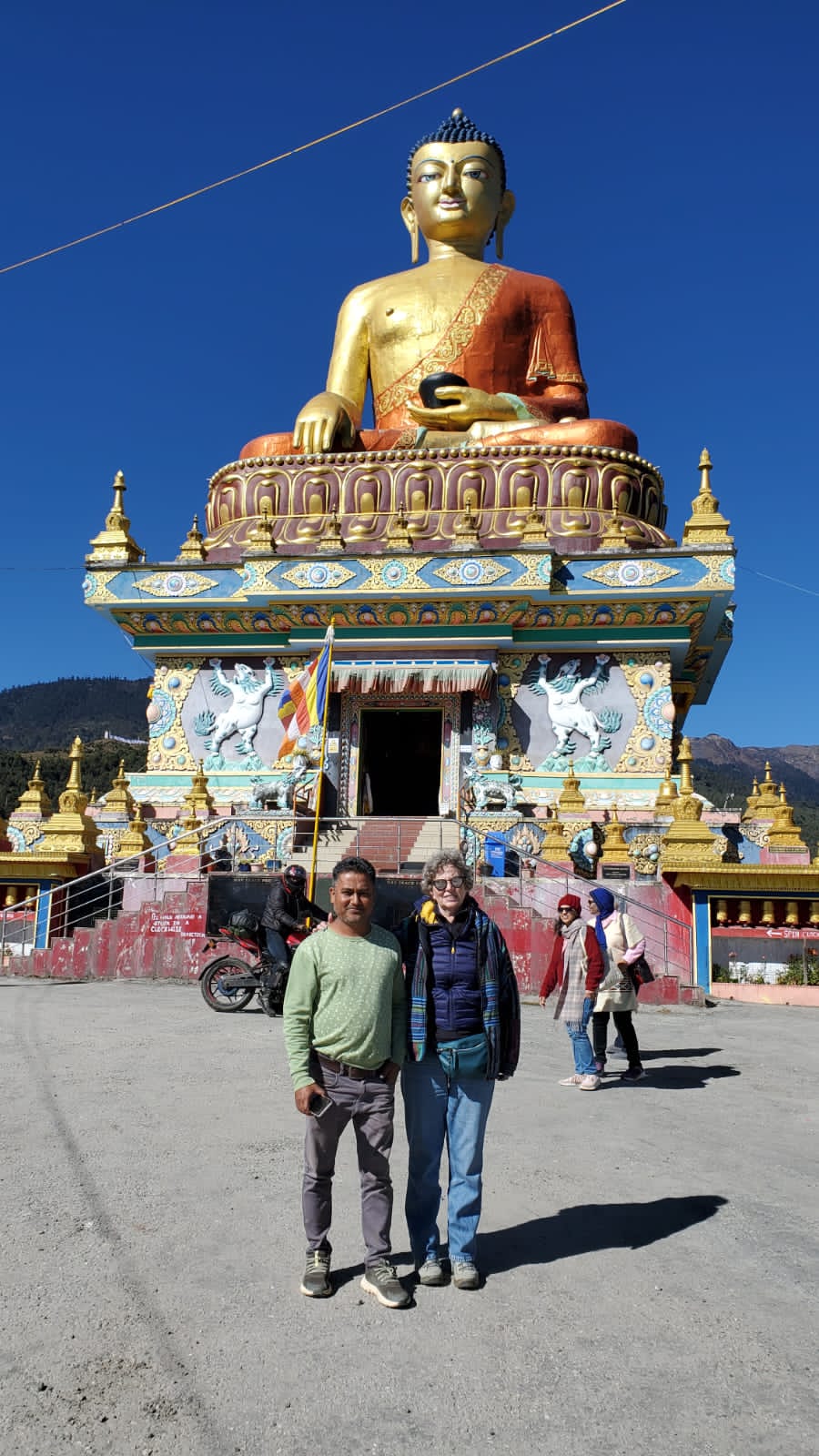
The first four days were spent climbing into Arunachal Pradesh — Guwahati to Shergaon to Dirang, and then over the Sela Pass at 4,170 metres into Tawang. Basumutary drove the switchbacks slowly, in the way an experienced mountain driver does; there was no hurry. Robert and Odile stood in the great courtyard of Tawang Monastery, and in front of the giant gilded Buddha above the town, in the thin cold air of the Bhutan border.
Zemithang and the Apatani Valley
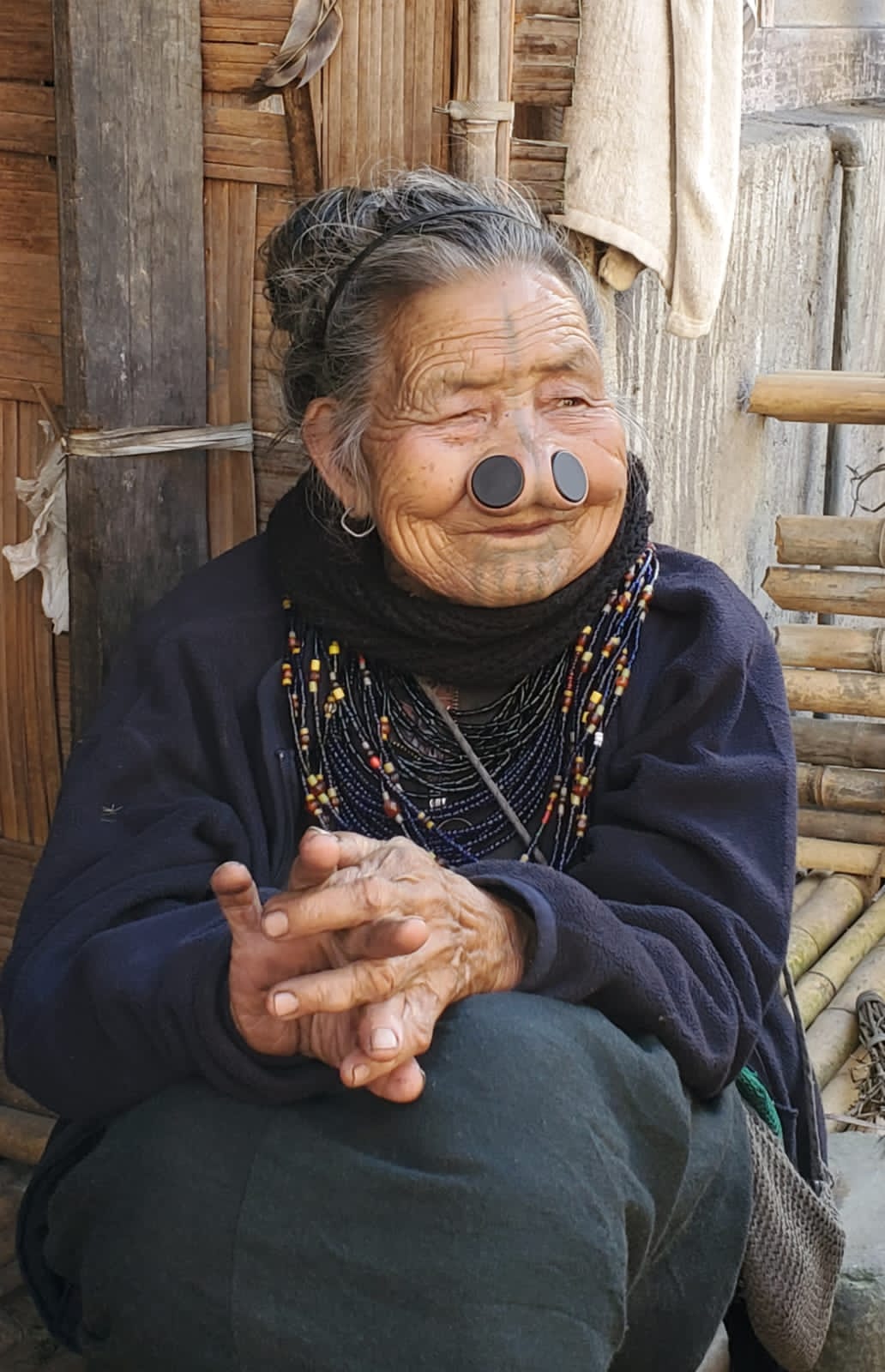
From Tawang they made the day excursion to Zemithang, a quiet valley of Monpa villages, prayer flags and the Nyamjang Chu. Then south again — Bomdila, Itanagar, and down into Ziro, the Apatani homeland. Pradeep took them through the villages of Hong and Hija, past the paddy-fish fields, and introduced them to the elders — the last generation of Apatani women with the ceremonial nose plugs and long facial tattoos.
Across the Brahmaputra
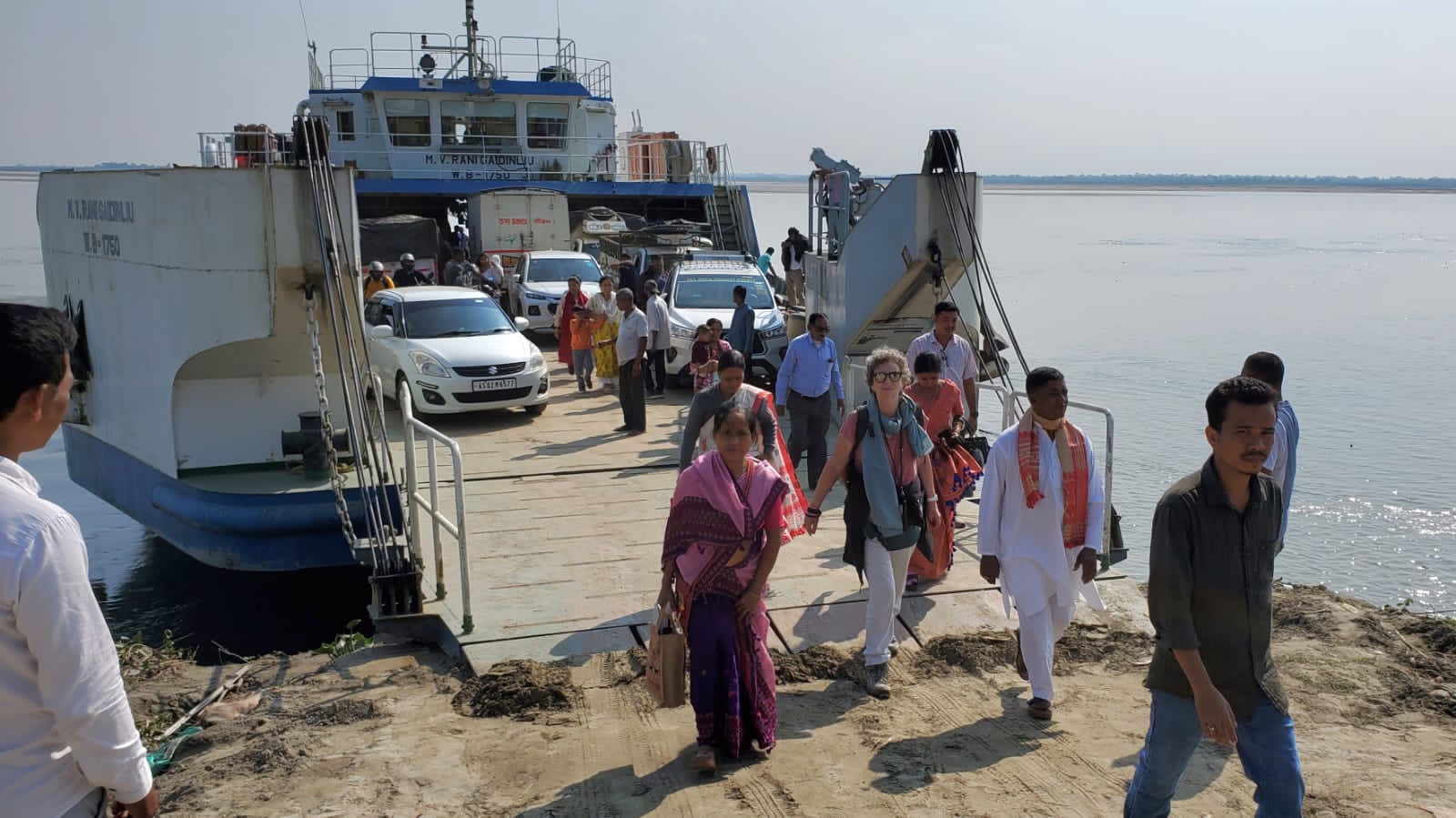
On the eleventh day they crossed the Brahmaputra by ferry to Majuli, the world's largest inhabited river island. The car went with them on the deck. They spent two days among the satras — the Vaishnavite monasteries where monks still dance in painted masks — and watched Samaguri's mask-makers stretch bamboo and clay over the wooden armatures of Hindu deities.
A Meal on Majuli
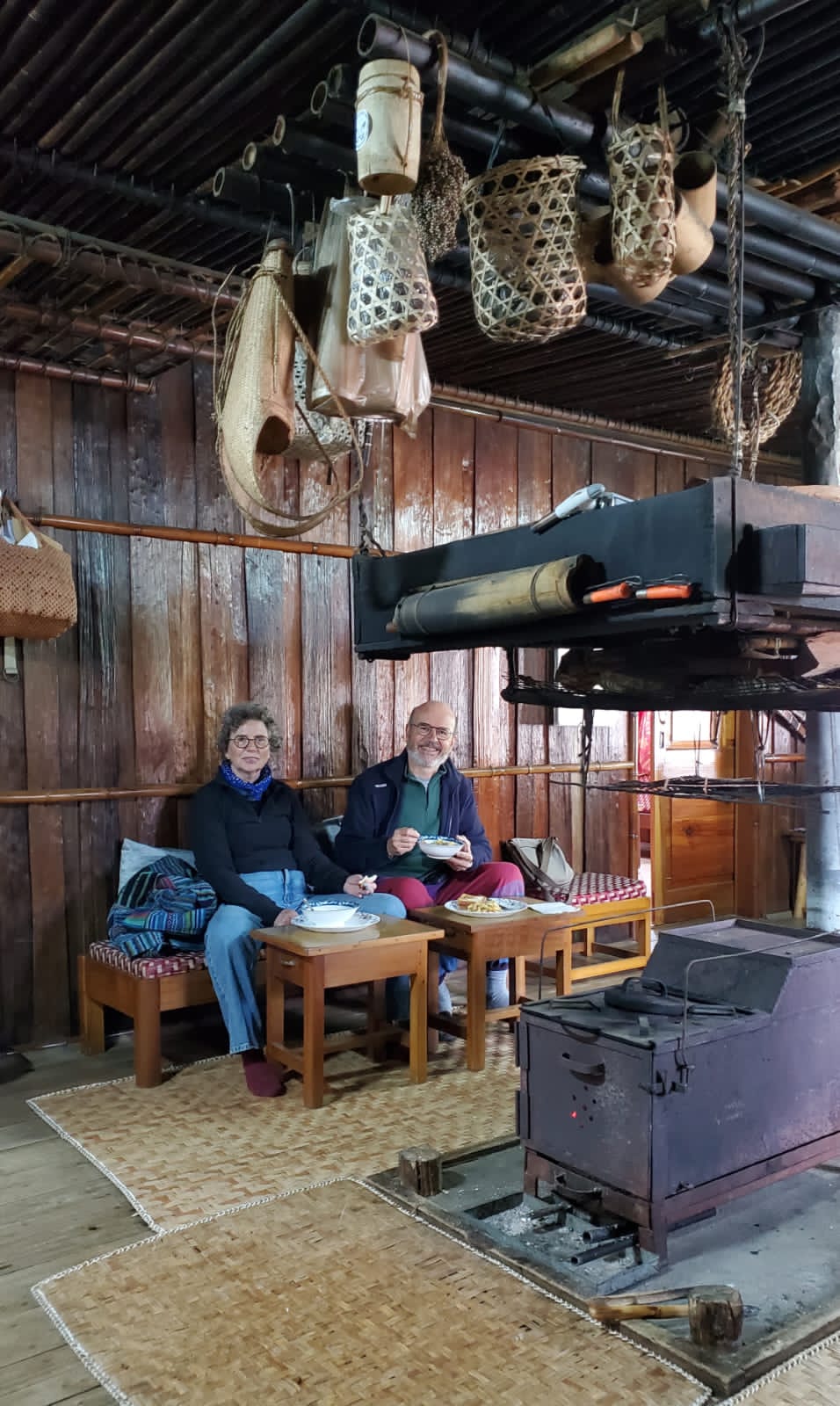
One afternoon on Majuli they sat down to a slow lunch in the smoke-blackened kitchen of a Mising home — rice, fish curry, bamboo shoot, tea. Overhead, baskets and gourd containers hung from the bamboo rafters; the hearth burned in the middle of the floor. Pradeep translated the introductions. It was the kind of quiet, uneventful hour that later becomes the strongest memory of a journey.
Kaziranga
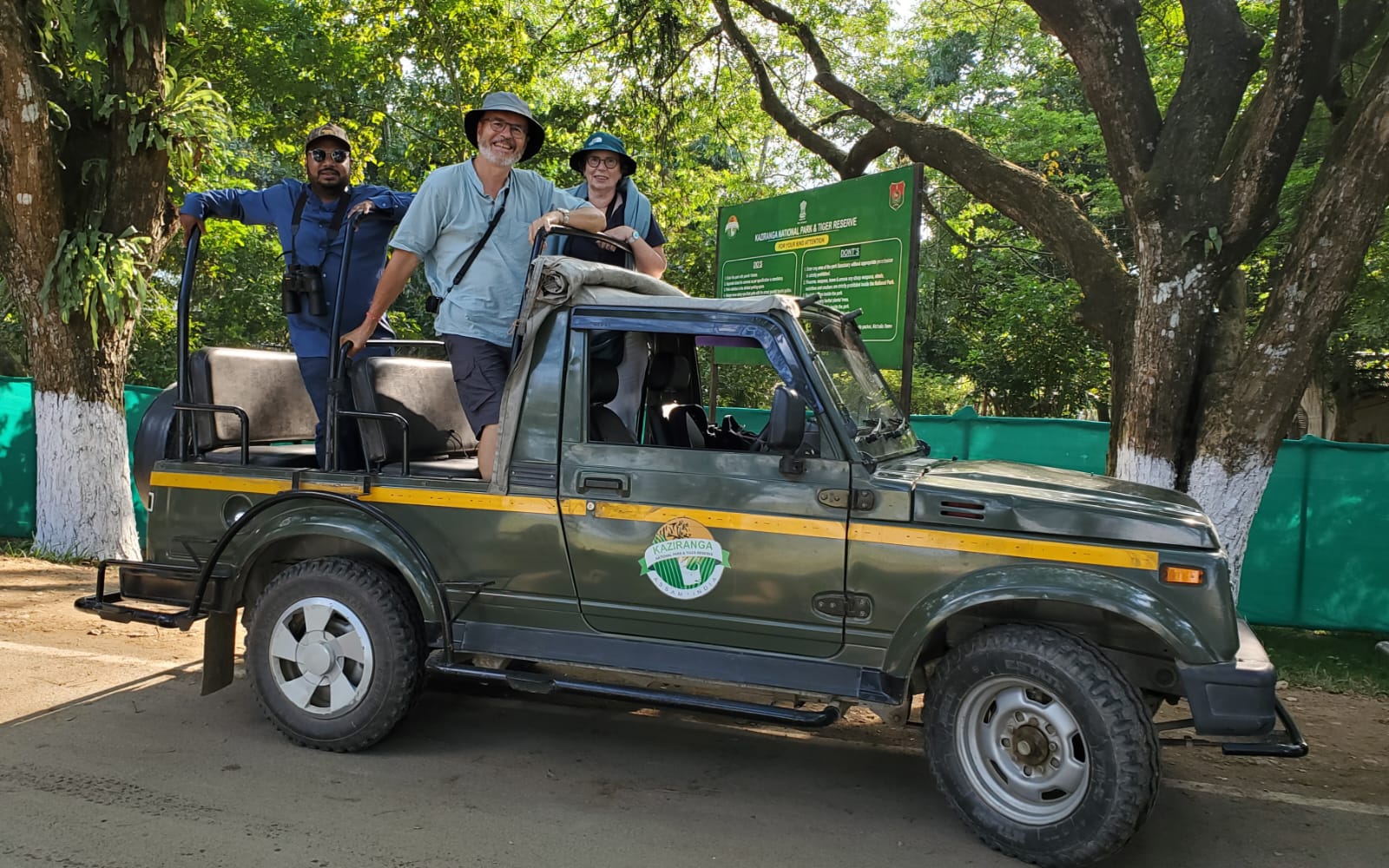
The Brahmaputra floodplain came next — three days at Kaziranga, in the elephant grass and shallow beels. They took two safaris in the open jeep at the park gate: one-horned rhinos in the mist at dawn, herds of wild elephant on the far bank, water buffalo, hog deer, and once — briefly, at distance — the outline of a tigress moving through the grass.
Arrival in Kohima
On the sixteenth day they turned south-east and drove up into Nagaland. The road climbs steadily out of the Assam plains into the Angami hills, and Kohima appears on a series of ridges. Robert and Odile arrived in the late afternoon, in the cold, dry light of a Nagaland December. This was what the sixteen days had been leading to. The Hornbill Festival would begin the next morning.
Inside the Morungs at Kisama
The festival is held at Kisama Heritage Village, a purpose-built ground about ten kilometres south of Kohima. Each of the seventeen Naga tribes keeps its own morung there — a longhouse of thatch, timber and carved posts that serves as a living room, a kitchen and a stage. Robert and Odile moved between them slowly. Pradeep introduced them at the Konyak morung, and at the Ao and Chakhesang morungs, and translated where the older hosts spoke only in Nagamese or their own tongues. Smoked pork hung from the rafters; rice beer was offered in bamboo cups.
The Arena
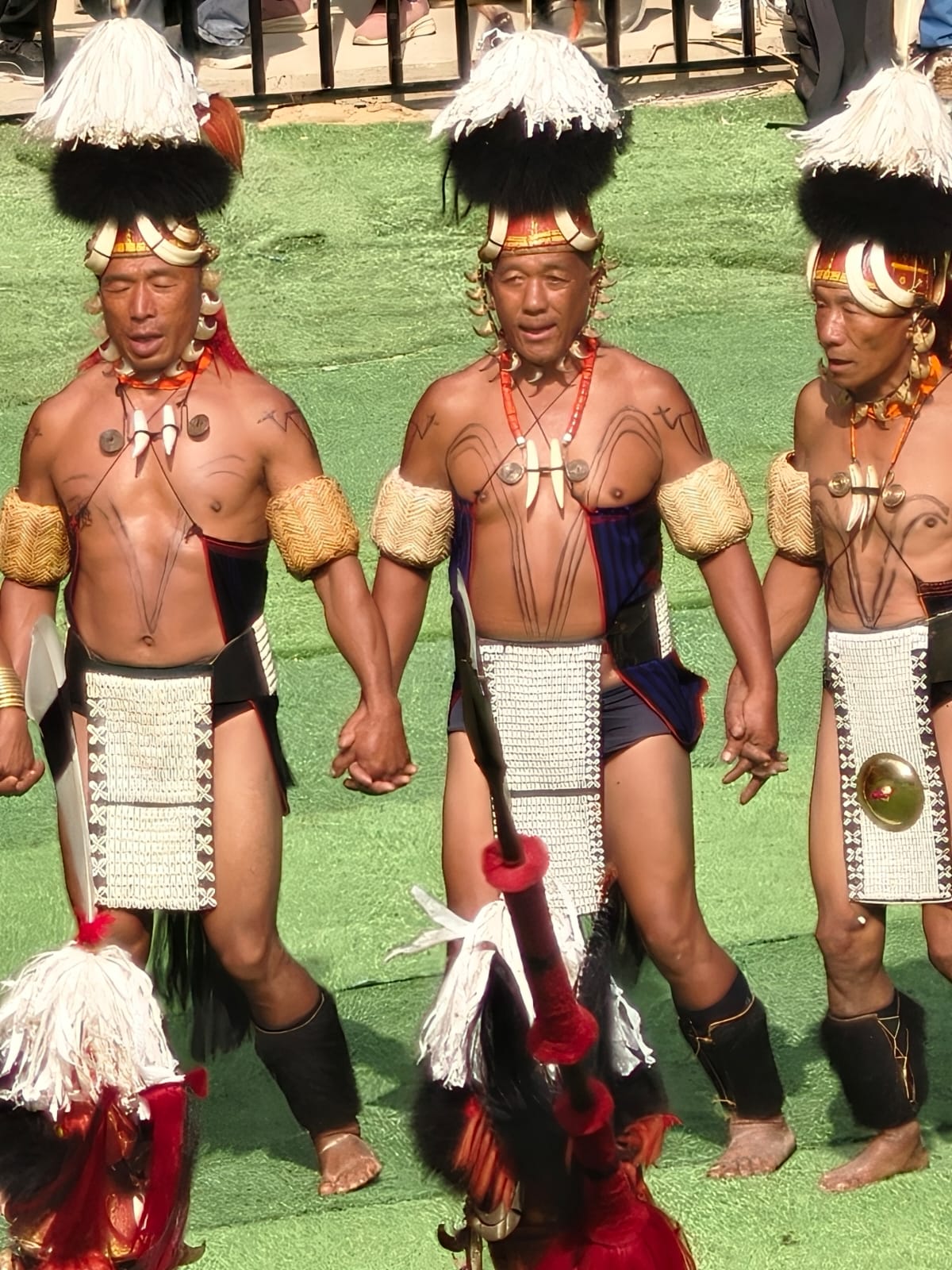
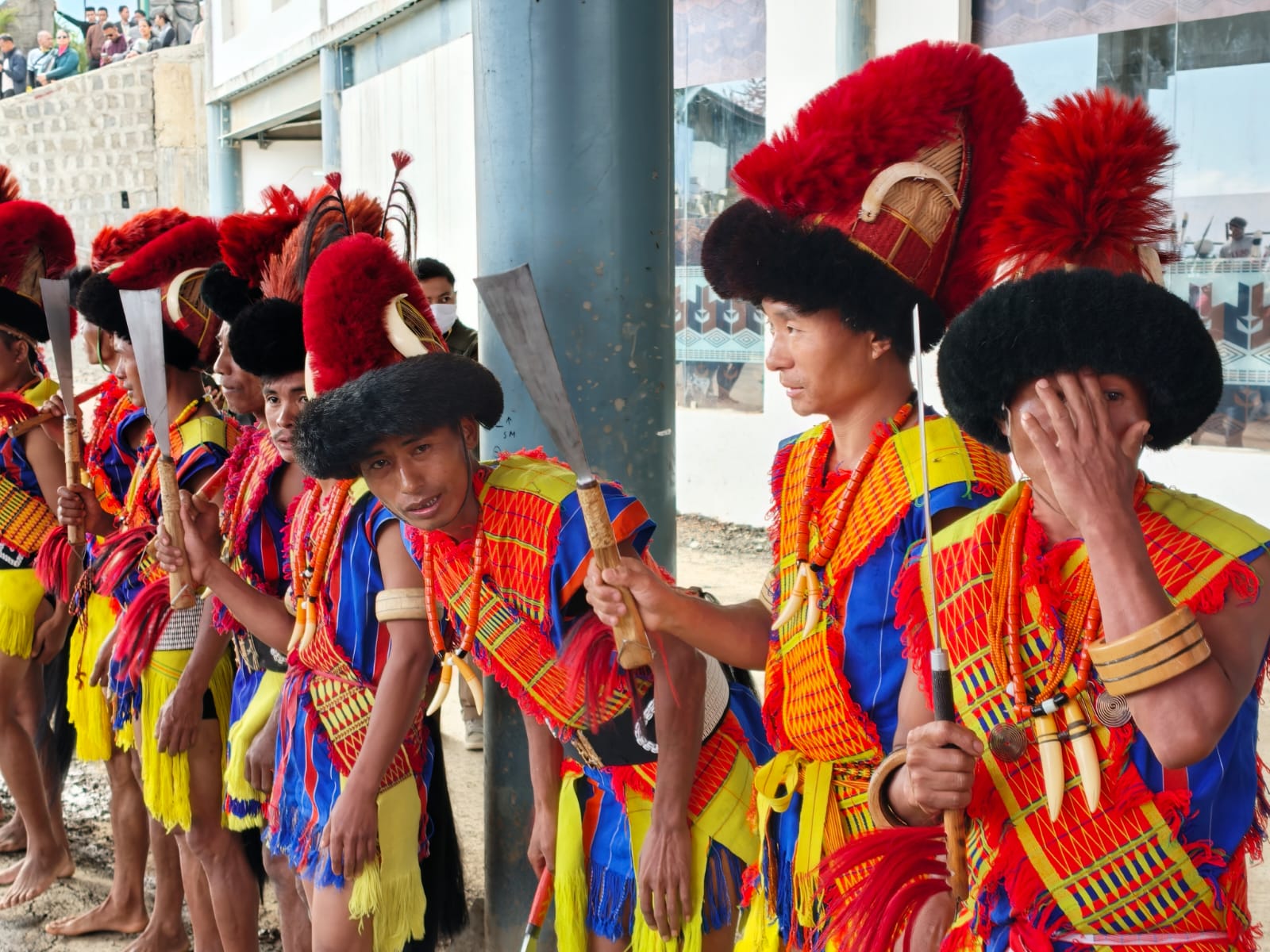
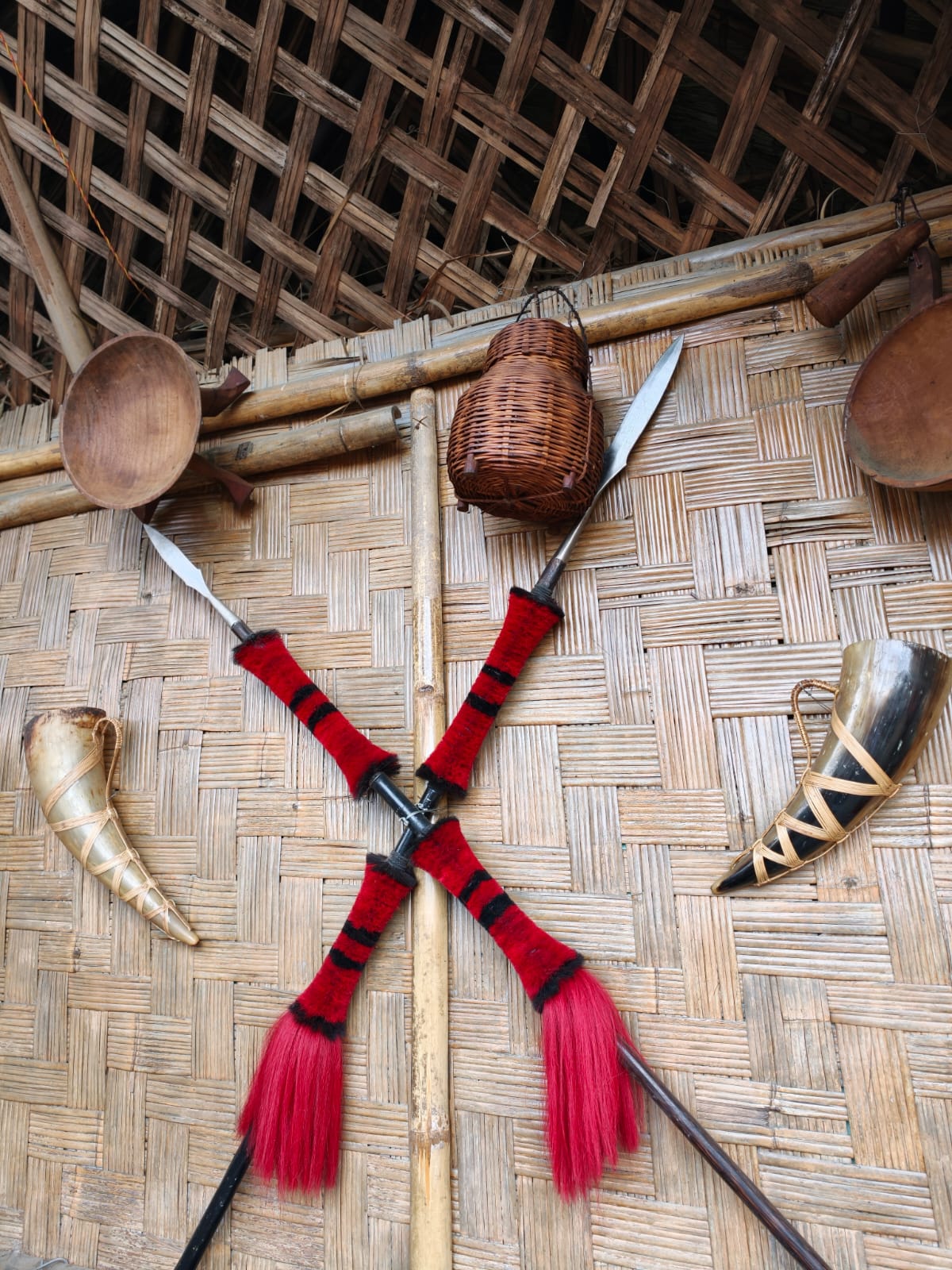
The arena programme is the loud, public face of Hornbill — the massed dances, the log-drum calls, the warrior processions in red-fur headdresses and mithun horns. Robert photographed from the arena rim; Odile watched, mostly, from the shade of a morung doorway. Nothing about it felt staged for a visitor. It was, plainly, the tribes doing what they have done for a long time — only now, once a year, with a stand of chairs on one side.
The Food and the Craft Bazaar
Between arena sets they ate the way the hosts ate — smoked pork with bamboo shoot, sticky rice, boiled greens, fermented soybean, hot bhut jolokia chutney used sparingly. In the craft bazaar behind the morungs, weavers worked at back-strap looms; there were naga shawls, beadwork, dao knives in carved sheaths, and coffee grown in the eastern districts. Odile bought a red-and-black Chakhesang shawl.
Khonoma, and Away
On their last morning in Nagaland, Basumutary drove them out to Khonoma, the old Angami warrior village about twenty kilometres west of Kohima — stone-paved lanes, terraced rice fields stepping down the hillside, and the tall wooden gates carved with mithun heads. In the afternoon they descended to Dimapur and flew out the next day. Nineteen days across Northeast India, and one festival at Kisama that had, in the end, held the whole journey together.
Journey Timeline
19 days across Northeast India
- Day 1Arrival in GuwahatiLanding in Assam — the gateway to Northeast India and the start of the drive north into Arunachal Pradesh.
- Day 2Guwahati → ShergaonLong climb into the West Kameng hills; first cold night in the Arunachal mountains.
- Day 3Shergaon → DirangApple orchards, monastery villages, and the Dirang valley below the Sela range.
- Day 4Dirang → TawangOver the Sela Pass at 4,170m and down into Tawang, the great Monpa Buddhist town near the Bhutan border.
- Day 5TawangTawang Monastery — the largest in India — the giant Buddha and the old lanes of the town.
- Day 6Zemithang excursion from TawangA quiet border valley of Monpa villages, prayer flags and the Nyamjang Chu river.
- Day 7Tawang → BomdilaBack over Sela to the pine-forested ridge town of Bomdila.
- Day 8Bomdila → ItanagarDescent to the plains and the Arunachal capital.
- Day 9Itanagar → Ziro ValleyInto the Apatani homeland — bamboo groves, paddy-fish fields and long tattooed faces.
- Day 10Ziro ValleyA slow day among the Apatani villages of Hong, Hija and Bamin-Michi.
- Day 11Ziro → MajuliDown to the Brahmaputra and the ferry crossing to the world's largest inhabited river island.
- Day 12MajuliThe Vaishnavite satras — mask-making at Samaguri, monk-dancers at Kamalabari and Auniati.
- Day 13Majuli → Kaziranga National ParkFerry back to the mainland and east along the Brahmaputra to the grasslands.
- Day 14Kaziranga safariMorning jeep safari — one-horned rhinos, wild elephants, water buffalo and Pallas's fish eagles.
- Day 15KazirangaA second day in the park, at a quieter pace.
- Day 16Kaziranga → KohimaThe long drive south-east into Nagaland; first evening in the Angami hills.
- Day 17Kohima — Hornbill Festival, Kisama Heritage VillageThe full festival day — seventeen morungs, arena performances, food, crafts and portraits.
- Day 18Kohima → Khonoma → DimapurMorning in Khonoma, the green Angami warrior village; afternoon descent to Dimapur.
- Day 19Departure — DimapurFlight out of Northeast India after nineteen days.
Festival Experiences
What he saw at Kisama
- The Kisama arena — massed dances of the Naga tribes
- Time inside a Konyak morung, with guide Pradeep translating
- Smoked pork, bamboo shoot and sticky rice from the morung kitchens
- The craft bazaar — weavers, beadwork and Naga shawls
- Khonoma, the Angami green village, on the last morning
- The long approach — Tawang, Ziro, Majuli, Kaziranga
In his own words
“We came for the Hornbill Festival, and it was worth every one of the sixteen days it took to reach it. Pradeep opened the culture for us; Basumutary carried us there safely.”
— Robert & Odile, France
Continue Reading
Related Hornbill Festival pages
Hornbill Festival 2026
The full guide to the 1–10 December 2026 festival at Kisama.
ReadKisama Heritage Village
The seventeen morungs, the arena and how to walk the grounds.
ReadFestival Dates
Day-by-day programme for the ten days at Kisama.
ReadHow to Reach Kohima
Flights to Dimapur and the drive up into the Angami hills.
ReadFestival Packages
Curated Hornbill Festival journeys with Living Roots.
ReadTravel Guide
Permits, costs, itineraries and practical planning for Nagaland.
ReadYour Journey
Plan Your Own Hornbill Festival Journey
Small groups, private guides, and stays with the families whose photographs appear on this page.