Introduction
The Angami are one of the major Naga tribes and the host community of Kohima, the capital of Nagaland. They are best known for their fortified stone villages, intricate terraced wet-rice cultivation, and a deep warrior heritage that shaped the history of the Naga hills. For most visitors arriving for the Hornbill Festival, the Angami are the first Naga community they meet — at the airport, in the markets of Kohima, and in the heritage village of Kisama itself.
Their territory covers the high ridges around Kohima town and stretches south to the Japfü and Dzükou ranges. Angami villages are some of the oldest continuously inhabited settlements in Nagaland, with stone monoliths, megaliths and gates that record centuries of clan history.
History & Origins
Angami oral history traces the tribe's origins to Mekhrümi, a legendary ancestral village in the southern Naga hills. From there, clans migrated to settle the present-day Kohima area, founding villages like Khonoma, Jakhama, Viswema and Kohima village itself. The Angami became known across the region for their skill in warfare, terrace agriculture and their fiercely democratic village councils.
During the colonial period, the Angami fought a series of resistance battles against the British, most famously at Khonoma in 1879. In 1944, Kohima — an Angami town — became the site of the Battle of Kohima, one of the turning points of the Second World War in Asia. The war cemetery in Kohima honours the soldiers who died defending the ridge from the Japanese advance.
District & Location
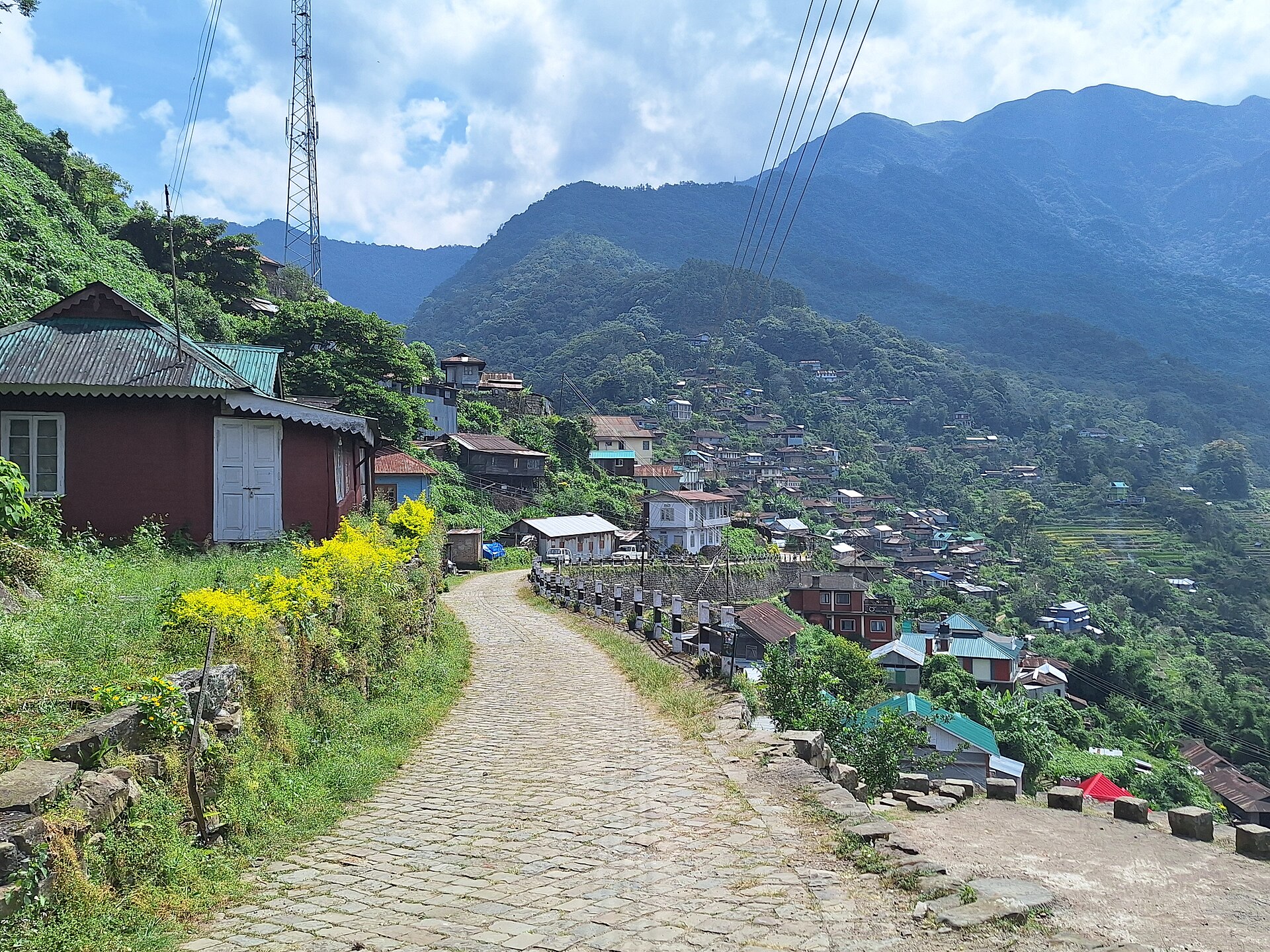
The Angami are concentrated in Kohima district, with significant populations in the southern part of the district around Viswema, Khuzama and Kigwema, and in the western belt around Khonoma and Mezoma. Kohima town itself, sitting at around 1,440 metres, is the cultural and administrative centre of Angami country.
Important Villages
Khonoma is the best-known Angami village, widely described as India's first green village and for its terraced fields cut into the steep hillsides. Kigwema, a few kilometres from Kisama, is where Hornbill Festival visitors often stay and where Japanese troops first entered Nagaland in 1944. Other important villages include Jakhama, Viswema, Mezoma and Kohima village (the old settlement, now part of the town).
Traditional Attire
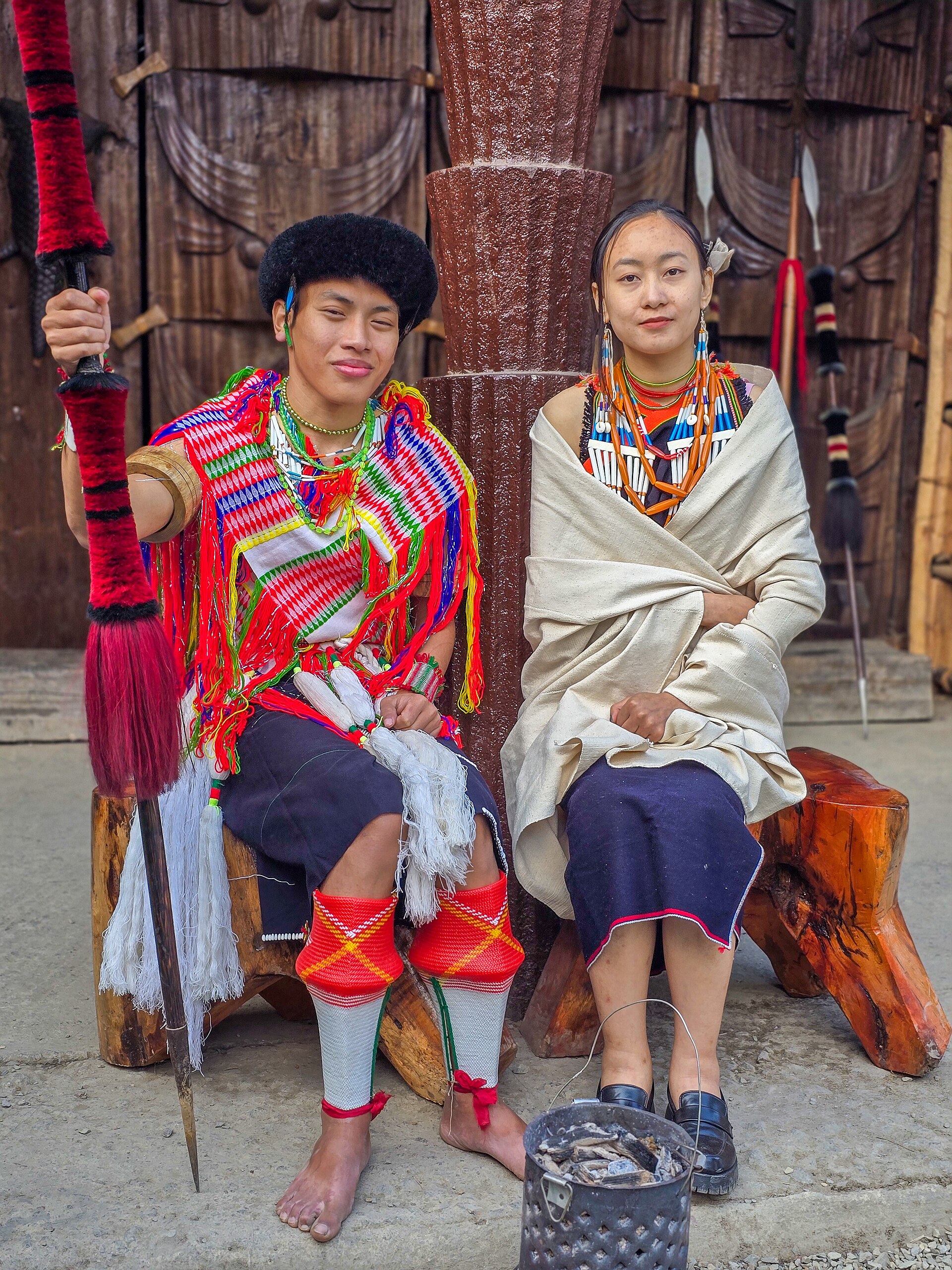
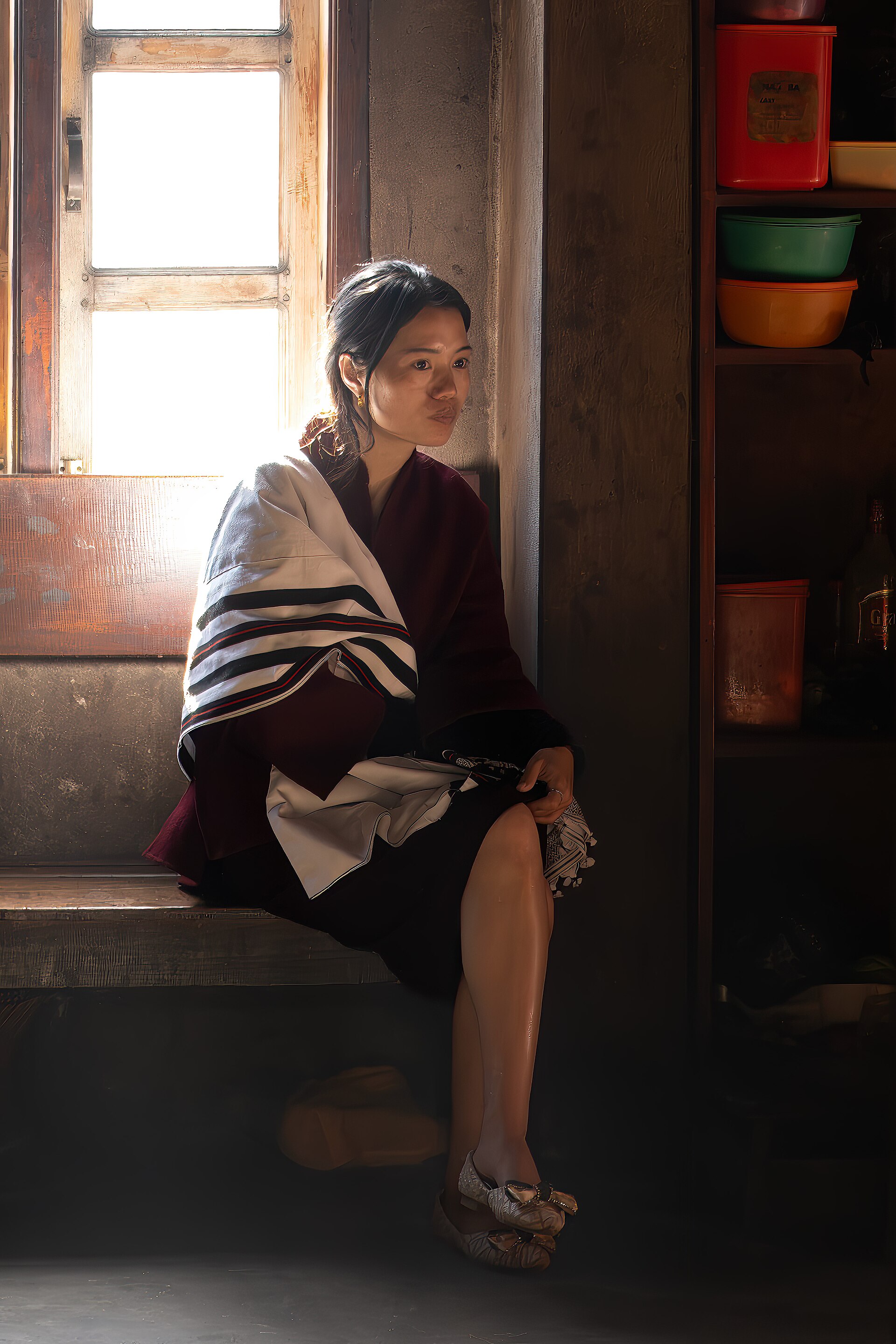
Angami men wear a black kilt edged with three or four lines of cowrie shells, paired with a richly patterned shawl called the Lohe. Warriors of distinction wore the Neikhro, a shawl decorated with cowries arranged in distinct geometric patterns earned through feasts of merit. Women wear the Mechala, a wraparound skirt with bold horizontal bands of black, white and red, with matching shawls and heavy bead necklaces.
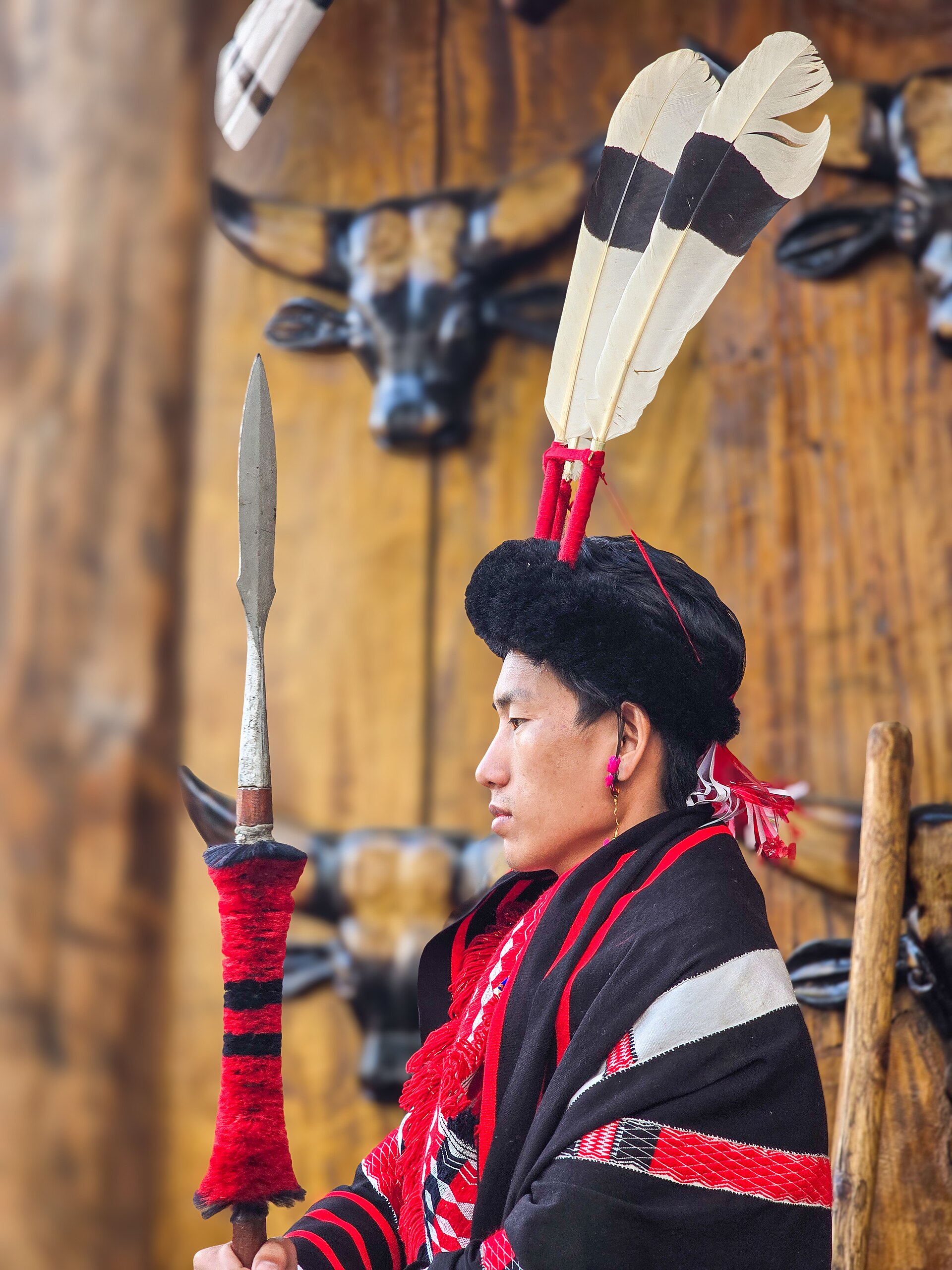
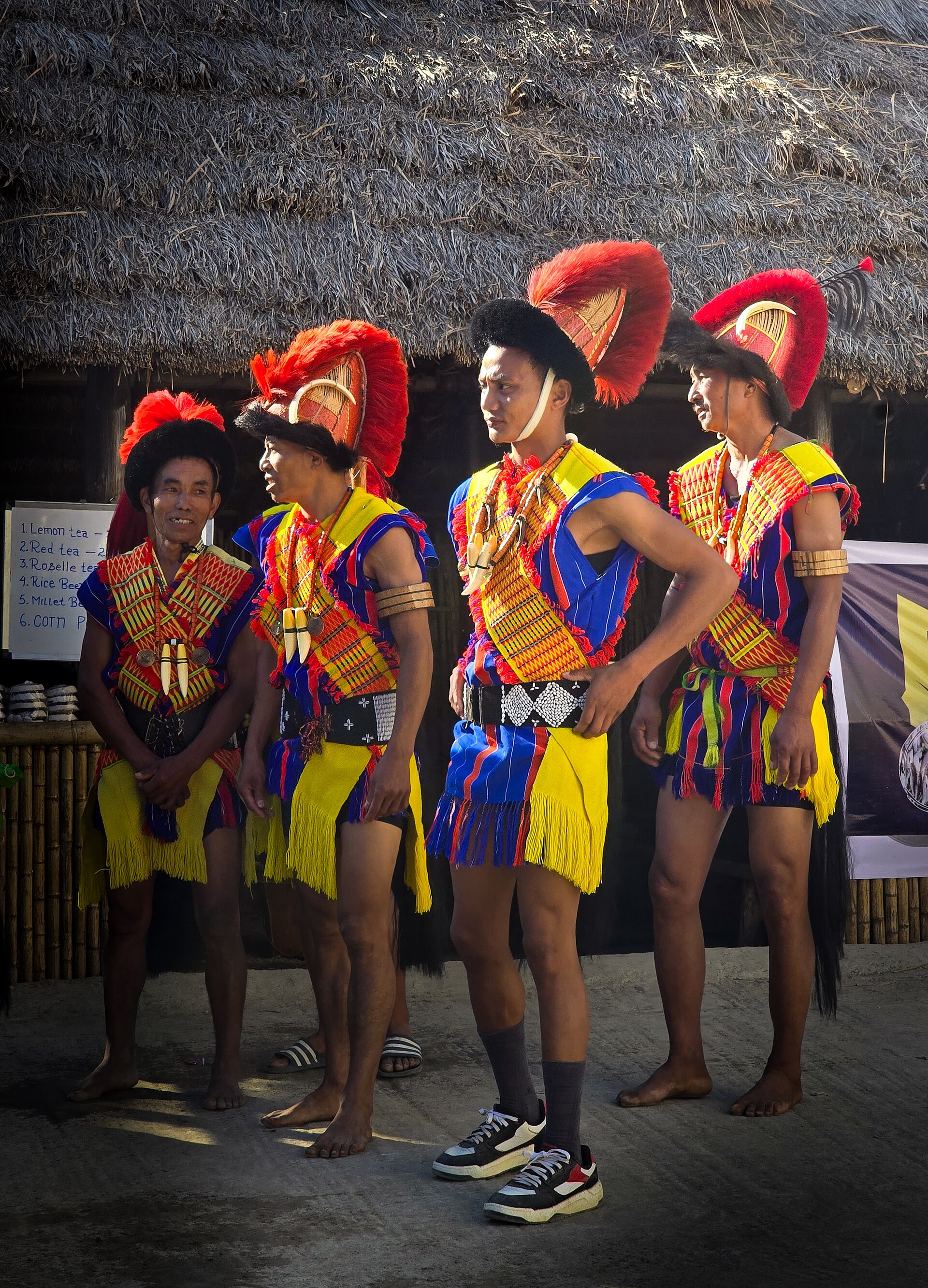
Headgear is a key marker of status. Men of standing wear a feathered headdress with hornbill plumes, while warriors carry the dao (machete) and a spear with red goat-hair tassels.
Morung & Architecture
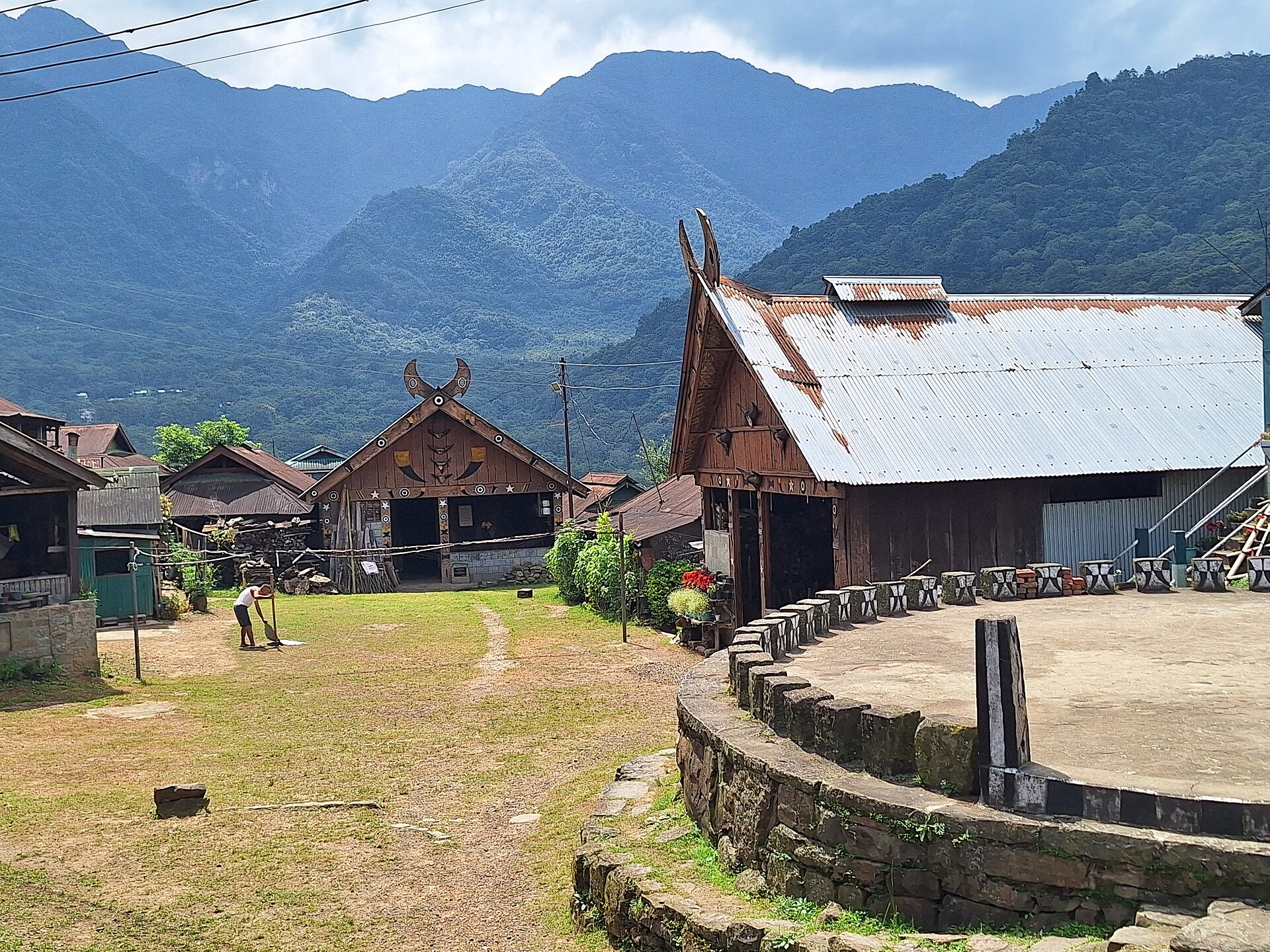
Angami villages are built on hilltops for defence, with stone gates carved with figures of warriors, mithun (a wild bovine) and weapons. Houses are long, low and built of timber with thatched roofs, often with carved horns at the gable ends to indicate the owner's status. The morung — the traditional dormitory where young men once learned warfare, crafts and oral history — has largely faded as a living institution, but its architecture is preserved at Kisama during the Hornbill Festival.
Culture & Lifestyle
Angami society is organised around clans (thino) and khels (village wards), each with its own council. Decisions are made democratically, often after long discussions in the village square. Wet-rice terrace farming is the backbone of the rural economy, supplemented by foraging, fishing, and small-scale livestock rearing.
Christianity arrived in Angami country in the late nineteenth century and is now the dominant religion, but older animist beliefs survive in agricultural rituals, healing practices and the importance of dreams and omens.
Festivals & Celebrations
Sekrenyi, celebrated in late February, is the most important Angami festival. It is a ten-day purification festival that marks the start of the new year and the transition of young men into adulthood. Rituals include the cleansing of the village wells, the slaughter of a rooster, communal feasting and the singing of traditional songs called Sekrenyi-lü.
Other observances include Liede in May (a sowing festival) and Tsiekrü, a harvest celebration. During Hornbill Festival, the Angami host the entire gathering at Kisama and participate prominently in the cultural programmes.
Food & Cuisine
Angami cuisine is built around rice, smoked meats, fermented bamboo shoot, perilla seeds (called ñü) and the famous Naga king chilli (Raja mircha). Galho, a one-pot rice porridge cooked with vegetables, smoked pork and herbs, is the everyday staple. Smoked pork with axone (fermented soya bean) and boiled greens dressed with perilla are common at every festival meal.
Zutho and Thutshe, traditional rice beers brewed in bamboo or earthen vessels, are served at every important gathering.
Arts, Music & Dance
Angami war dances are among the most striking performances at Hornbill Festival — slow, deliberate, with deep chest cries and synchronised steps that reenact the rhythms of a war party. Folk songs called Lizo are sung in call-and-response form, often by women working in the fields. Weaving on the back-strap loom remains a living craft, with Angami shawls instantly recognisable by their geometric red, white and black bands.
Role During Hornbill Festival
Kisama Heritage Village, where Hornbill Festival is held, sits in Angami territory between the villages of Kigwema and Phesama. The Angami morung at Kisama is one of the most visited, and Angami warriors lead several of the main ceremonial processions. Many of the food stalls, craft markets and homestays around the festival are run by Angami families from nearby villages.
Jewellery & Ornaments
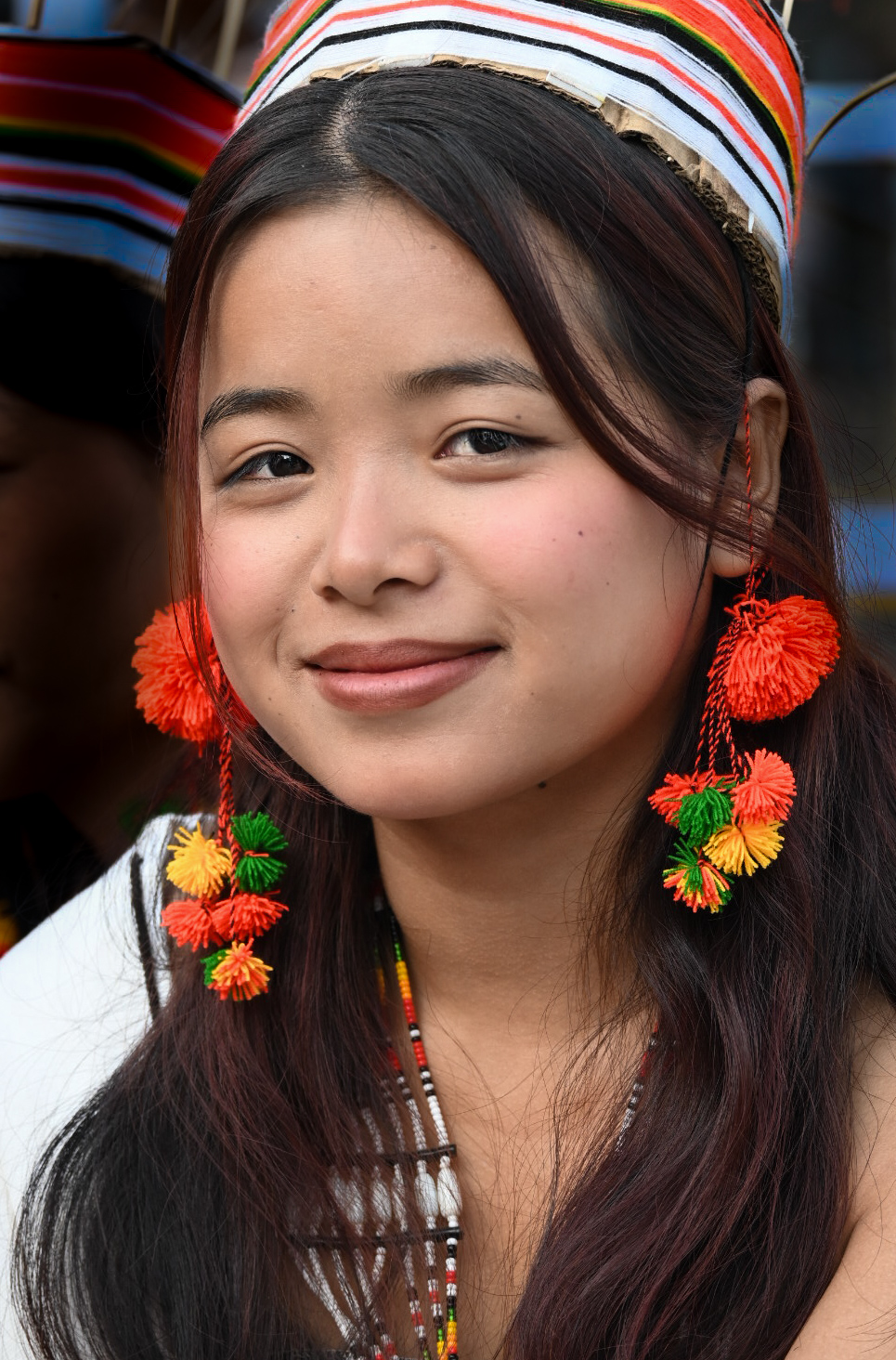
Angami women wear heavy strings of carnelian and red glass beads (Tsükro), brass earrings and conch-shell pendants. Men of standing wear cowrie-bordered baldrics, boar-tusk armlets and necklaces of polished cornelian — each piece earned at a Feast of Merit.
Photography Tips
The Sekrenyi cleansing at Khonoma's village wells (late February) is the most photographed Angami moment; arrive by 6 a.m. for the misty backlight.
At Kisama, the Angami morung's stone-gate facade catches warm light between 3.30 and 4.30 p.m. — best for portraits with elders.
Khonoma's terraced rice fields photograph beautifully in October (golden) and June (emerald); use a 35–85 mm range for compression.
Always ask before photographing the Kelhoukevira (war-dance) leader — many wear ancestral feathers and prefer a quick word first.
Cultural Etiquette
Remove shoes before entering a traditional Angami house; the hearth area is sacred.
Do not step over a dao (machete), a spear or a basket of grain — all are treated as living objects.
If offered Zutho (rice beer), accept at least a sip; refusing outright can be read as a slight.
Photographs of the Sekrenyi ritual wells require permission from the village Gaonbura (chief).
Related Hornbill Performances at Kisama
At Kisama, the Angami contingent leads the Kelhoukevira war dance, performs the slow Lizo call-and-response folk songs, and demonstrates the throwing of the spear during the indigenous games. The Angami morung also hosts daily Zutho tasting sessions.
Travel Information
The Angami homeland in Kohima district is reached most easily by road from Kohima or Dimapur. Most travellers fly into Dimapur (DMU), the only commercial airport in Nagaland, and continue by shared sumo or private vehicle. The drive from Dimapur to Kohima takes around two and a half to three hours; onward travel to the Angami districts varies from a couple of hours to a full day depending on the village.
Permits are essential. Indian travellers need an Inner Line Permit (ILP), which can be issued online or at entry points in Dimapur and Kohima. Foreign travellers need a Protected Area Permit (PAP) and must register at the Foreigners' Registration Office on arrival. We handle both as part of any booking.
October to April is the most comfortable window to visit. December is festival season — roads are busier, stays book out months in advance, and temperatures in the hills drop sharply at night. Carry layers, sturdy shoes for village walks, and a power bank; electricity in remote villages can be intermittent.
Accommodation Options
Stays in Angami country range from simple village homestays run by local families to mid-range guesthouses in the district headquarters. Kohima itself offers a wider choice — from deluxe properties like The Heritage and Razhü Pru to comfortable standard hotels closer to Kisama.
For a more immersive experience, we recommend at least one night in a traditional homestay. You'll share meals cooked over a wood fire, hear stories from elders, and wake to the sounds of a working Naga village. Most homestays are basic but spotlessly clean, with shared bathrooms and warm bedding.
During the Hornbill Festival (1–10 December), rooms in and around Kohima fill up by September. Booking early matters more than booking expensive — we'll suggest the right fit based on your dates, budget and how close to Kisama you want to be.
Gallery
Photographs from Angami villages around Kohima and Khonoma, taken during festival and off-season visits.
Photographs
Frequently Asked Questions
- What language do the Angami speak?
- Tenyidie, also called Angami, is the principal language. English and Nagamese are widely spoken in Kohima.
- Is Khonoma village open to visitors year-round?
- Yes. Khonoma is open year-round; February (Sekrenyi) and October–April are the best months for weather and visibility.
- Can I attend an Angami Feast of Merit?
- These are rare private rituals today; most visitors experience an abbreviated version during Sekrenyi or at the Angami morung at Kisama in December.
Plan a Angami Visit
Plan Your Visit
Meet the Angami at the Hornbill Festival
See the Angami morung in person at Kisama, or extend your trip with a visit to a Angami village in Kohima District.