Traveller Stories · Germany
Mr. Buchner & Friends's Journey to the Hornbill Festival
Mr. Buchner and three close friends travelled from Germany on a thirteen-day journey through Northeast India — the waterfalls of Meghalaya, the double-decker living root bridge below Cherrapunjee, the quiet forests of Nameri, the tea gardens of Assam, a ferry across the Brahmaputra to Majuli, and finally the Hornbill Festival at Kisama. This is their journey, kept in their own photographs.
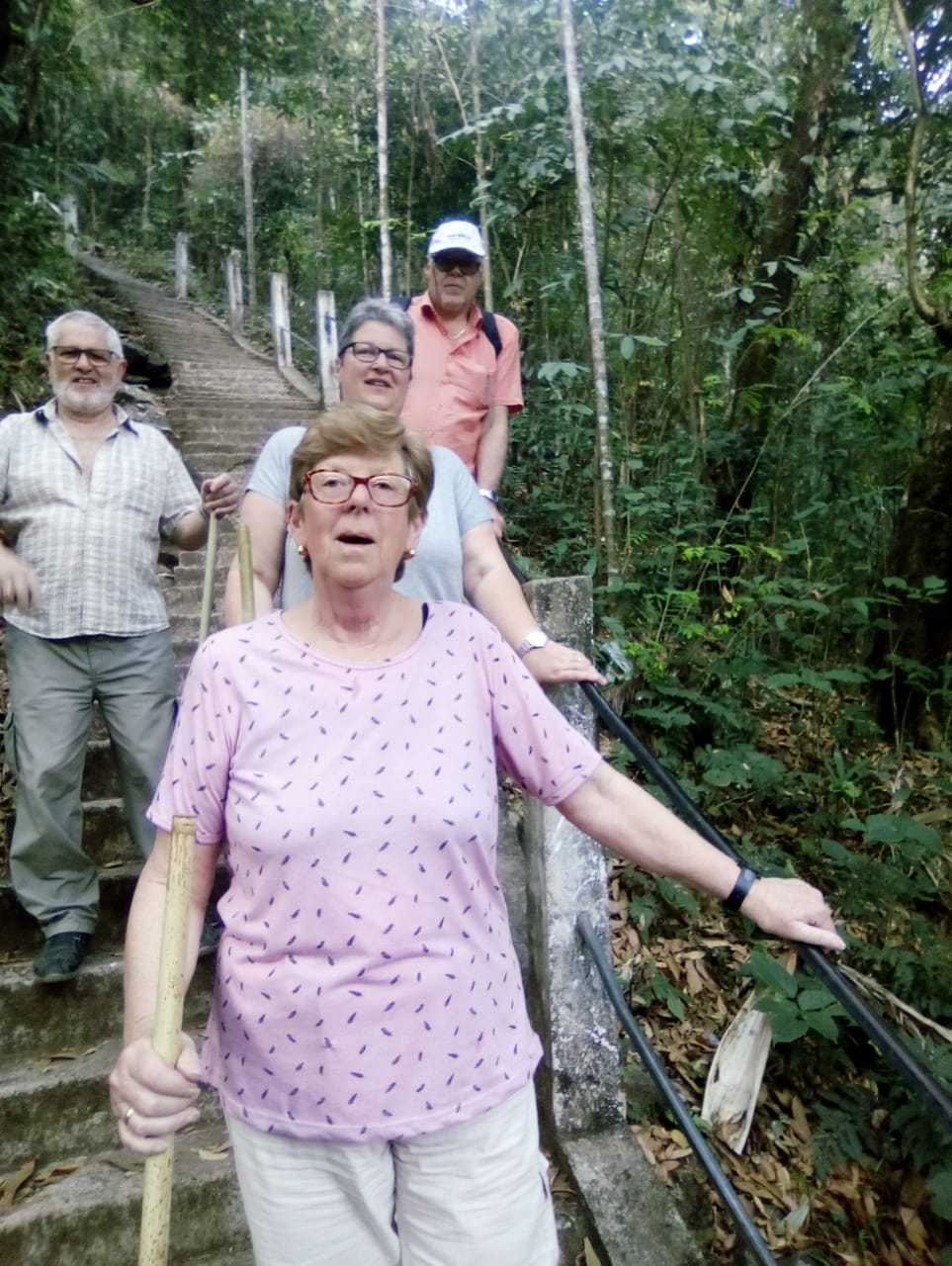
Four friends from Germany — Mr. Buchner among them — landed in Guwahati one November afternoon with a simple plan: thirteen days on the ground across Northeast India, ending in Nagaland for the Hornbill Festival at Kisama. No fixed idea of what they would find, only the willingness to be slow about it.
They crossed three states in the end — Meghalaya, Assam and Nagaland — with a river-island detour to Majuli in between. The photographs on this page are their own, taken along the way. We publish them chronologically, exactly as the journey unfolded.
Arrival — Guwahati and the Road South
They arrived in Guwahati in the late afternoon and stayed only a night. The next morning the car turned south and began the long climb into the Khasi hills of Meghalaya. The plains fell away, the air cooled, and by evening they were in Cherrapunjee — the small cliff-edge town that for a long time held the record as the wettest place on earth.
The Double Decker Living Root Bridge
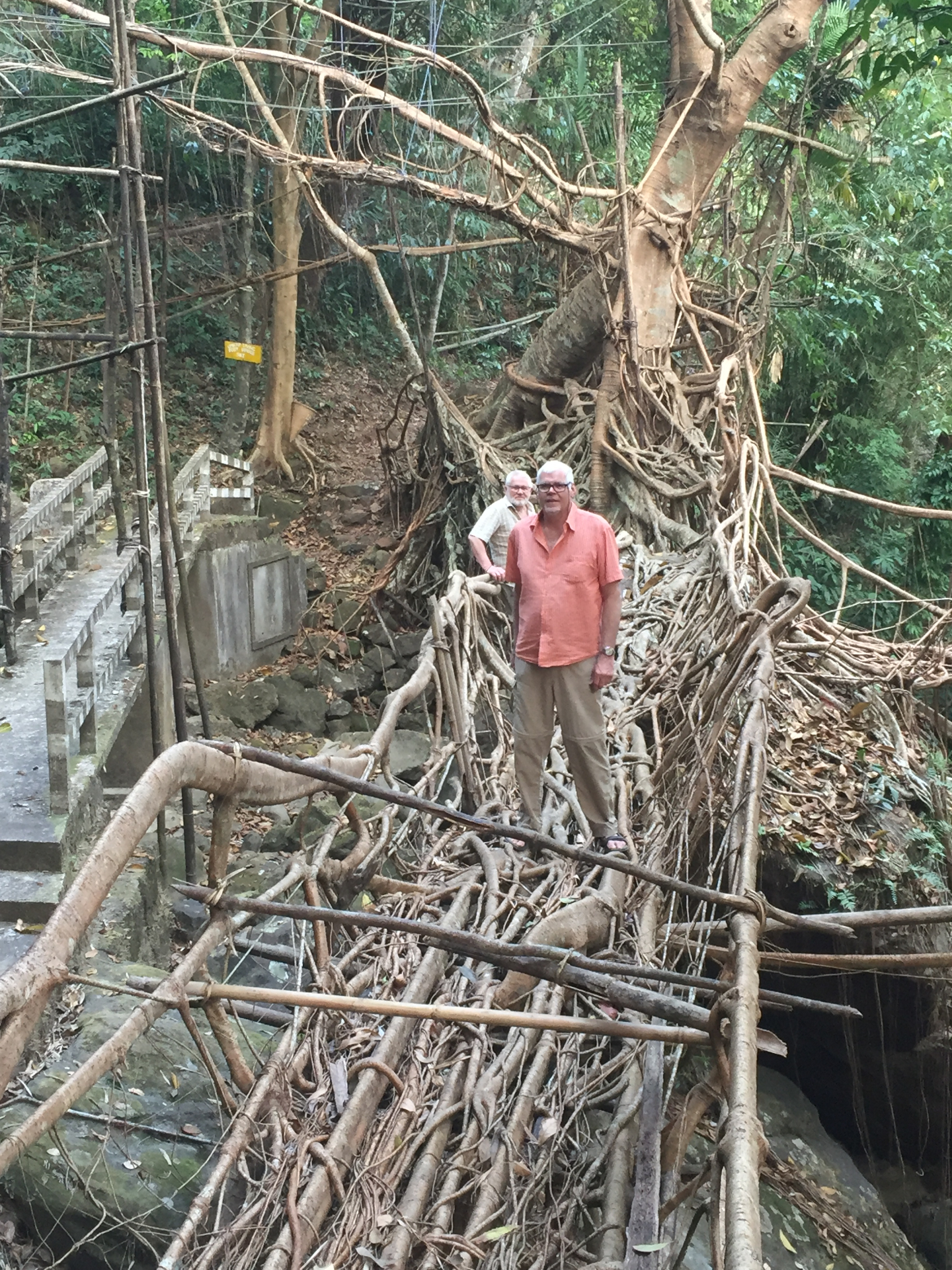
The third day was the one they had been quietly worried about: 3,500 stone steps down into the Umshiang gorge, and then the same number back up. At the bottom, in a dripping sub-tropical forest, stood the double decker living root bridge of Nongriat — two tiers of woven ficus roots grown across the river by generations of Khasi villagers. Mr. Buchner and one of his friends posed for a photograph on the lower tier. The climb back took most of the afternoon, and nobody talked much.
Shillong
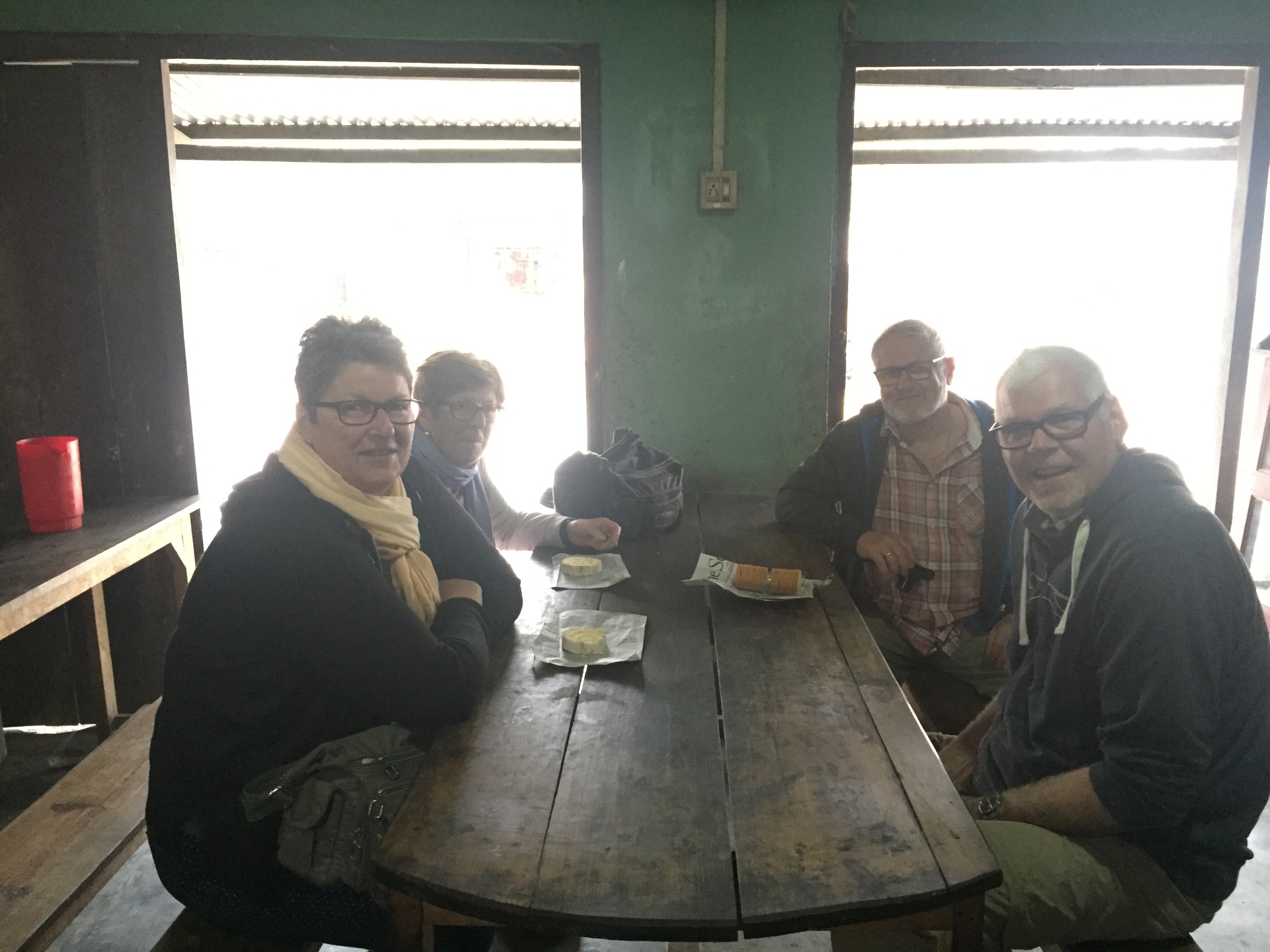
The fourth day they returned north to Shillong, the hill capital — a soft, colonial-era town of pine ridges, corrugated-iron roofs and old churches. They walked around Ward's Lake, drank tea in a small back-street shop, and stopped somewhere on the road for a rest and a biscuit. It is the kind of unremarkable, comfortable morning that later becomes one of the strongest memories of a trip.
Nameri — The Forest Days
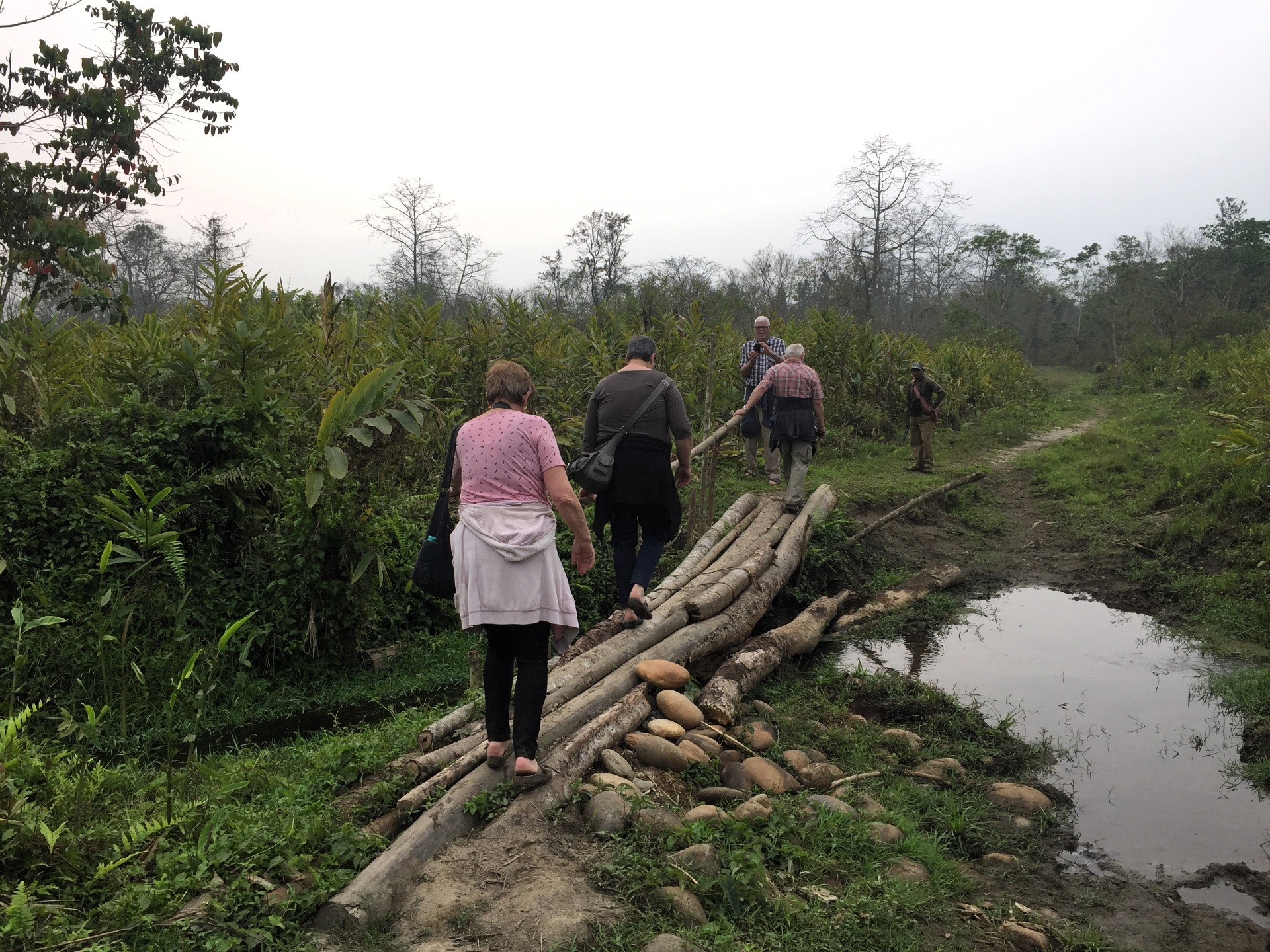
From Shillong they crossed the Brahmaputra and drove east to Nameri National Park, on the Assam–Arunachal border. Nameri is not the famous rhino park; it is the quiet one — sal forest, the Jia Bhoroli river, hornbills in the canopy and almost no other vehicles. They walked out to the river one morning, crossed a log-and-bamboo bridge over a slow stream, and did not see another tourist all day.
The Tea Gardens
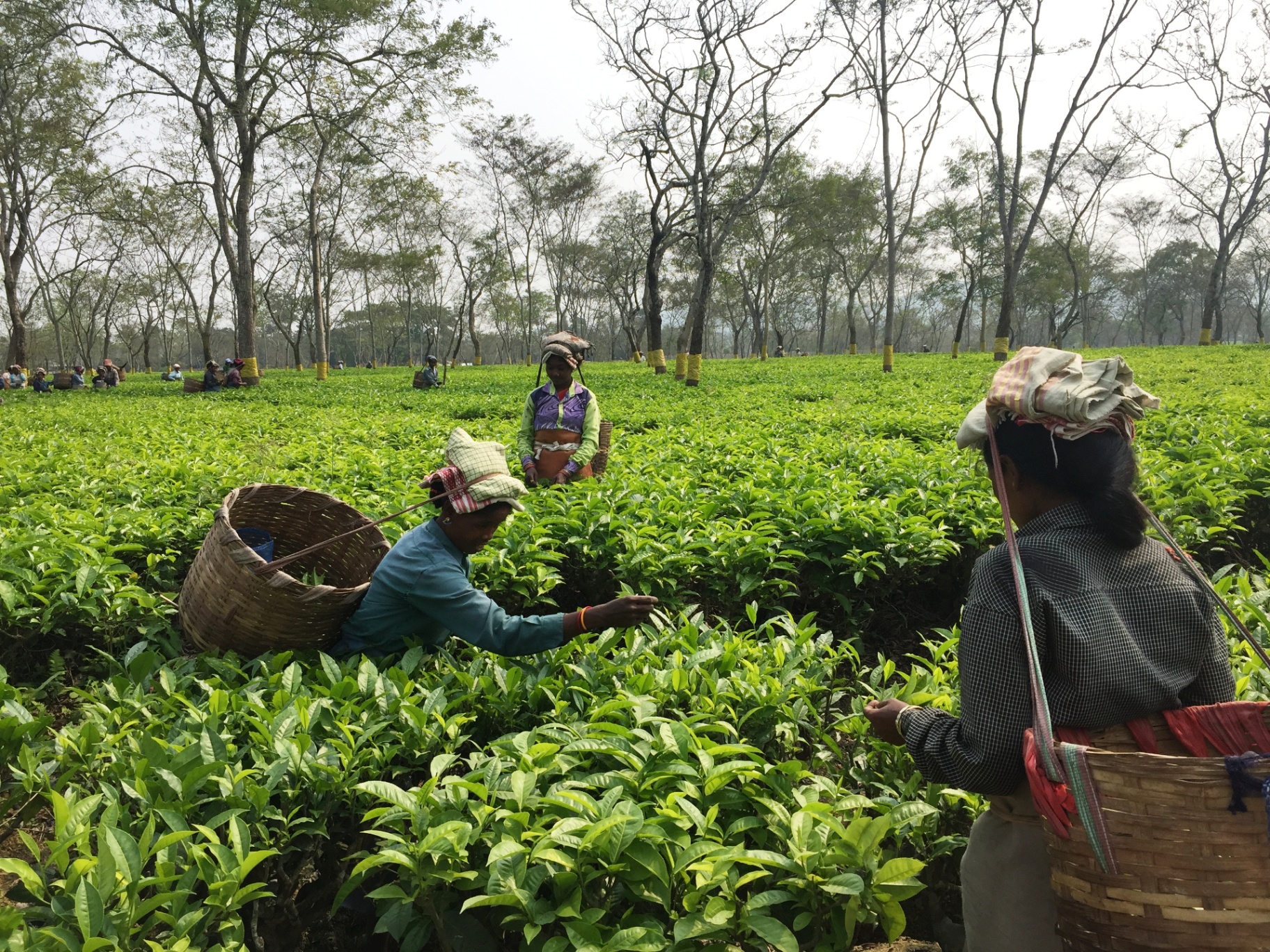
On the seventh day they drove east along the Brahmaputra toward Jorhat, through the tea belt that gives Assam most of its identity. Women in bright cloth were picking the top two leaves and a bud, exactly as the packets in Germany describe it, moving slowly down the rows with cane baskets on their backs. They stopped once and just watched.
Crossing to Majuli
The next morning they boarded the public ferry at Nimati Ghat with the car on the deck, and crossed the Brahmaputra to Majuli — the world's largest inhabited river island. On the island they spent a full day among the satras — the Vaishnavite monasteries where monks still dance in painted masks — and the mask-makers of Samaguri.
The Potter's Yard
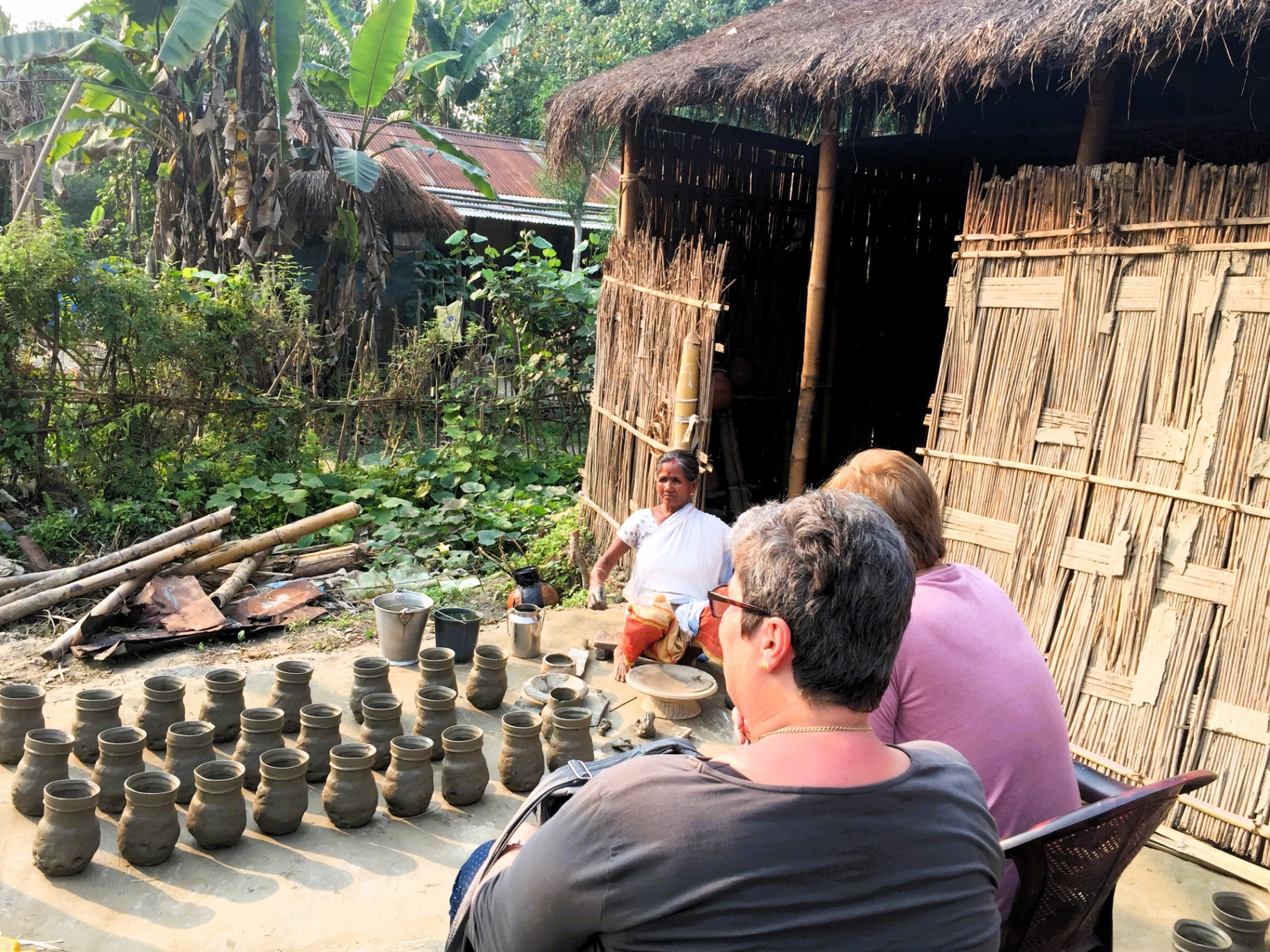
The strongest photograph from Majuli is not from a temple. It is from a small yard behind a bamboo hut in the potter's village at Salmora, where an old woman shapes clay pots by hand — no wheel, only her fingers and a wooden paddle. Two of the friends sat on plastic chairs at the edge of the yard and watched her line up the day's work in the sun. She did not speak much German or English, and it did not matter.
The Road to Kohima
On the tenth day they ferried back to the mainland and turned south-east. The road climbs steadily out of the Assam plains into the Angami hills of Nagaland, and Kohima appears on a series of ridges just before sunset. They arrived at the hotel in the cold, dry light of a Nagaland December. This was what the previous ten days had, in a quiet way, been leading to. The Hornbill Festival would begin the next morning.
Kisama — The Sumi Morung
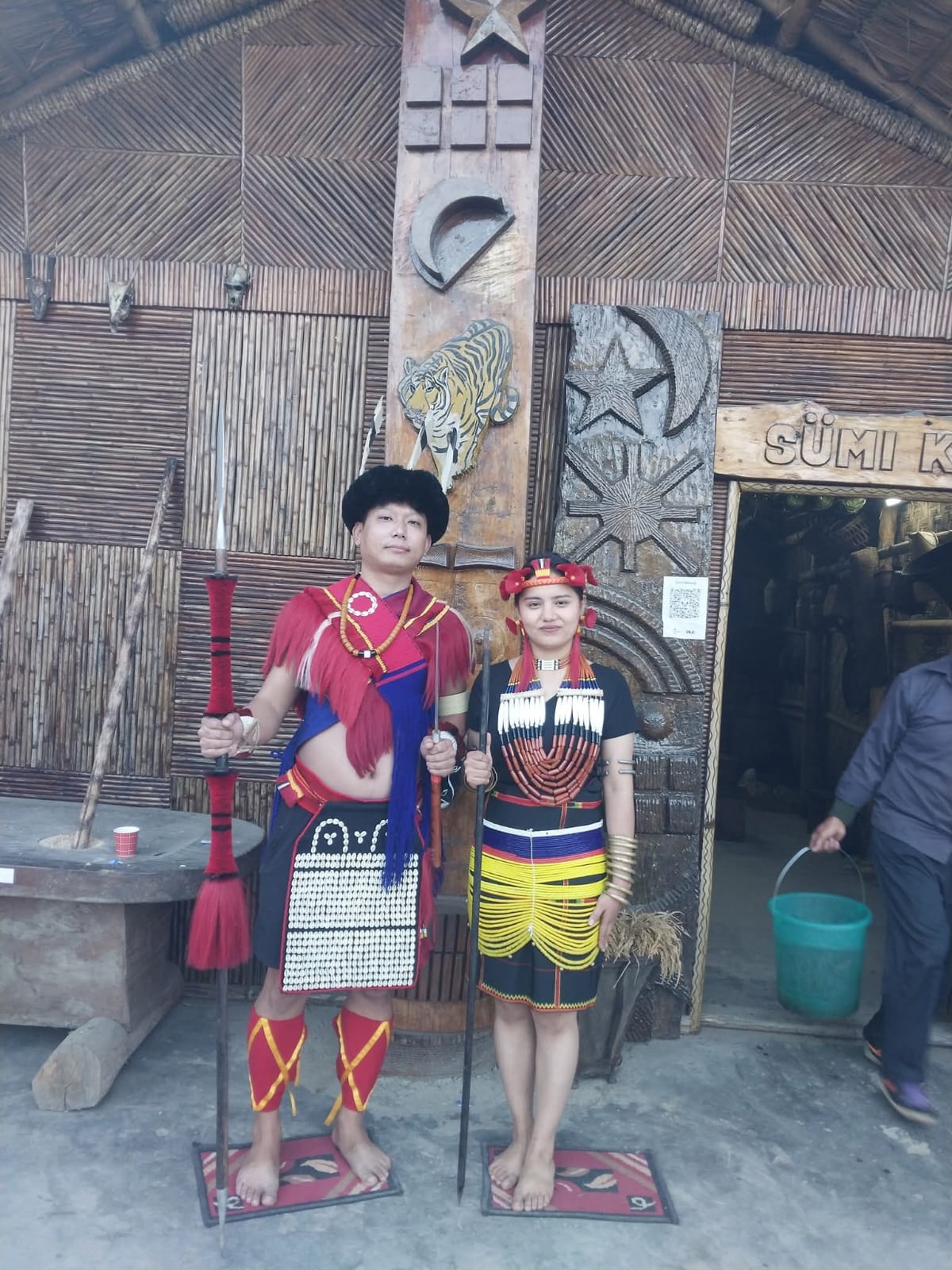
The festival is held at Kisama Heritage Village, a purpose-built ground about ten kilometres south of Kohima. Each of the seventeen major Naga tribes keeps its own morung there — a thatched longhouse of timber and carved posts that serves as living room, kitchen and stage for the ten days of the festival. The group moved between them slowly. Outside the Sumi Kilhomi morung a young man and woman stood in full Sumi attire — he in the dark headband and beaded apron of a Sumi warrior with a ceremonial spear, she in the beaded skirt and shell-and-bead necklace of a Sumi bride. Behind them the carved wooden post of the morung, with its tiger relief and stars, gave the whole entrance the look of a threshold rather than a stage.
The Arena
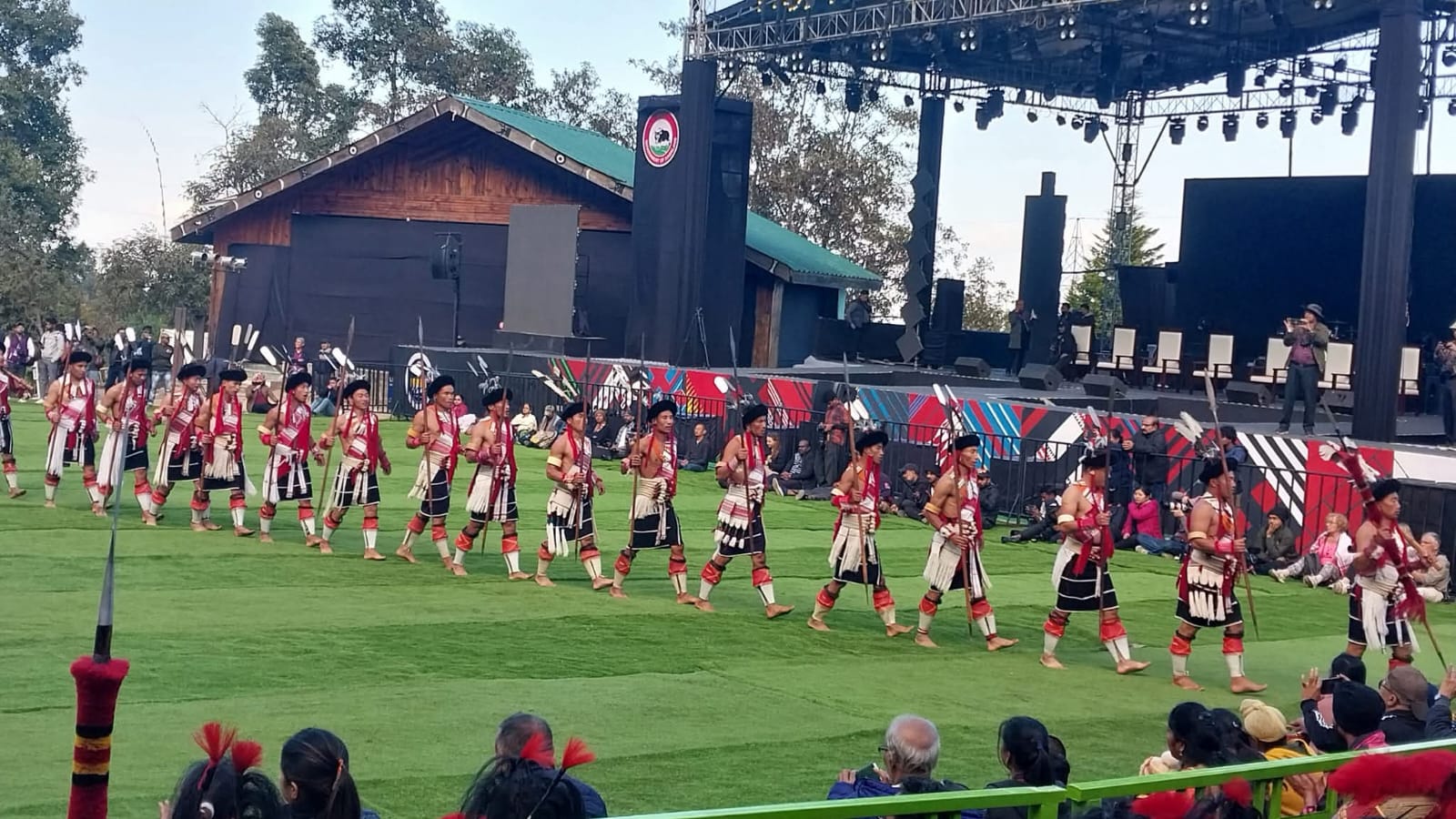
The arena programme is the loud, public face of Hornbill — the massed dances, the log-drum calls, the warrior processions. That morning a long line of Sumi warriors in bear-fur headbands, red-fringed shawls and cowrie-shell aprons crossed the green in front of the main stage, spears at rest on the shoulder, moving in the slow unison that gives the festival its name. Mr. Buchner photographed from the arena rim; the others watched from the stands. At the craft bazaar behind the morungs, later, they bought a Chakhesang shawl and a small dao knife in a carved wooden sheath.
The Elders
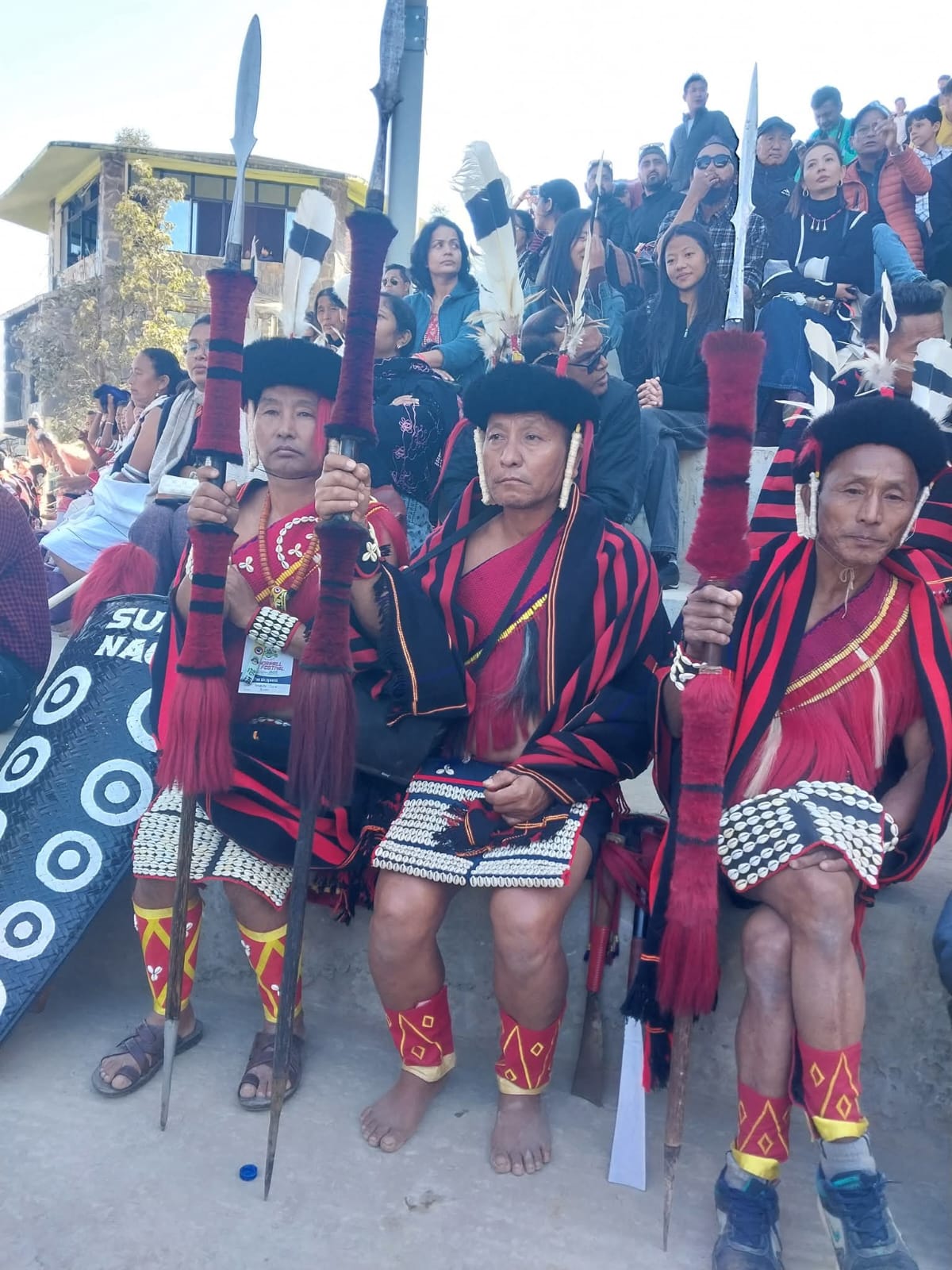
Between arena sets, three older men from the Sumi delegation sat down at the front of the stands, spears upright in their hands. Long red-fur plumes at the tops of the shafts, black bear-fur headbands, the shell-and-bead work on their skirts catching the low December sun. Nobody asked them to pose. It is one of those Hornbill photographs that is really a portrait — three men who have been coming to this festival, in one form or another, for most of their lives.
A Photograph with the Warriors
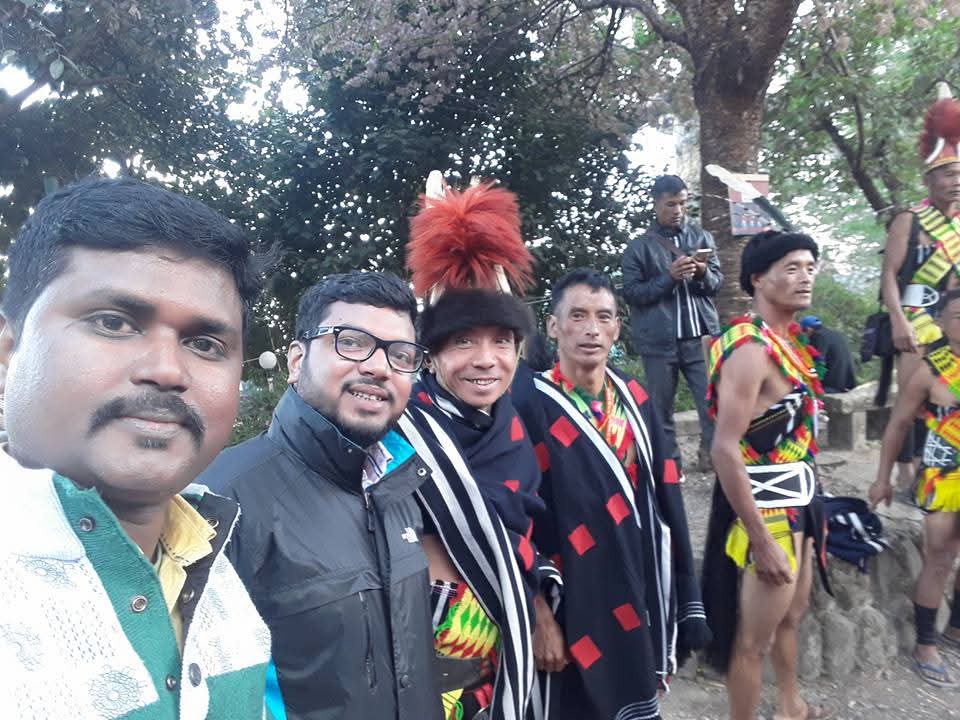
At the end of the day, on the walk back up the slope to the car, the group stopped for the photograph that everyone stops for eventually — a selfie with two of the Naga performers still in their festival attire. Red-fur headdress, striped shawl, wooden shields leaned against the tree behind. The German friends do not appear in this frame; it is the guide, standing with the two men. It is the picture the group brought home to explain, without words, what Hornbill actually looks like when the arena empties out.
Guwahati — And Home
On the twelfth day the car turned west again, back through the tea-belt districts to Guwahati. They flew out the next morning. Thirteen days across Northeast India — Meghalaya's cliffs, Nameri's forests, Majuli's satras, and one festival at Kisama that had, in the end, held the whole journey together.
Journey Timeline
13 days across Northeast India
- Day 1Arrival in GuwahatiLanding in Assam; first night in the plains before the drive south into the Meghalaya hills.
- Day 2Guwahati → CherrapunjeeLong climb into the Khasi plateau — cliffs, waterfalls and the wettest hills on earth.
- Day 3Double Decker Living Root Bridge trekDown 3,500 stone steps into the Umshiang gorge to the famous two-tier root bridge, and back up again.
- Day 4Cherrapunjee → ShillongReturn north to the hill capital of Meghalaya — pine ridges, colonial churches and Ward's Lake.
- Day 5Shillong → Nameri National ParkEast across the Brahmaputra to the forested foothills of Arunachal at the edge of Nameri.
- Day 6Nameri National ParkA quiet forest day — river walks, a raft on the Jia Bhoroli, and time among the sal trees.
- Day 7Nameri → JorhatEast along the Brahmaputra through Assam's tea country to the old planter's town of Jorhat.
- Day 8Jorhat → Ferry to MajuliThe public ferry across the Brahmaputra to Majuli — the world's largest inhabited river island.
- Day 9MajuliThe satras of Kamalabari and Auniati, the mask-makers of Samaguri, and the potter's village at Salmora.
- Day 10Majuli → KohimaFerry back to the mainland and the long drive south-east into the Angami hills of Nagaland.
- Day 11Kohima — Hornbill Festival, Kisama Heritage VillageThe full festival day — seventeen morungs, arena performances, food, crafts and portraits.
- Day 12Kohima → GuwahatiThe long westbound drive back to Assam through the tea-belt districts.
- Day 13Departure — GuwahatiFlight out of Northeast India after thirteen days.
Festival Experiences
What he saw at Kisama
- The Kisama arena — massed dances of the Naga tribes
- Inside the Sumi and Angami morungs at the festival
- Naga food — smoked pork, bamboo shoot, sticky rice, rice beer
- The double-decker living root bridge below Cherrapunjee
- A river-walk morning in Nameri National Park
- The Brahmaputra ferry crossing to Majuli
- Watching a Mising potter shape clay pots by hand
- Assam's tea gardens on the road to Jorhat
Continue Reading
Related Hornbill Festival pages
Hornbill Festival 2026
The full guide to the 1–10 December 2026 festival at Kisama.
ReadKisama Heritage Village
The seventeen morungs, the arena and how to walk the grounds.
ReadSumi Tribe
The tribe whose morung the group visited on festival day.
ReadFestival Dates
Day-by-day programme for the ten days at Kisama.
ReadHow to Reach Kohima
Flights to Dimapur and the drive up into the Angami hills.
ReadFestival Packages
Curated Hornbill Festival journeys with Living Roots.
ReadYour Journey
Plan Your Own Hornbill Festival Journey
Small groups, private guides, and stays with the families whose photographs appear on this page.