Introduction
The Konyak are the largest Naga tribe and live in Mon district in the far north-east of Nagaland, along the border with Myanmar and Arunachal Pradesh. They are world-famous for their elaborate facial and chest tattoos, brass-skull necklaces and the institution of the Angh — the hereditary chief whose word was once law across vast tracts of the Konyak hills.
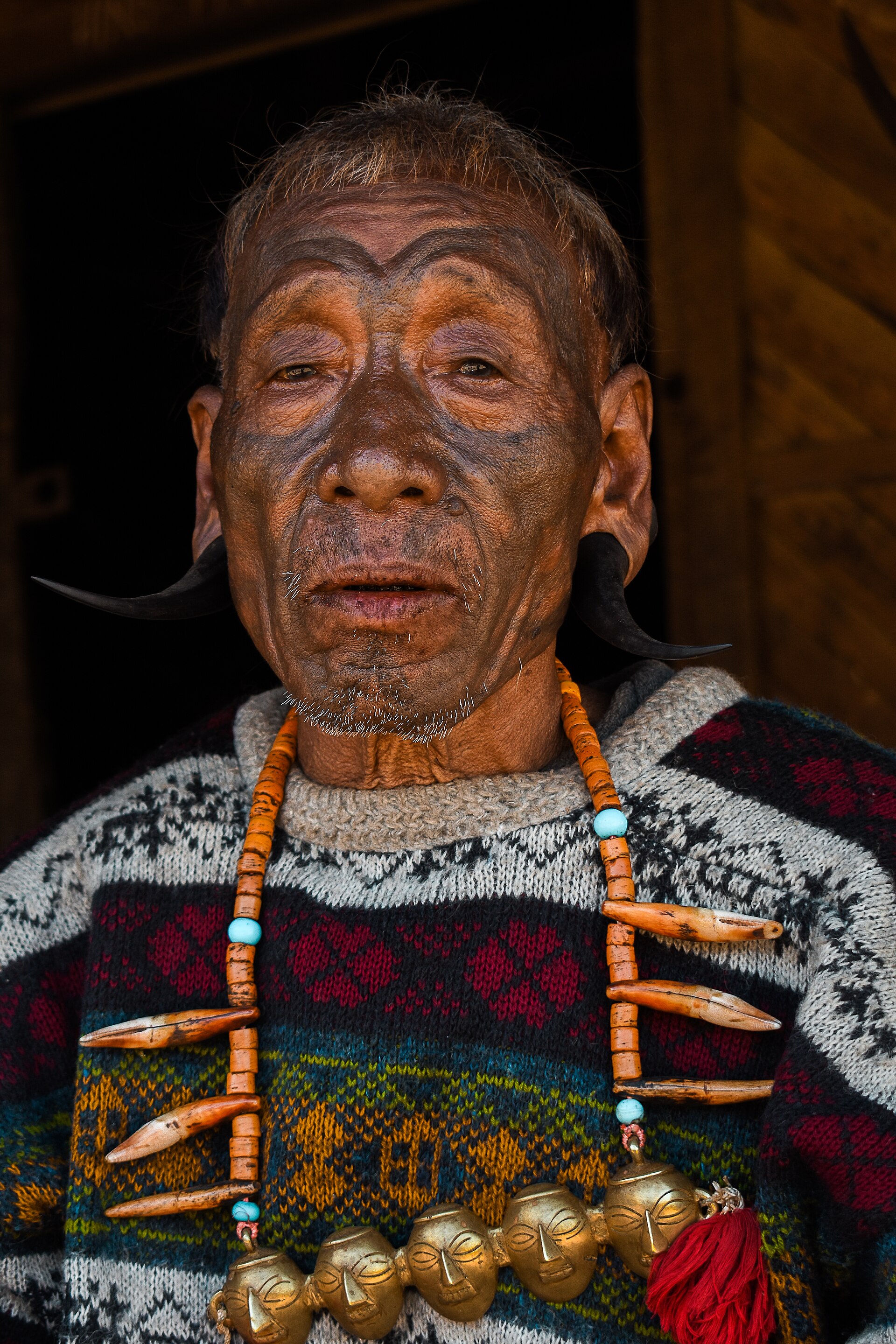
Until well into the twentieth century, Konyak villages practised headhunting as part of the warrior code, with elaborate tattoos marking each successful raid. Today, only the eldest generation still bears these tattoos, which makes a visit to villages like Longwa, Hongphoi and Shangnyu one of the most extraordinary cultural experiences in India.
History & Origins
Konyak oral tradition traces their migration from the upper Irrawaddy valley in present-day Myanmar to their current homeland over several generations. The institution of the Angh — a hereditary chief drawn from a noble bloodline — gave Konyak society a more centralised political structure than most other Naga tribes, which were governed by village councils.
British administration of the Konyak hills was minimal until the 1940s, and many villages remained effectively independent until Indian independence. Christianity reached the region in the early twentieth century and is now the predominant faith, though traditional rituals and the authority of the Angh remain culturally important.
District & Location
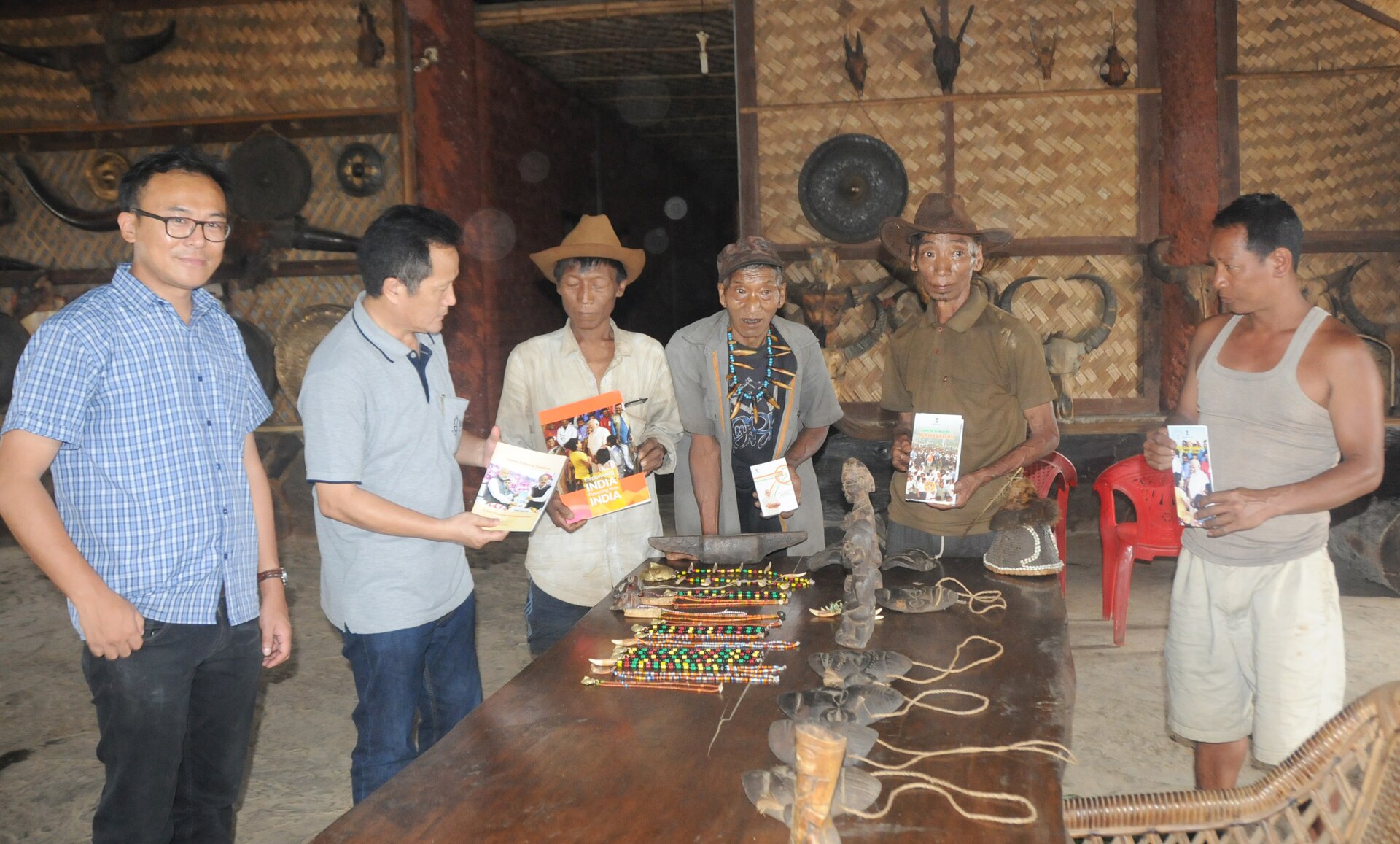
Mon district is the heartland of the Konyak. The district headquarters at Mon town is around 280 kilometres from Dimapur — typically an overnight stop on the way north. Some Konyak villages, most famously Longwa, straddle the international border with Myanmar; the Angh of Longwa is said to rule over villages on both sides of the line.
Important Villages
Longwa, where the chief's house sits exactly on the India–Myanmar border, is the most visited Konyak village. Shangnyu is known for its carved wooden monolith depicting figures of men and animals. Hongphoi and Wakching are quieter villages where traditional life continues largely as it has for generations. Chui, the old capital of the Konyak Angh-dom, holds particular cultural significance.
Traditional Attire
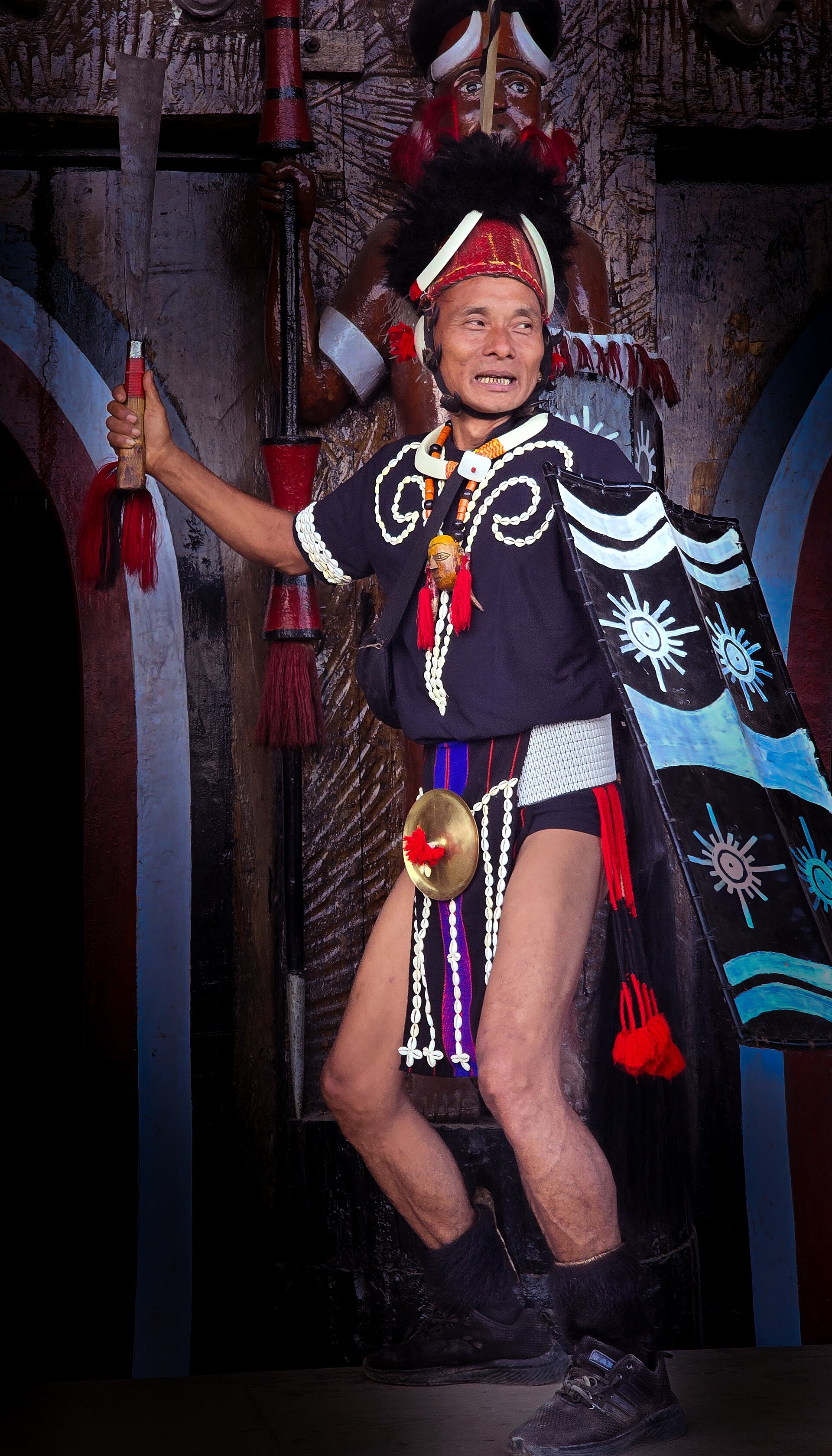
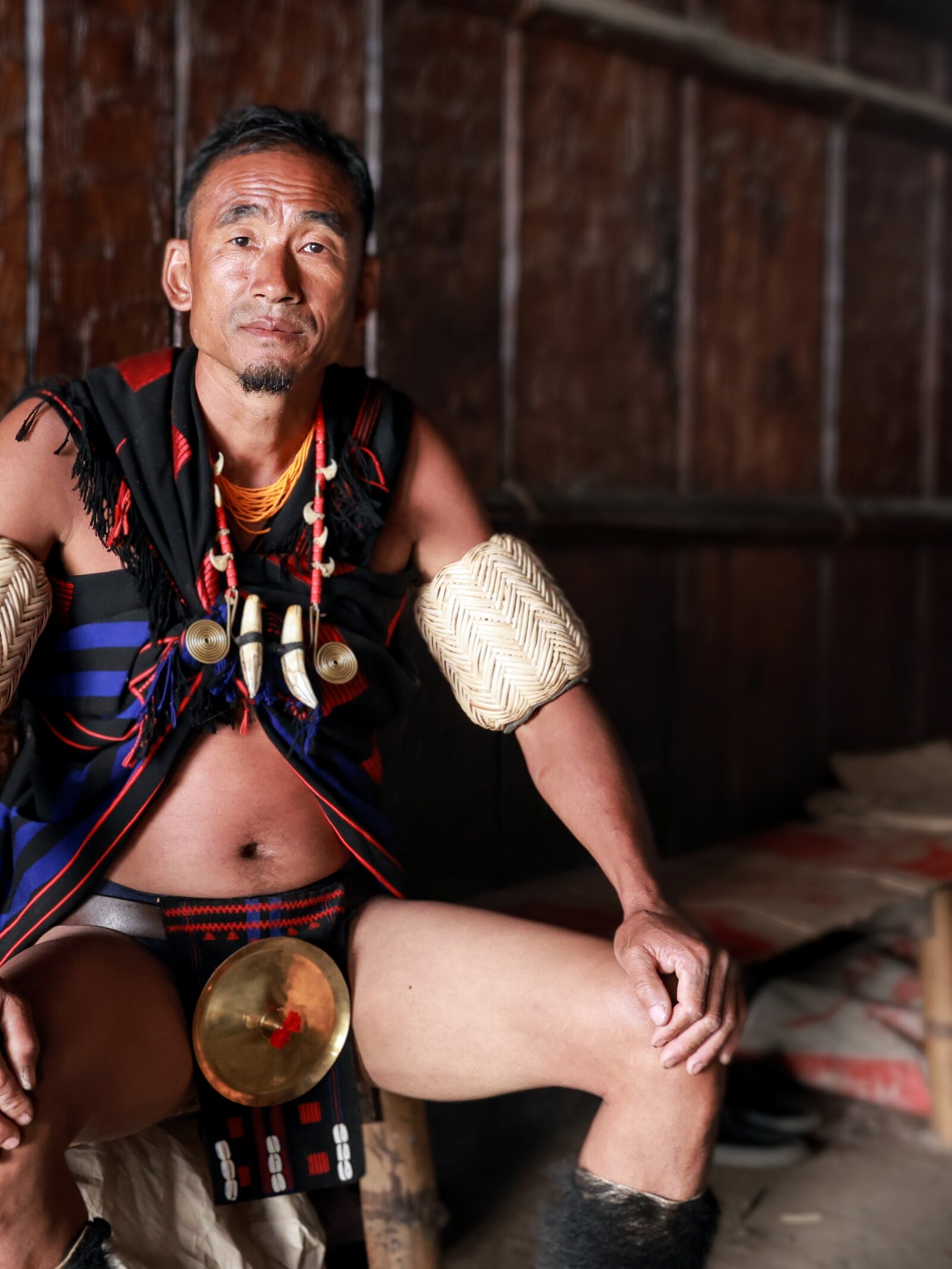
Konyak men of standing wear a red cane belt, a black kilt and a headdress made of woven bamboo, wild boar tusks, hornbill feathers and the horns of the great Indian hornbill. The most striking element is the brass-skull necklace — a string of small brass heads, each one originally representing a head taken in battle.
Women wear plain wraparound skirts in deep colours with bead necklaces and brass earrings. Tattoos on the face, throat and chest were once given as marks of beauty, fertility and clan identity.
Morung & Architecture
The Konyak morung, called the Pang, is the largest and most architecturally distinctive of all the Naga dormitories. Huge log drums called the log-drum or 'shum' are carved from single tree trunks and housed in or beside the morung — they are beaten to signal news, war, or celebration. Houses of the Angh are decorated with carvings of mithun skulls, hornbills, human figures and weapons.
Culture & Lifestyle
Konyak society is organised around the Angh and the lineages that surround him. The Great Angh's authority extends across multiple villages, while lesser Anghs govern smaller clusters. Polygamy was traditionally practised by the Anghs as a way of cementing political alliances.
Slash-and-burn (jhum) cultivation remains the main form of agriculture in the steep Konyak hills, supplemented by hunting, fishing and the small-scale cultivation of opium poppy in some areas — a legacy of cross-border trade with Myanmar.
Festivals & Celebrations
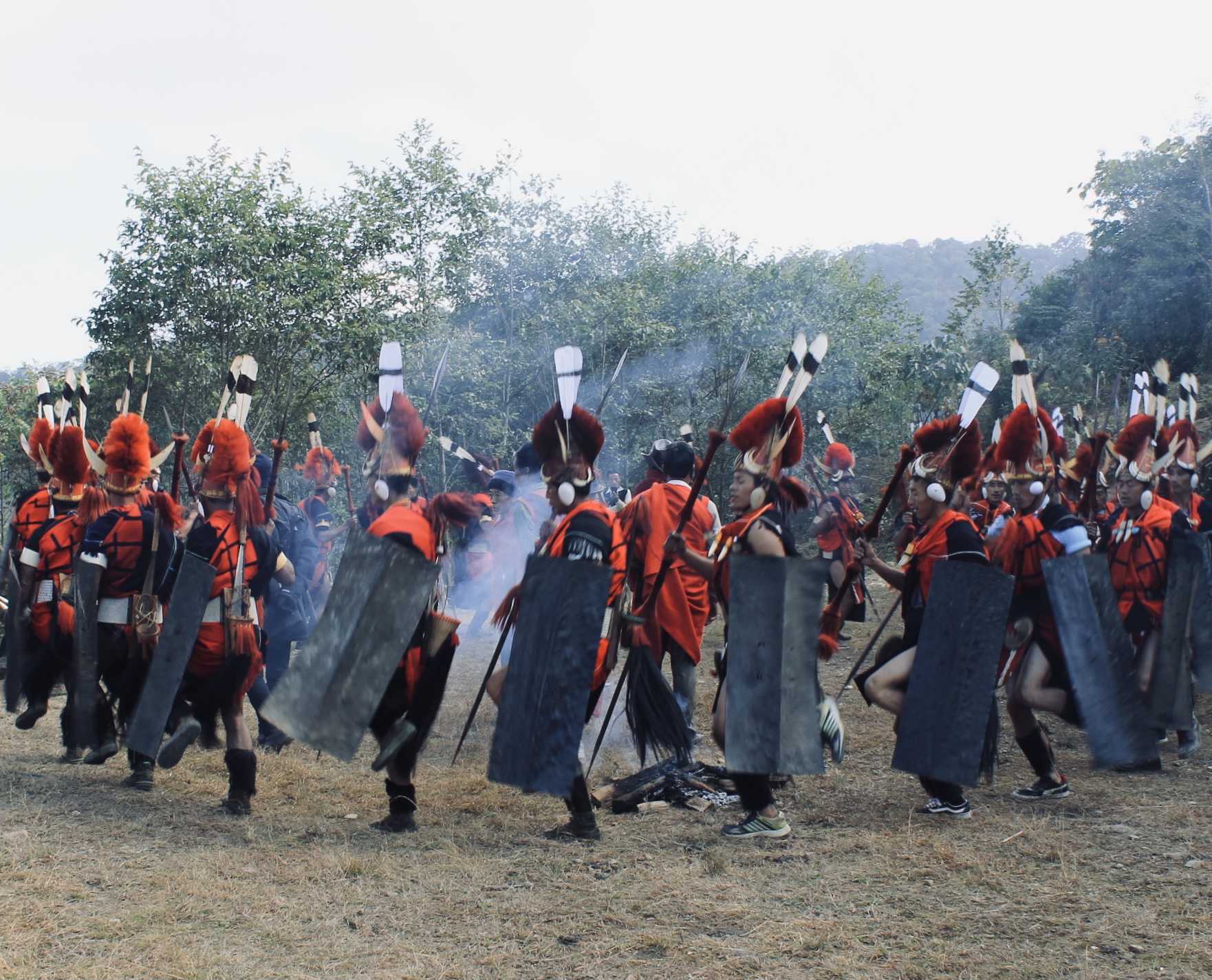
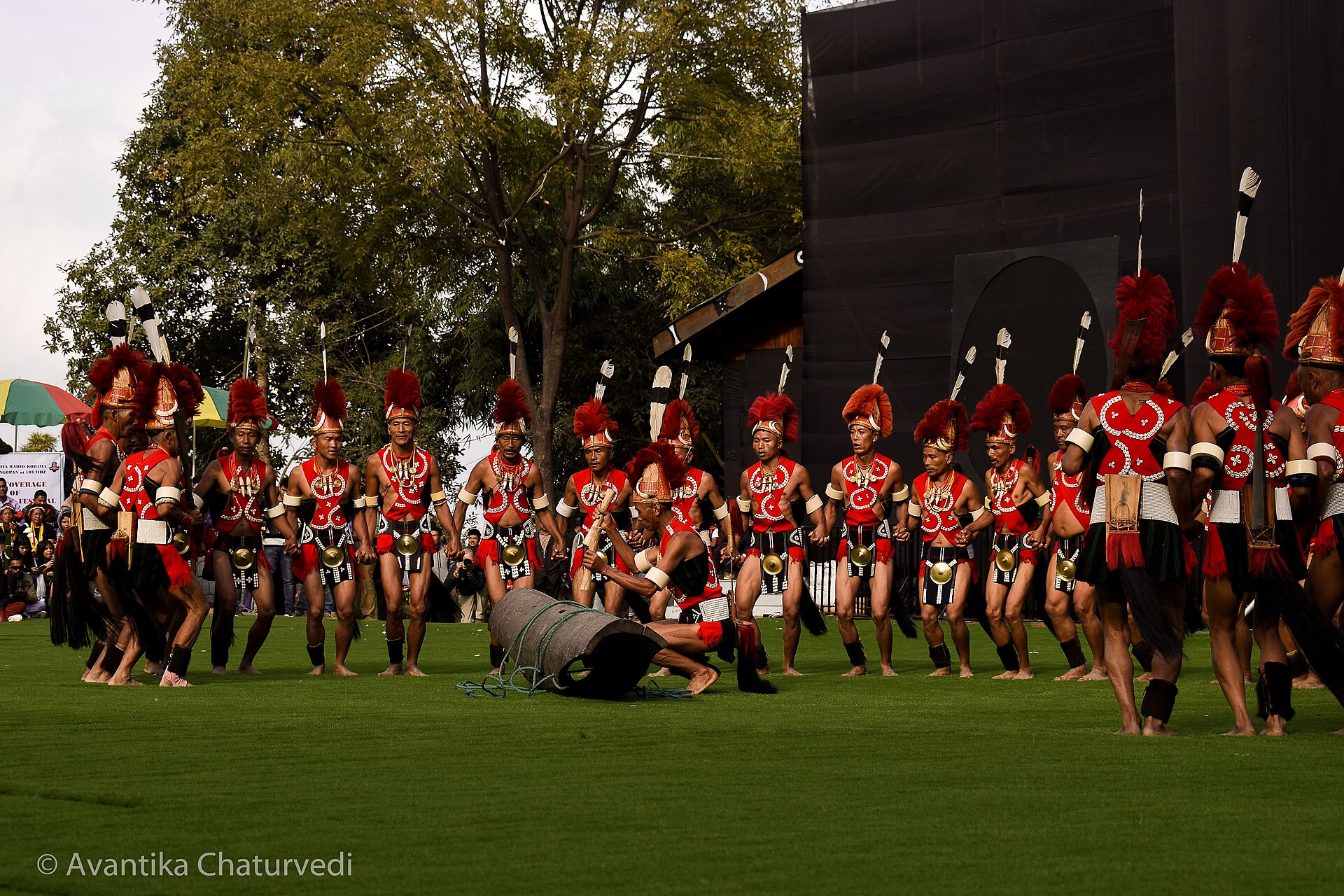
Aoleang, celebrated in the first week of April, is the most important Konyak festival. It marks the end of the old year, the start of the new agricultural cycle and the renewal of the bond between clans. Men dress in full warrior regalia, log drums are beaten through the night, and the Angh receives gifts from every household.
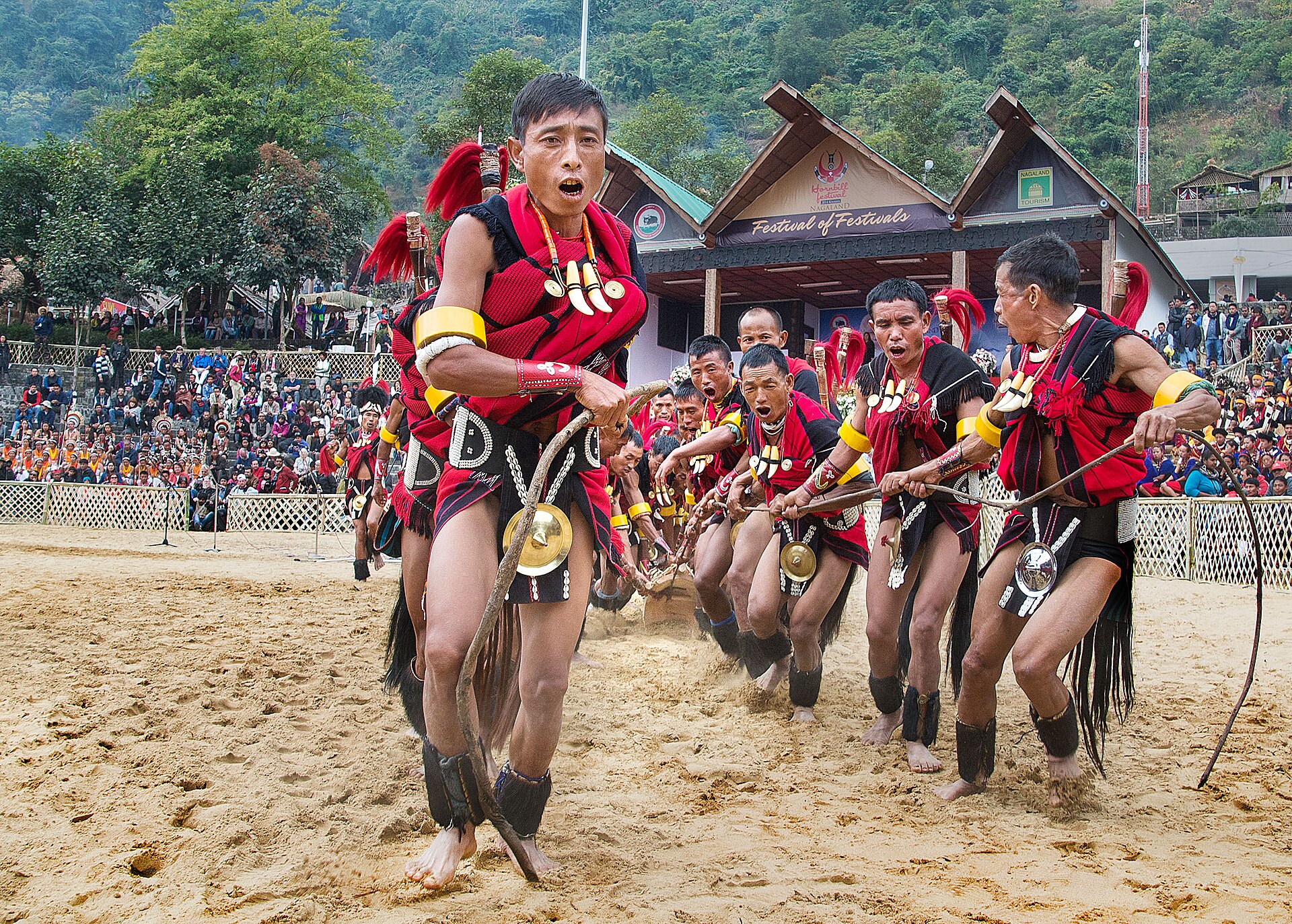
Lao-ong-mo, the harvest festival, is celebrated in August. During Hornbill Festival the Konyak morung at Kisama is one of the most photographed, drawing visitors who want to see the tattooed elders and hear the log drums beaten in the festival arena.
Food & Cuisine
Konyak cuisine relies on rice, smoked meats (especially pork, beef and game), bamboo shoot, yam and a wide range of foraged greens. Meals are simple, often cooked in a single pot over an open fire, with a great deal of smoked chilli and ginger. Rice beer brewed from sticky rice is served at almost every gathering.
Arts, Music & Dance
Konyak music is dominated by the log drum, whose deep beat carries for miles through the hills. War dances are vigorous and theatrical, with warriors leaping, stamping and shouting in unison. Konyak men are also exceptional craftsmen — making beadwork, basketry, and the famous Konyak daos (machetes) with carved bone handles.
Role During Hornbill Festival
The Konyak contingent is one of the largest at Hornbill Festival, traveling several hundred kilometres to Kisama. Their warrior dances, log-drum performances and the presence of the tattooed elders make their morung one of the most visited stops at the festival. Many visitors who fall in love with Konyak culture extend their trip with a journey up to Mon to see the villages in person.
Jewellery & Ornaments
The Konyak brass-skull necklace (Yanlonghai) is the most distinctive ornament in Nagaland — once one tiny brass head for every head taken in battle. Men also wear wild-boar tusk armlets, hornbill-feather hair sticks and red cane belts. Women wear loops of polished glass beads and brass coil earrings.
Tattoos & Body Art
Konyak facial and chest tattoos — diamonds across the throat, V-shapes on the chest, lines on the chin — were once marks of having taken a head in raid. Women's facial tattoos were marks of beauty given at puberty. The last generation of tattooed elders is now in their 80s and 90s; photographing them in Longwa, Hongphoi and Shangnyu is one of the most extraordinary cultural experiences in India.
Photography Tips
Morning light (6.30–8.30 a.m.) in Longwa is exceptional — the Angh's house sits on the ridge with mist rolling up from Myanmar.
Tattooed elders almost always smoke opium pipes; frame the pipe and the tattoos together, but always after a quiet introduction.
Log-drum (shum) performances are best photographed from a low angle to catch the drummers' upward strikes.
A small honorarium (₹200–500) to a tattooed elder for a portrait is considered respectful, not transactional.
Cultural Etiquette
The Angh's house is private — wait outside until invited in.
Never touch a Konyak headhunter's brass-skull necklace; it is considered an ancestral object.
Photography of the inside of a morung's skull-display alcove requires the Angh's permission.
Speak softly inside the chief's house; loud voices are considered ill-mannered.
Related Hornbill Performances at Kisama
At Kisama, the Konyak morung is the most visited stop. Daily highlights include the log-drum (shum) call, the head-taker's war dance with full warrior regalia, and the slow Konyak folk songs sung in deep chest voice. The morung also displays the brass-skull necklaces and the Angh's ceremonial throne.
Travel Information
The Konyak homeland in Mon district is reached most easily by road from Kohima or Dimapur. Most travellers fly into Dimapur (DMU), the only commercial airport in Nagaland, and continue by shared sumo or private vehicle. The drive from Dimapur to Kohima takes around two and a half to three hours; onward travel to the Konyak districts varies from a couple of hours to a full day depending on the village.
Permits are essential. Indian travellers need an Inner Line Permit (ILP), which can be issued online or at entry points in Dimapur and Kohima. Foreign travellers need a Protected Area Permit (PAP) and must register at the Foreigners' Registration Office on arrival. We handle both as part of any booking.
October to April is the most comfortable window to visit. December is festival season — roads are busier, stays book out months in advance, and temperatures in the hills drop sharply at night. Carry layers, sturdy shoes for village walks, and a power bank; electricity in remote villages can be intermittent.
Accommodation Options
Stays in Konyak country range from simple village homestays run by local families to mid-range guesthouses in the district headquarters. Kohima itself offers a wider choice — from deluxe properties like The Heritage and Razhü Pru to comfortable standard hotels closer to Kisama.
For a more immersive experience, we recommend at least one night in a traditional homestay. You'll share meals cooked over a wood fire, hear stories from elders, and wake to the sounds of a working Naga village. Most homestays are basic but spotlessly clean, with shared bathrooms and warm bedding.
During the Hornbill Festival (1–10 December), rooms in and around Kohima fill up by September. Booking early matters more than booking expensive — we'll suggest the right fit based on your dates, budget and how close to Kisama you want to be.
Gallery
Photographs from Longwa, Shangnyu and Hongphoi villages — Angh houses, log drums and the famous tattooed elders.
Photographs
Frequently Asked Questions
- Are Konyak villages safe to visit?
- Yes. Mon district is peaceful and well-patrolled; the main caution is the rough road from Sonari (Assam) to Mon — 4–6 hours of slow driving.
- How do I reach Longwa village?
- Fly to Dibrugarh, drive 4 hours to Mon, then 2 hours to Longwa. We arrange permits, driver and a Konyak-speaking guide.
- Will I still see tattooed elders?
- Yes, but the youngest tattooed Konyak is now in their late 70s. We recommend visiting in the next 3–5 years to meet this generation.
Plan a Konyak Visit
Plan Your Visit
Meet the Konyak at the Hornbill Festival
See the Konyak morung in person at Kisama, or extend your trip with a visit to a Konyak village in Mon District.