Introduction
The Ao are one of the largest and most culturally influential Naga tribes, living principally in Mokokchung district. They were the first Naga community to receive Christian missionaries — the American Baptist mission established a foothold at Molungkimong in 1872 — and as a result, the Ao developed an early tradition of literacy, schooling and written literature in their own language.
The Ao language is now one of the most widely written Naga languages, with a rich tradition of folk songs, hymns, and modern literature.
History & Origins
Ao oral tradition holds that the ancestors emerged from six stones at Lungterok, on the Chongliemdi hill near present-day Longkhum. From there, the original six clans spread out to found the villages of the Ao homeland. The two main divisions of the Ao — Chongli and Mongsen — speak distinct dialects but share a common culture and history.
The early adoption of Christianity reshaped Ao society. Within two generations, headhunting was abandoned, mission schools spread across the district, and Ao men and women became among the first Nagas to take up modern professions in teaching, medicine and the civil service.
District & Location
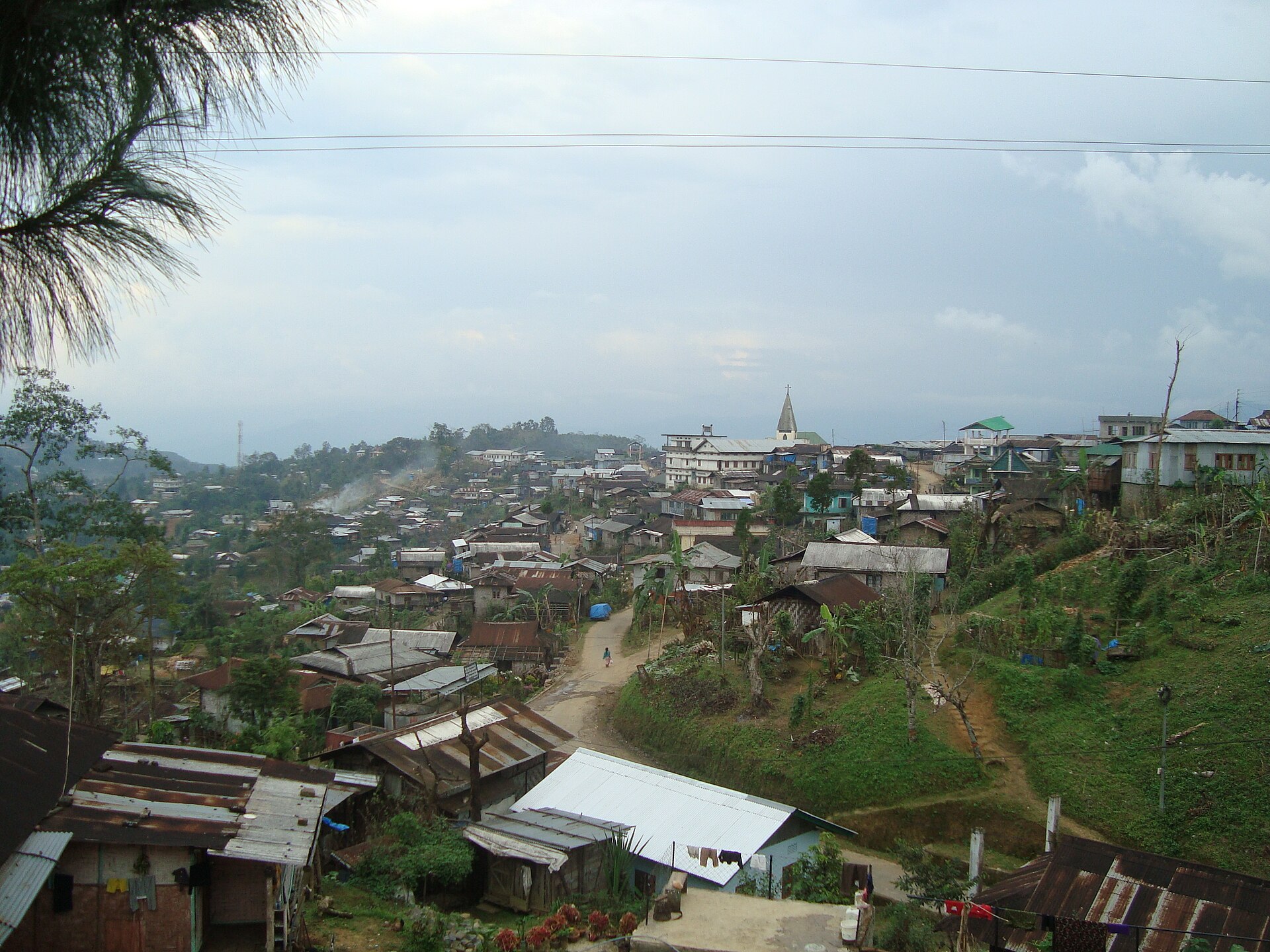
Mokokchung district, in the central-north of Nagaland, is the Ao homeland. The district town of Mokokchung sits on a ridge at around 1,325 metres and is one of the larger urban centres in Nagaland. The drive from Kohima takes around six to seven hours through the Naga hills.
Important Villages
Ungma is considered the mother village of the Ao tribe and one of the largest villages in Nagaland by population. Longkhum, perched on a high ridge, is famous for its panoramic views and the legend of Jina and Etiben — a Naga Romeo and Juliet story. Mopungchuket, Khensa and Chuchuyimlang are other important Ao villages worth visiting.
Traditional Attire
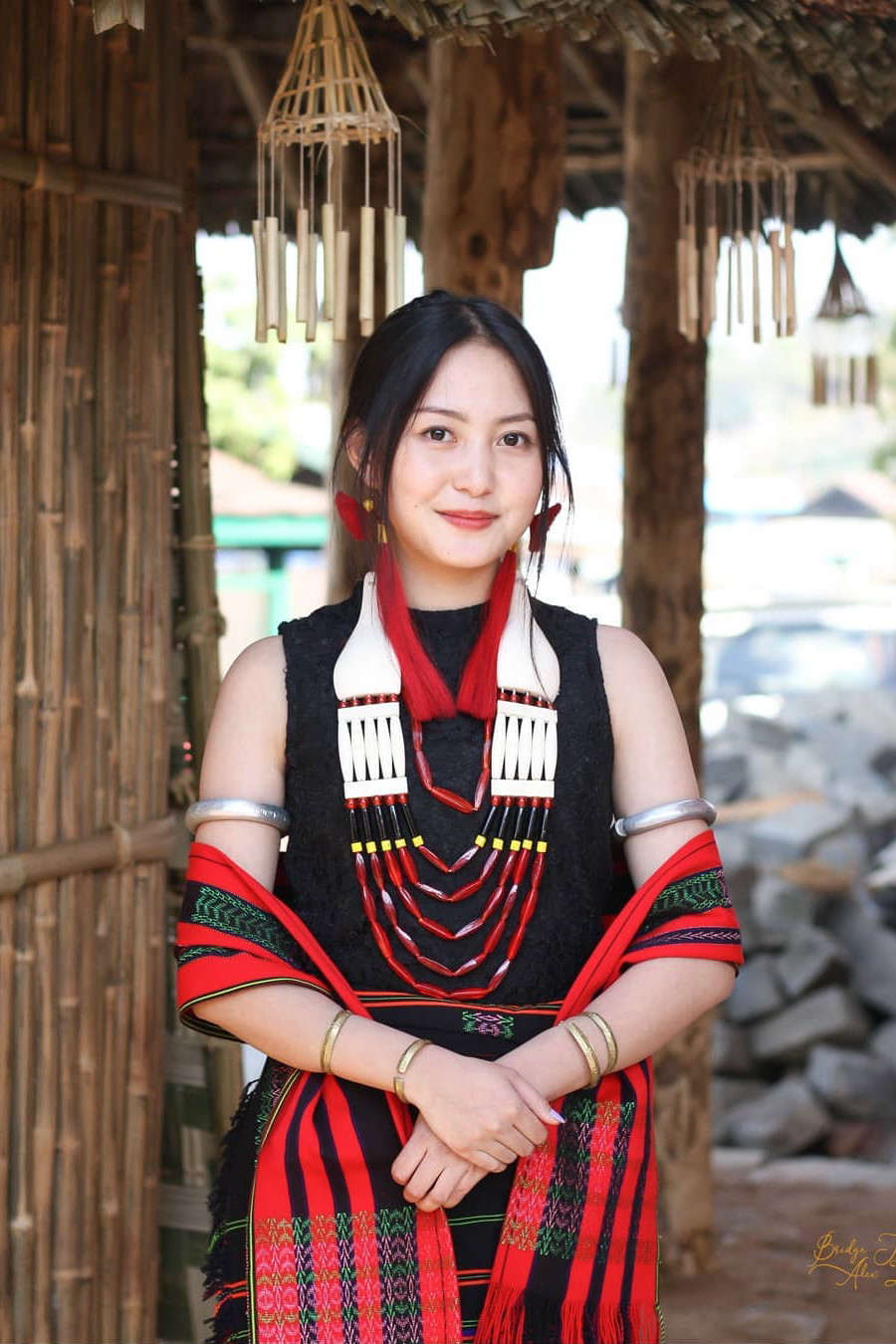
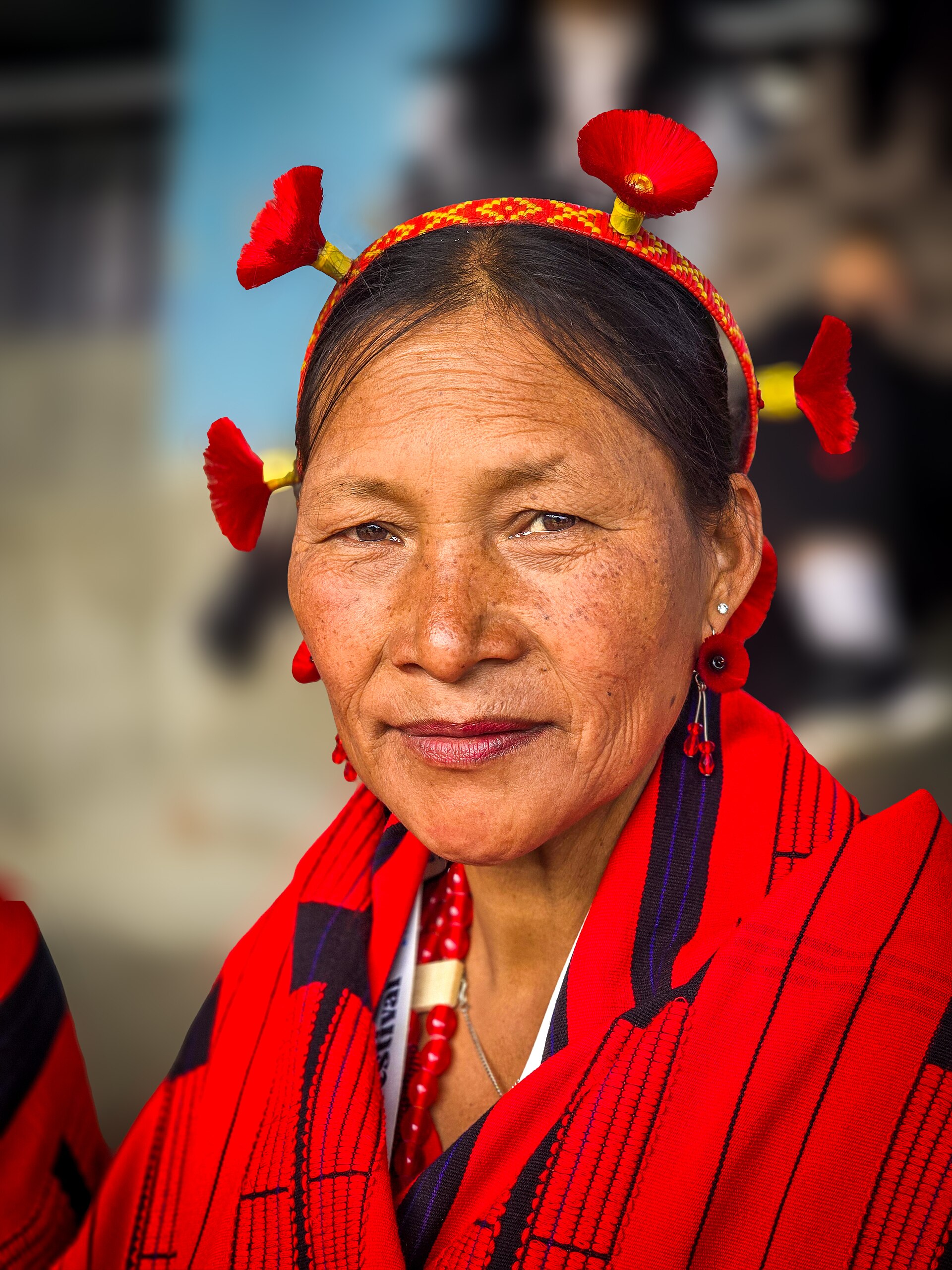
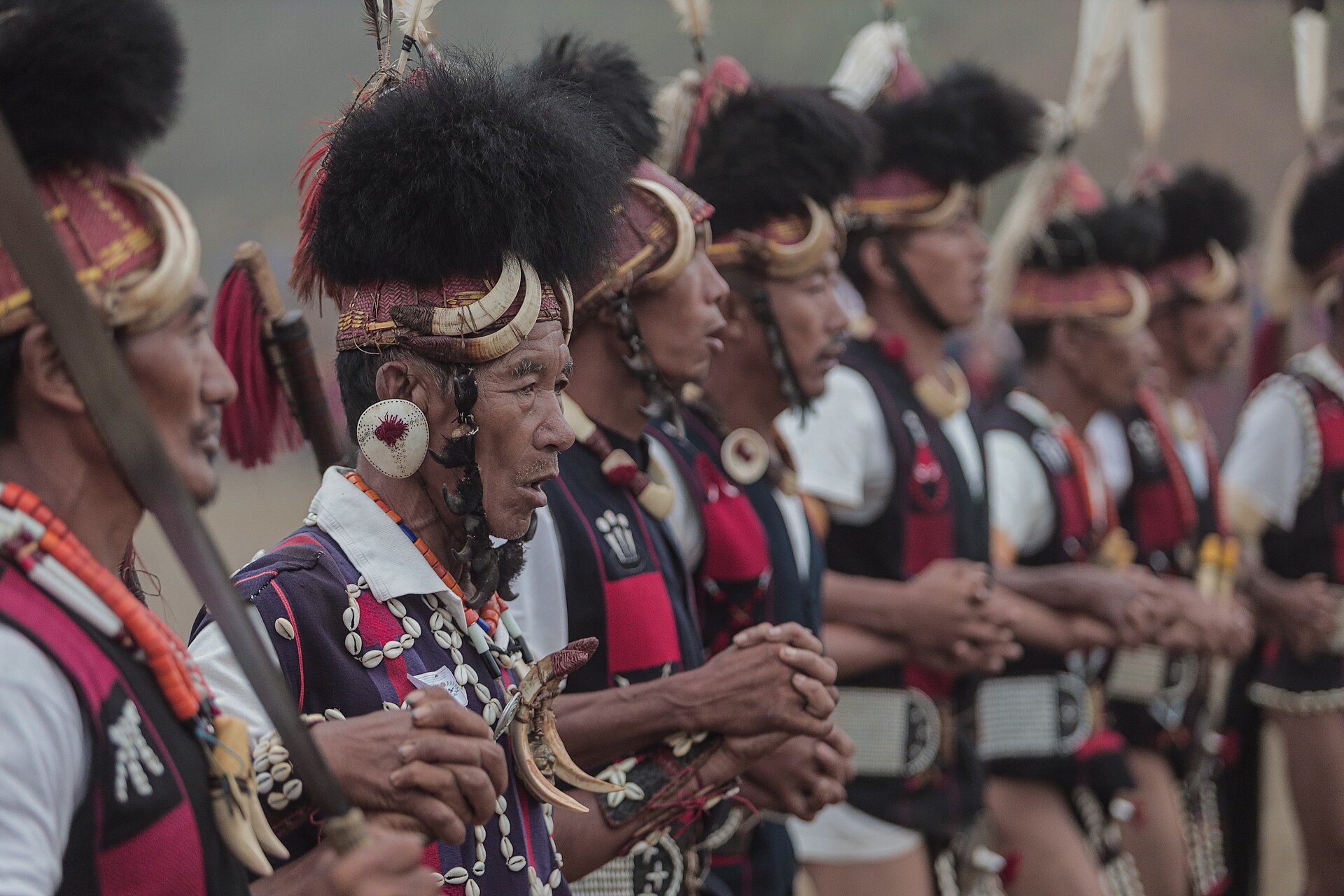
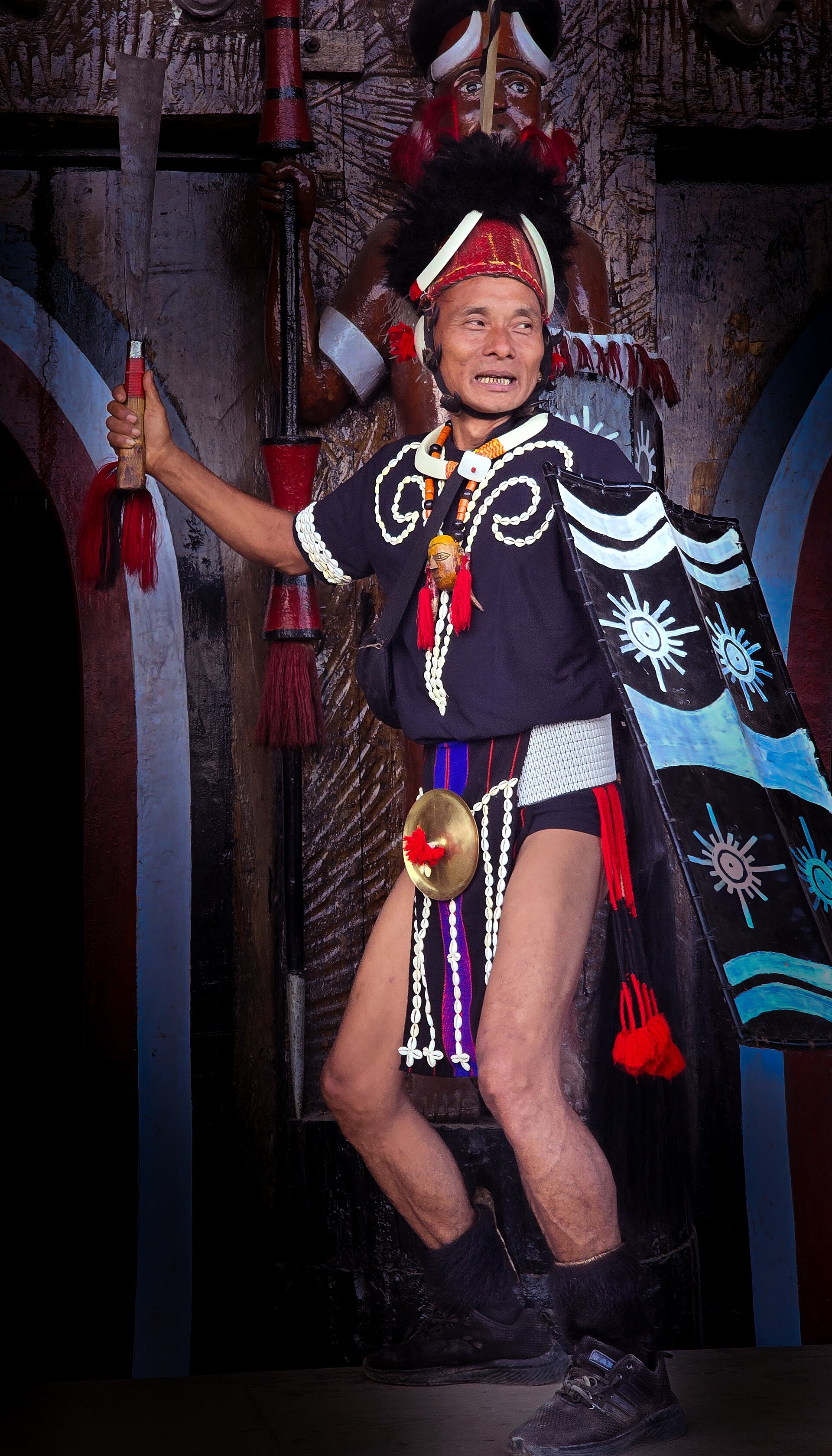
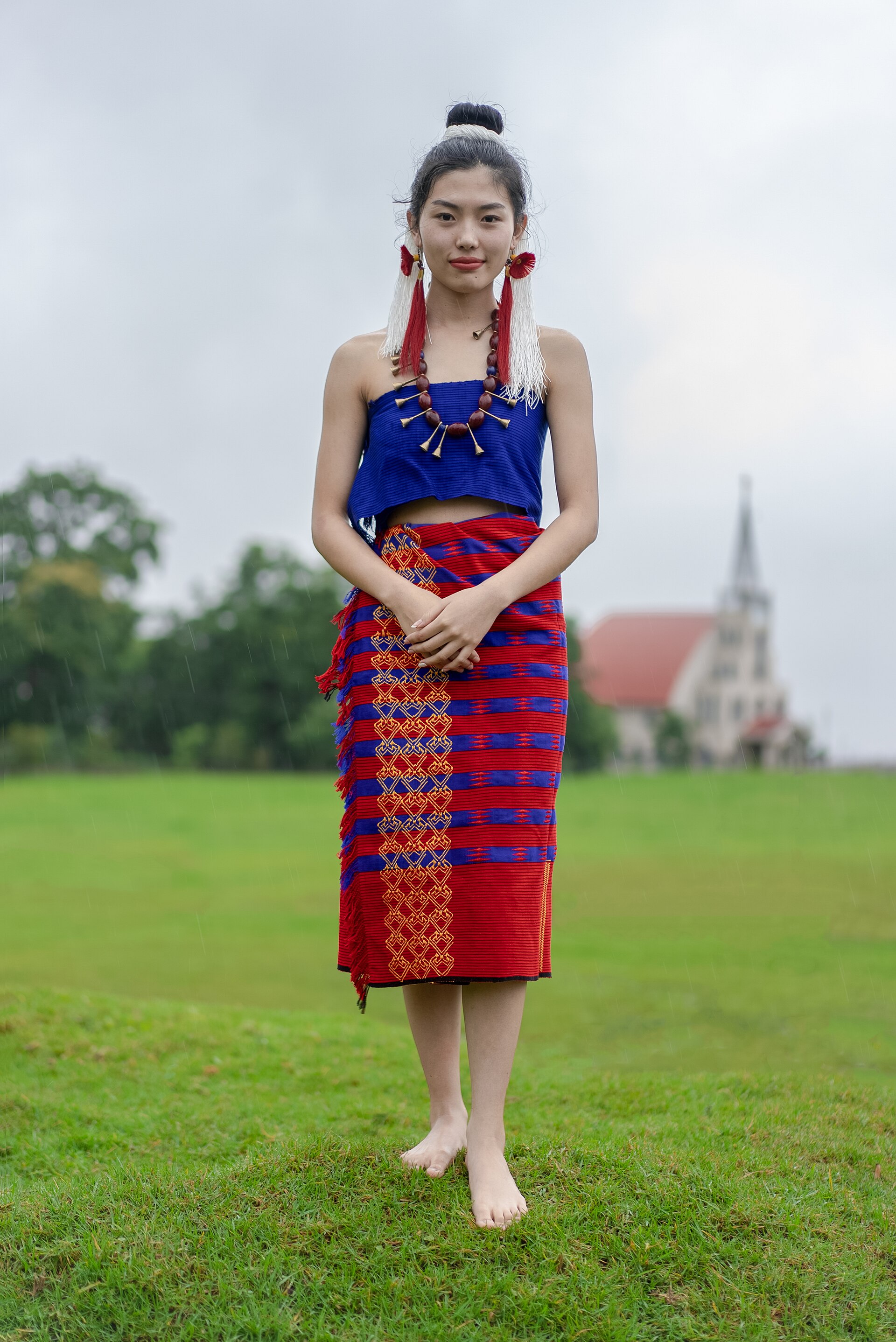
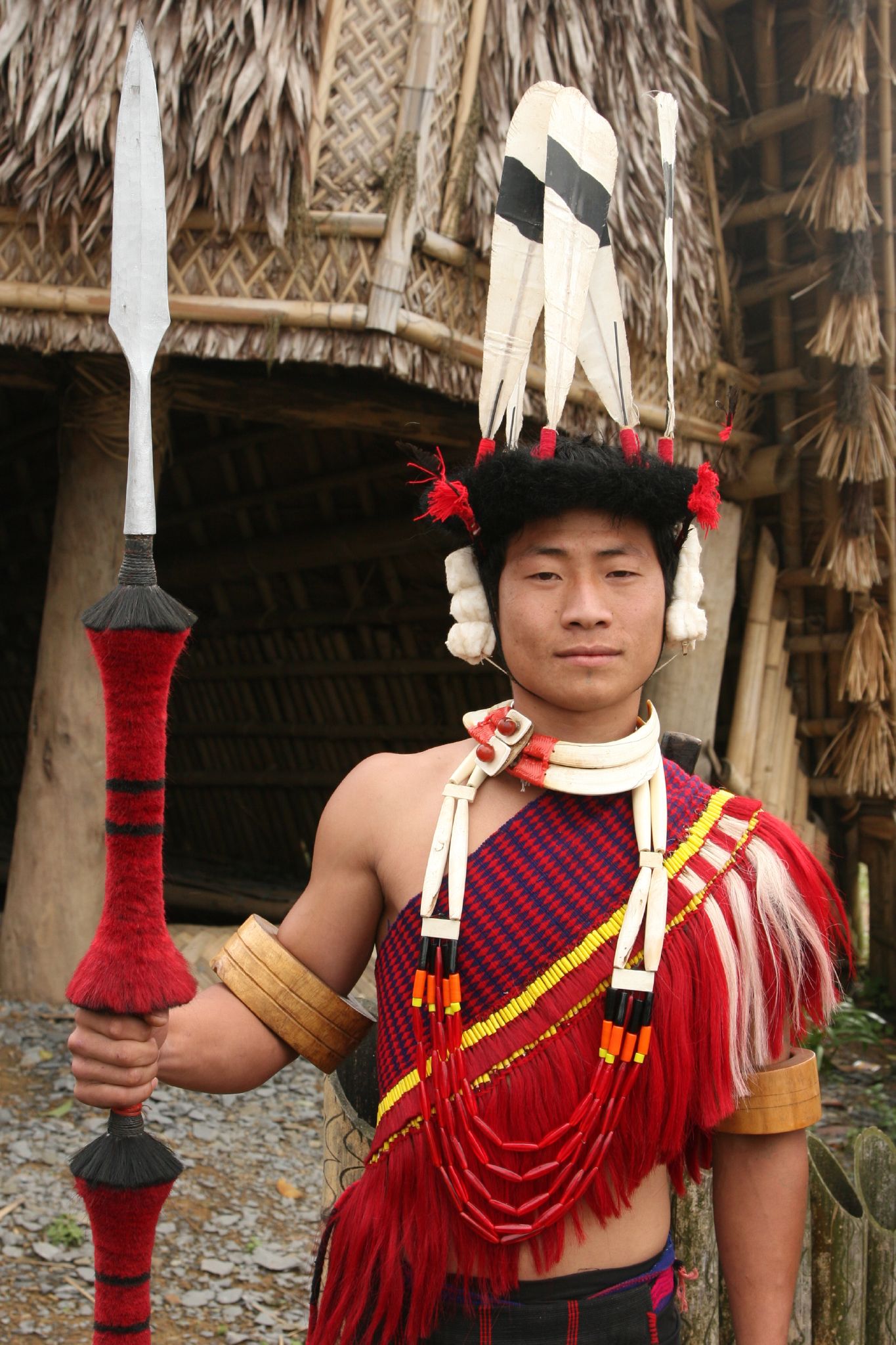
Ao men wear the Tsüngkotepsü, a red and black shawl with bold figures of mithun, tiger, human heads and elephants embroidered in white. Only men who had completed a series of feasts of merit were entitled to wear it. Women wear the Azu jangnup su, a striking black wraparound with bands of red, yellow and green at the borders.
Morung & Architecture
The Ao morung (called the Arü) was once the centre of village life — a school, a guard post and a dormitory for unmarried young men, all in one. Traditional Ao houses are built of wood with thatched roofs, with carved planks and a covered front porch. Some villages still maintain ceremonial morungs for cultural occasions.
Culture & Lifestyle
Ao society is patrilineal and organised into clans, with each clan having its own land and its own role in village ceremonies. Decisions are taken by a village council called the Putu Menden, whose members serve for fixed terms.
Wet-rice and jhum cultivation are both practised, depending on the terrain. Education is highly valued — Mokokchung has one of the highest literacy rates in Northeast India.
Festivals & Celebrations
Moatsü, celebrated in the first week of May, marks the end of the sowing season. Villages gather for three days of feasting, singing and dancing, with elders blessing the year's crops. Tsüngrem Mong, celebrated in early August, is a pre-harvest festival of thanksgiving.
At Hornbill Festival, the Ao morung at Kisama is a centre of singing and folk-song performance, with choirs that draw on both traditional and church-influenced harmonies.
Food & Cuisine
Ao food is mild compared to some other Naga cuisines, built around rice, smoked pork, bamboo shoot and a wide range of leafy greens. Anishi — a paste made of fermented and dried colocasia leaves — is a signature Ao ingredient, usually cooked with smoked pork. Rice beer (Yu) is brewed in every household for special occasions.
Arts, Music & Dance
The Ao are particularly known for their choral singing — folk songs in harmony, often sung by groups of men and women in alternation. Traditional dances include the warrior dance and the harvest dance, performed in full ceremonial dress. Weaving on the back-strap loom remains a living craft, and Ao shawls are widely sold across Nagaland.
Role During Hornbill Festival
The Ao contingent at Hornbill is known for the quality of its choral singing and the careful display of traditional crafts. The Ao morung is one of the most welcoming at Kisama, often with elders happy to explain the meaning of the patterns on each shawl.
Jewellery & Ornaments
Ao women wear strings of red and yellow cornelian beads (Tsüngrem), brass earrings and conch-shell pendants. Men wear cowrie-shell necklaces, hornbill-feather hair ornaments and brass armlets earned through merit feasts.
Tattoos & Body Art
Traditionally, Ao women of certain clans received chin and leg tattoos at puberty as marks of beauty and clan identity. The practice has largely ended; a small number of elderly women in Mokokchung district still bear the tattoos.
Photography Tips
Ungma village (just outside Mokokchung) holds a small Moatsü celebration in early May — far less crowded than the official Mokokchung event.
Late-afternoon light on the long Ao houses, with their carved bargeboards, is exceptional in October and November.
Hornbill Festival's Ao morung often features live Sangpangtu (community fire-gathering) recreations — golden hour at 4–5 p.m. is ideal.
Cultural Etiquette
Ao villages are deeply Christian (Baptist); Sunday is observed strictly — avoid scheduling visits or photography on Sundays.
Always greet the village pastor or Gaonbura before walking through a village.
Smoking and drinking should be discreet; alcohol is officially prohibited in Nagaland.
Related Hornbill Performances at Kisama
At Kisama, the Ao morung is known for the Sangpangtu fire-circle storytelling, war dances, and the singing of Tsüngrem Lü (folk songs) in three-part harmony. The Ao stall also serves smoked-pork Anishi (yam-leaf paste) — a Mokokchung delicacy.
Travel Information
The Ao homeland in Mokokchung district is reached most easily by road from Kohima or Dimapur. Most travellers fly into Dimapur (DMU), the only commercial airport in Nagaland, and continue by shared sumo or private vehicle. The drive from Dimapur to Kohima takes around two and a half to three hours; onward travel to the Ao districts varies from a couple of hours to a full day depending on the village.
Permits are essential. Indian travellers need an Inner Line Permit (ILP), which can be issued online or at entry points in Dimapur and Kohima. Foreign travellers need a Protected Area Permit (PAP) and must register at the Foreigners' Registration Office on arrival. We handle both as part of any booking.
October to April is the most comfortable window to visit. December is festival season — roads are busier, stays book out months in advance, and temperatures in the hills drop sharply at night. Carry layers, sturdy shoes for village walks, and a power bank; electricity in remote villages can be intermittent.
Accommodation Options
Stays in Ao country range from simple village homestays run by local families to mid-range guesthouses in the district headquarters. Kohima itself offers a wider choice — from deluxe properties like The Heritage and Razhü Pru to comfortable standard hotels closer to Kisama.
For a more immersive experience, we recommend at least one night in a traditional homestay. You'll share meals cooked over a wood fire, hear stories from elders, and wake to the sounds of a working Naga village. Most homestays are basic but spotlessly clean, with shared bathrooms and warm bedding.
During the Hornbill Festival (1–10 December), rooms in and around Kohima fill up by September. Booking early matters more than booking expensive — we'll suggest the right fit based on your dates, budget and how close to Kisama you want to be.
Gallery
Photographs from Ungma, Longkhum and Mokokchung town, including Moatsü festival and everyday village life.
Photographs
Frequently Asked Questions
- When is the Moatsü festival celebrated?
- Moatsü is celebrated in the first week of May (1–3 May officially) across all Ao villages and most prominently in Mokokchung town.
- Is Mokokchung worth visiting outside festival time?
- Yes. Mokokchung is the cultural capital of the Ao and one of the most pleasant hill towns in Nagaland — comfortable any time between October and April.
Plan a Ao Visit
Plan Your Visit
Meet the Ao at the Hornbill Festival
See the Ao morung in person at Kisama, or extend your trip with a visit to a Ao village in Mokokchung District.