Introduction
The Lotha are a major Naga tribe living principally in Wokha district. They are known for an unusually elaborate ceremonial culture, fine ornamentation, and a strong tradition of feasts of merit — public feasts in which a man and his wife earn social rank by giving away enormous quantities of food, drink and livestock.
Lotha society places great emphasis on hospitality, on ceremonial display, and on the careful maintenance of clan identity.
History & Origins
Lotha oral history traces the tribe's migration from the south, with the ancestral village of Phiro often cited as the original Lotha settlement. From Phiro, the clans spread out to found the present-day Lotha villages of Wokha district.
Christianity reached the Lotha in the late nineteenth century, brought by American Baptist missionaries, and the tribe today is overwhelmingly Christian.
District & Location
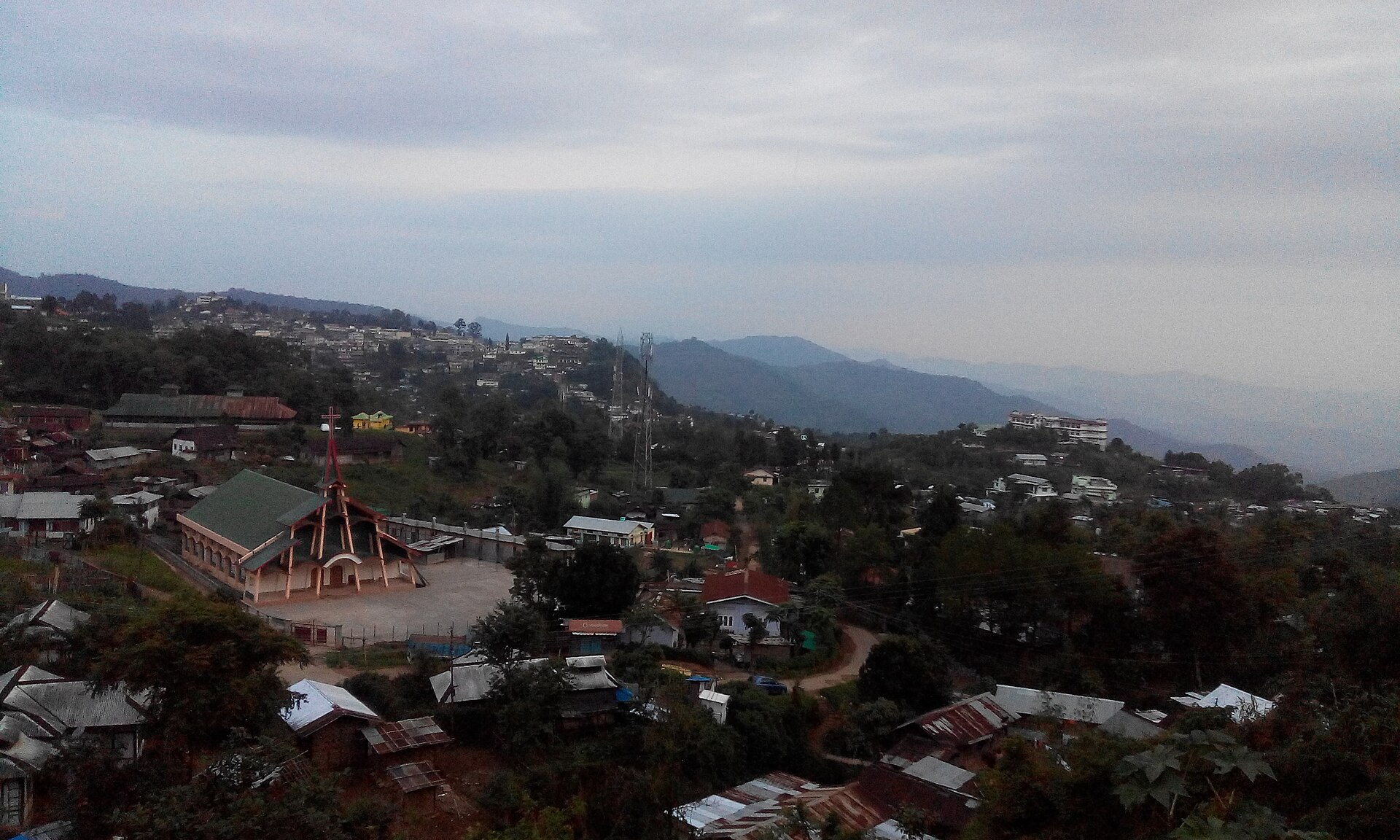
Wokha district lies between the Angami and Ao territories, with the district town of Wokha sitting at around 1,313 metres. The drive from Kohima takes about four hours.
Important Villages
Longsa, Pangti, Yikhum and Englan are among the well-known Lotha villages. Pangti is famous for being on the migration route of the Amur falcon — millions of these small raptors pass through the area every October on their way from Mongolia to southern Africa.
Traditional Attire
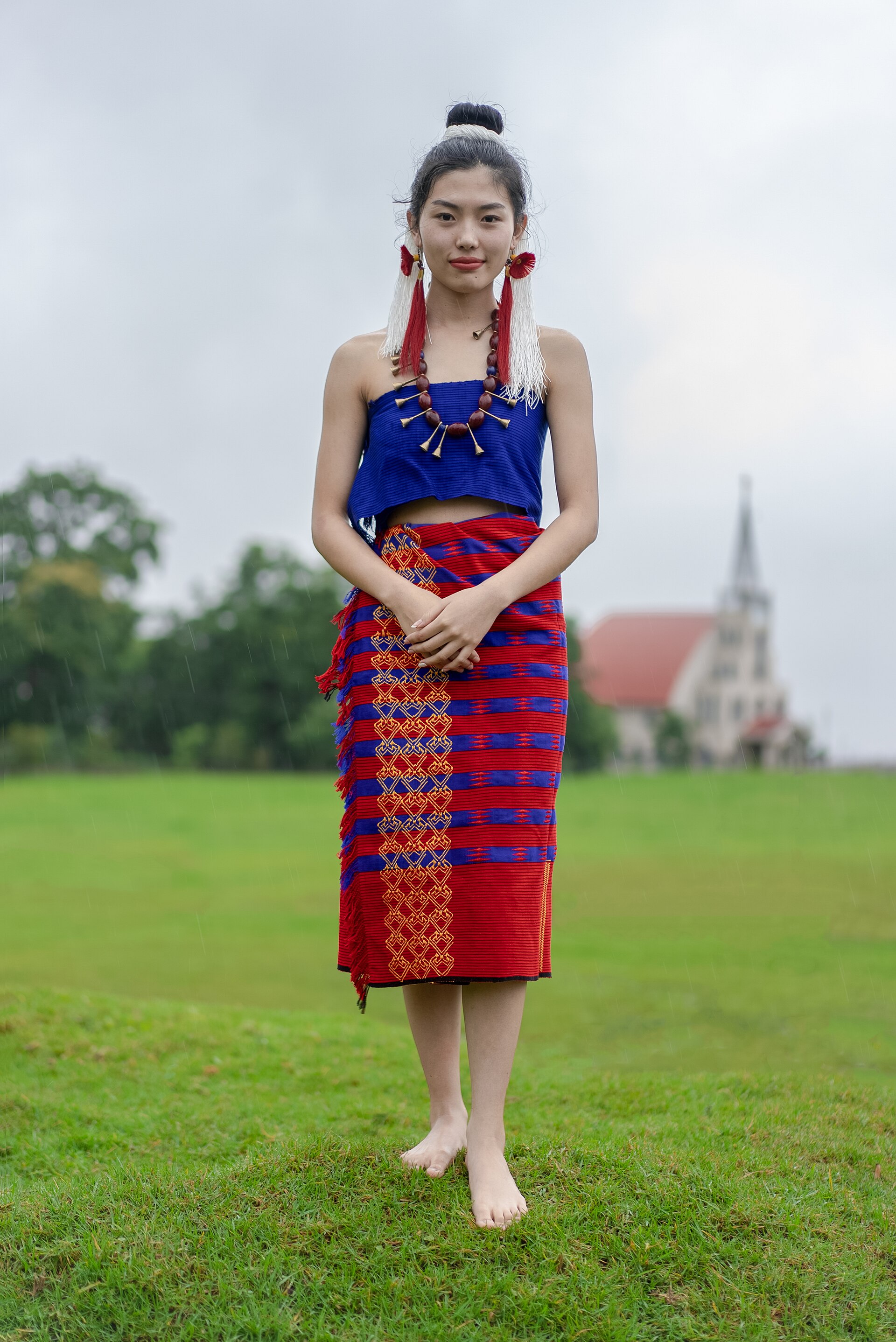
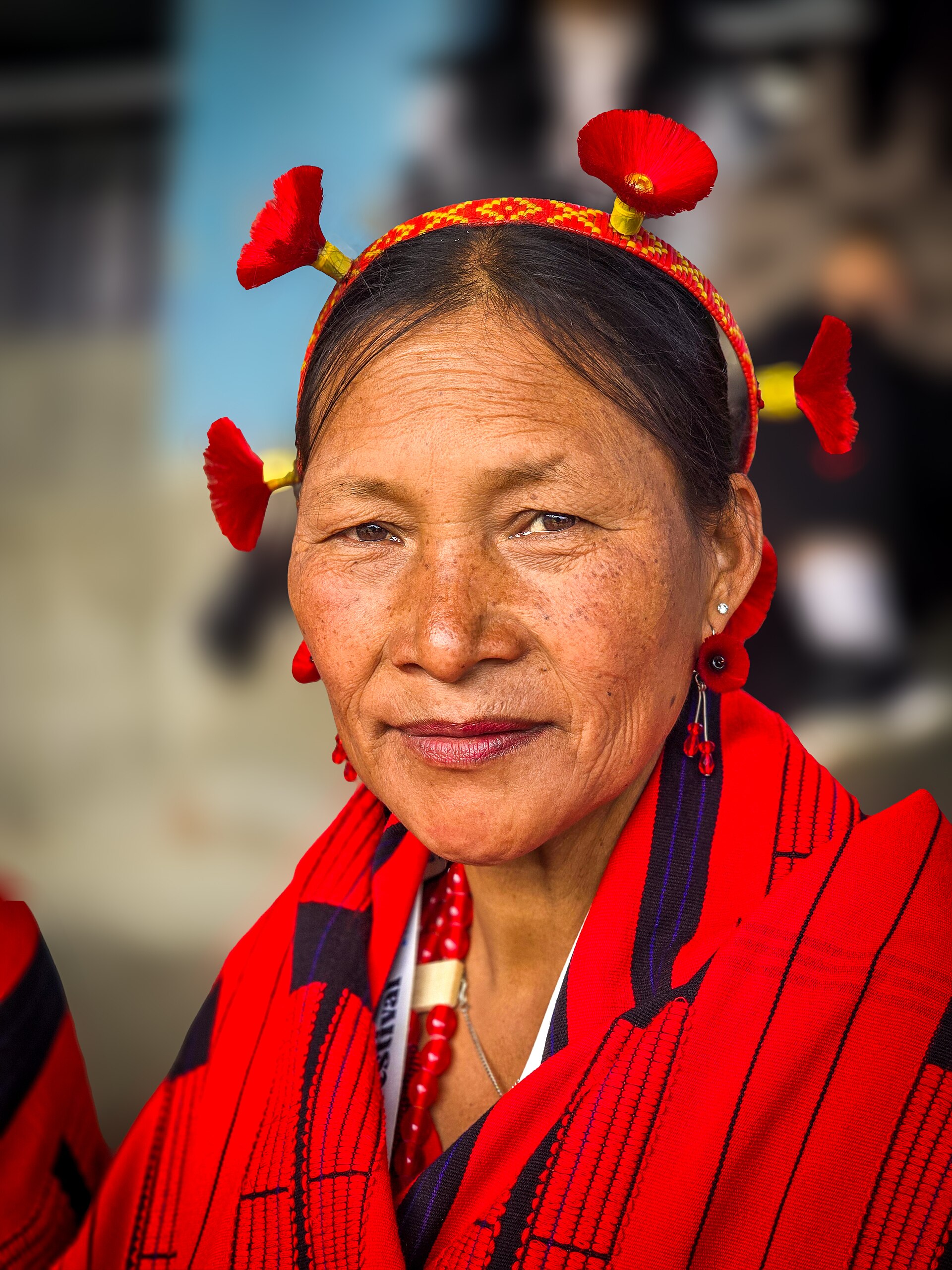
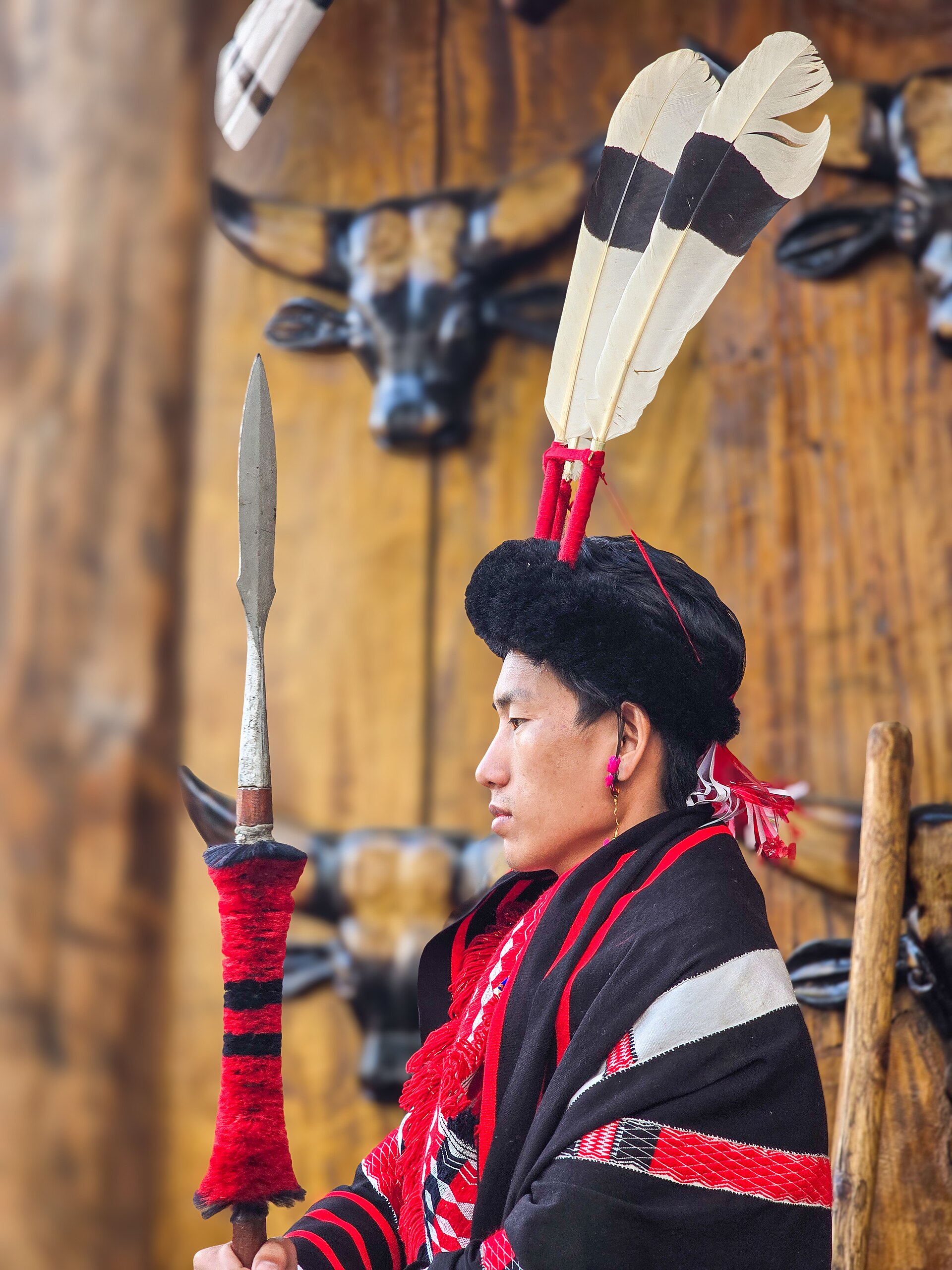
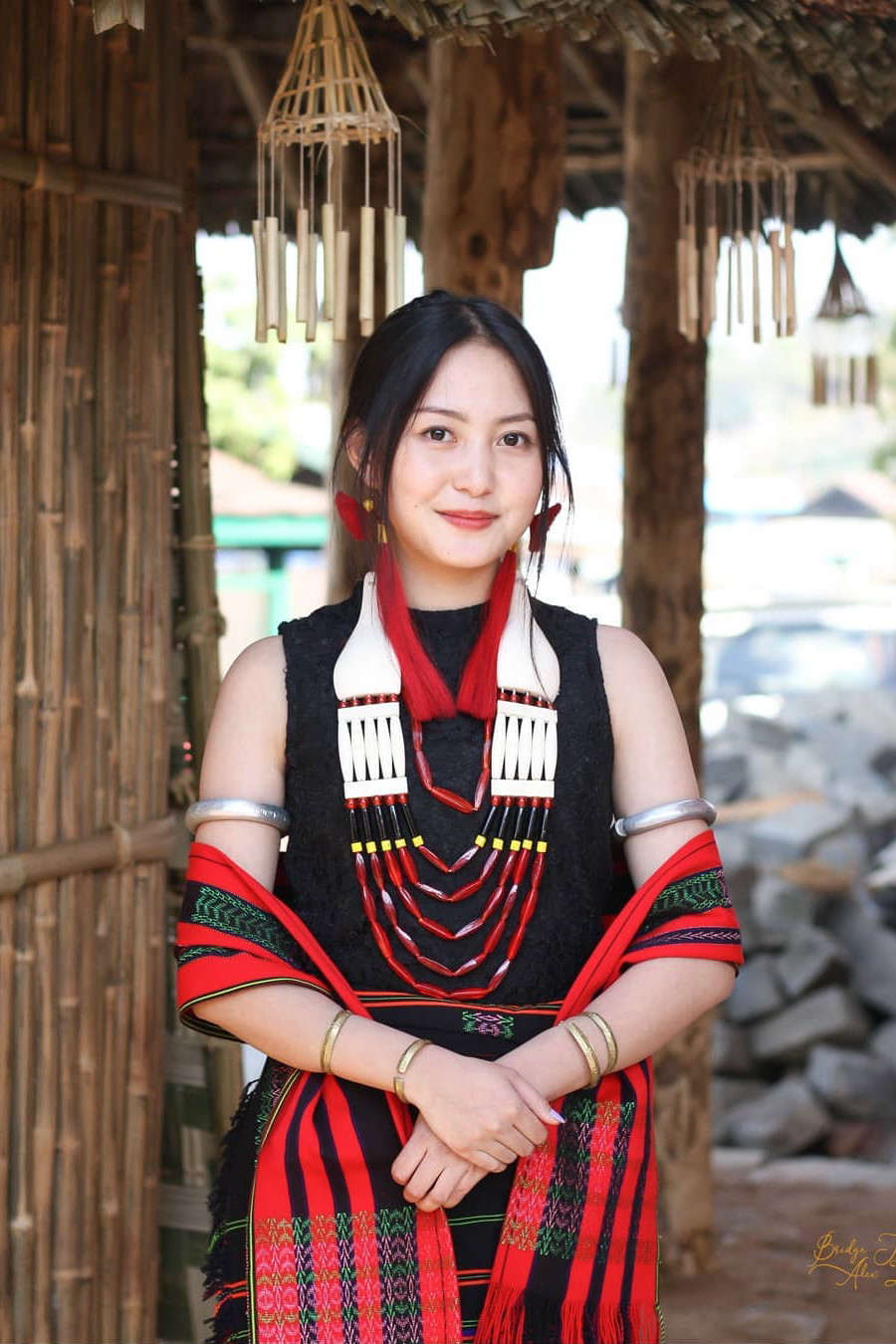
Lotha men wear the Süthak shawl, with bold red and black bands, as their ceremonial garment. Men of high rank — those who have given a series of feasts of merit — wear the Longpensü, a shawl with additional cowrie-shell decoration. Women wear richly patterned wraparound skirts with bead necklaces and brass ornaments.
Morung & Architecture
The Lotha morung (called the Champo) was the centre of village life for unmarried young men, who would sleep there at night, learn from elders and participate in collective work. Houses are built of timber with thatched roofs, often with carved planks and decorated gable horns.
Culture & Lifestyle
Lotha society is organised around patrilineal clans, with village councils made up of the heads of the principal clans. Feasts of merit (Oking) remain a culturally important institution, though they are now performed less frequently than in the past.
Festivals & Celebrations
Tokhü Emong, celebrated in the first week of November, is the most important Lotha festival. It marks the end of the harvest and is a nine-day celebration of feasting, singing, dancing and visits between villages.
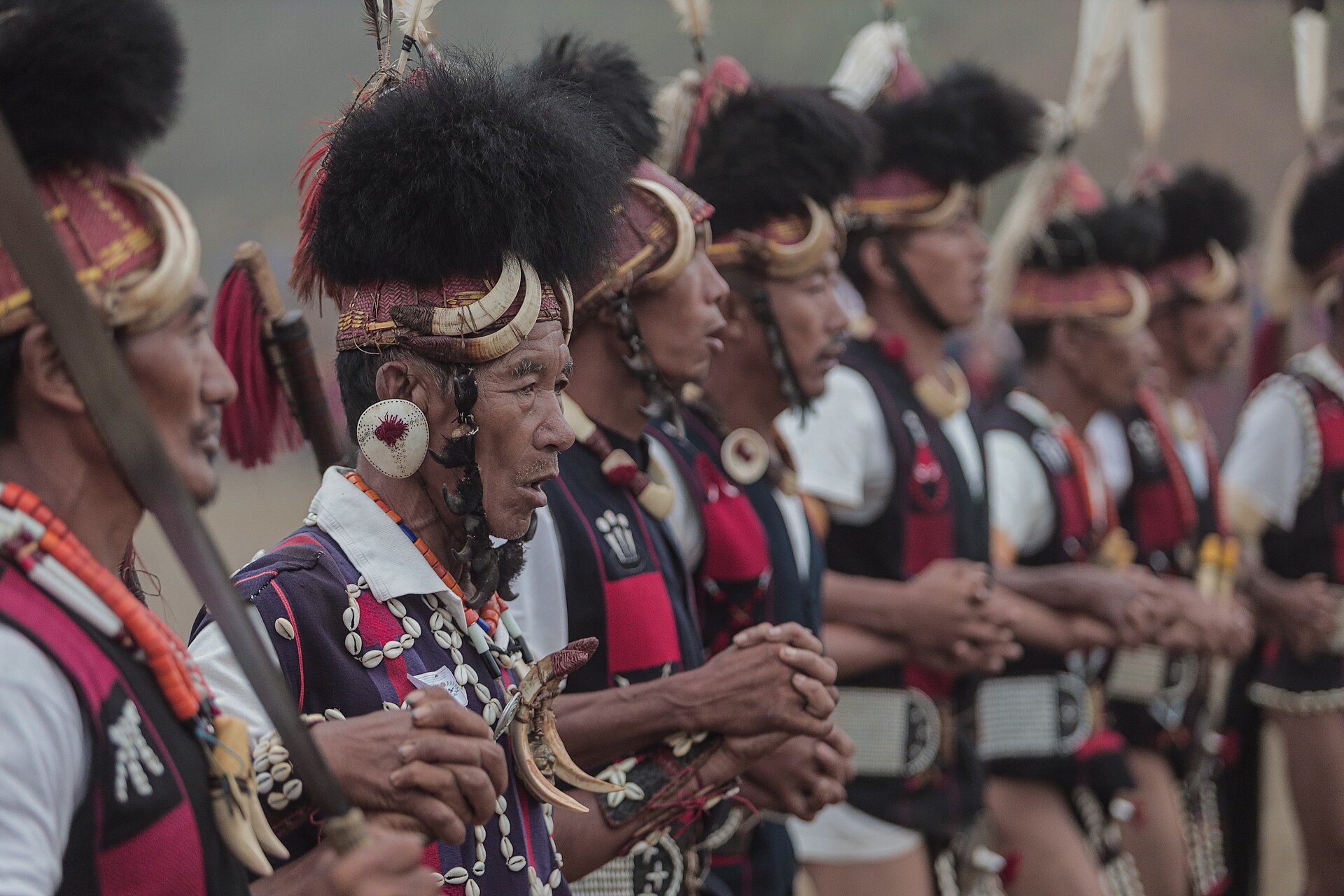
At Hornbill Festival, the Lotha morung at Kisama is known for the quality of its singing and the elaborate display of traditional ornaments.
Food & Cuisine
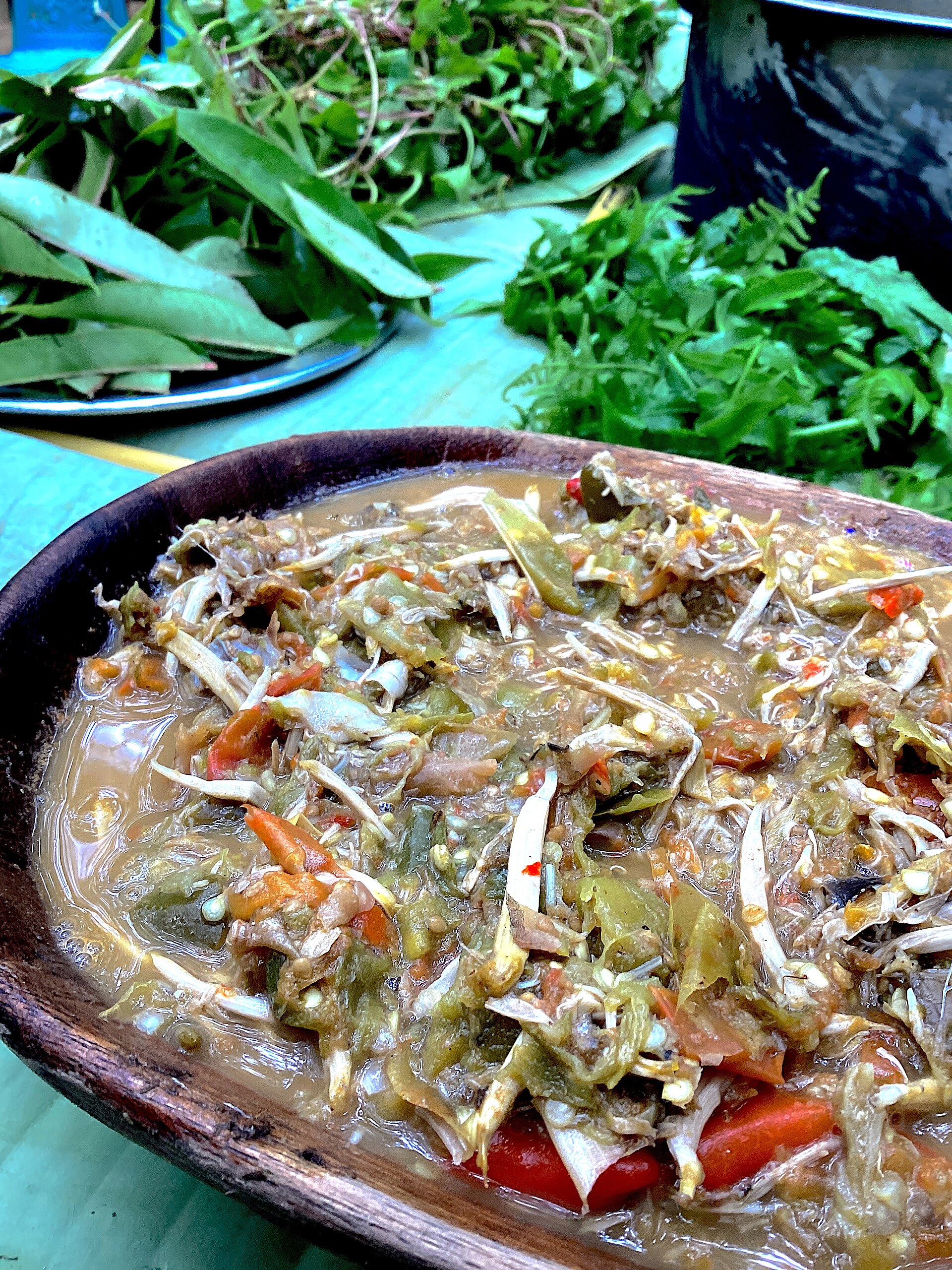
Lotha cuisine features smoked pork, fermented bamboo shoot, dried fish and a wide range of foraged greens. Pork cooked with axone (fermented soya bean) is a festival staple. Rice beer brewed from sticky rice is served at all important gatherings.
Arts, Music & Dance
Lotha folk songs are sung in slow, layered harmonies that often tell the story of a particular feast or a legendary ancestor. Traditional dances are performed in groups, with men and women in separate lines or circles.
Role During Hornbill Festival
The Lotha morung at Kisama is one of the more elaborately decorated, with displays of shawls, ornaments and traditional household items. Lotha choirs perform regularly at the festival's evening programmes.
Jewellery & Ornaments
Lotha men wear the Phangrhup, a cowrie-decorated baldric, with cornelian and conch necklaces. Women wear strings of red and white beads and heavy brass coil earrings.
Photography Tips
Tokhü Emong (7 November) in Wokha is colour-rich and uncrowded — a strong alternative to the Hornbill rush.
At Kisama the Lotha morung's harvest-dance is performed daily around 11 a.m. — bright midday light suits the all-white shawls.
Cultural Etiquette
Lotha society is matrilineal in some clans — address senior women with the title 'Apvü' (mother) as a sign of respect.
Wokha district is a strong Baptist area — Sundays are observed strictly.
Related Hornbill Performances at Kisama
At Kisama the Lotha morung features the Rhalo harvest dance, the slow Lichak folk songs, and a working loom where visitors can see the famous Lotha black-and-red shawls being woven.
Travel Information
The Lotha homeland in Wokha district is reached most easily by road from Kohima or Dimapur. Most travellers fly into Dimapur (DMU), the only commercial airport in Nagaland, and continue by shared sumo or private vehicle. The drive from Dimapur to Kohima takes around two and a half to three hours; onward travel to the Lotha districts varies from a couple of hours to a full day depending on the village.
Permits are essential. Indian travellers need an Inner Line Permit (ILP), which can be issued online or at entry points in Dimapur and Kohima. Foreign travellers need a Protected Area Permit (PAP) and must register at the Foreigners' Registration Office on arrival. We handle both as part of any booking.
October to April is the most comfortable window to visit. December is festival season — roads are busier, stays book out months in advance, and temperatures in the hills drop sharply at night. Carry layers, sturdy shoes for village walks, and a power bank; electricity in remote villages can be intermittent.
Accommodation Options
Stays in Lotha country range from simple village homestays run by local families to mid-range guesthouses in the district headquarters. Kohima itself offers a wider choice — from deluxe properties like The Heritage and Razhü Pru to comfortable standard hotels closer to Kisama.
For a more immersive experience, we recommend at least one night in a traditional homestay. You'll share meals cooked over a wood fire, hear stories from elders, and wake to the sounds of a working Naga village. Most homestays are basic but spotlessly clean, with shared bathrooms and warm bedding.
During the Hornbill Festival (1–10 December), rooms in and around Kohima fill up by September. Booking early matters more than booking expensive — we'll suggest the right fit based on your dates, budget and how close to Kisama you want to be.
Gallery
Photographs from Wokha town, Pangti village and Tokhü Emong festival.
Photographs
Frequently Asked Questions
- When is Tokhü Emong?
- Tokhü Emong is the Lotha post-harvest festival held annually from 7 November in Wokha district — a week of feasting, dance and community gatherings.
- Can I visit Doyang reservoir near Wokha?
- Yes — Doyang is the largest reservoir in Nagaland and a major Amur falcon roosting site in November. We arrange day trips from Wokha or Kohima.
Plan a Lotha Visit
Plan Your Visit
Meet the Lotha at the Hornbill Festival
See the Lotha morung in person at Kisama, or extend your trip with a visit to a Lotha village in Wokha District.